Alliance or revival? Why Congress faces a deep dilemma in Uttar Pradesh
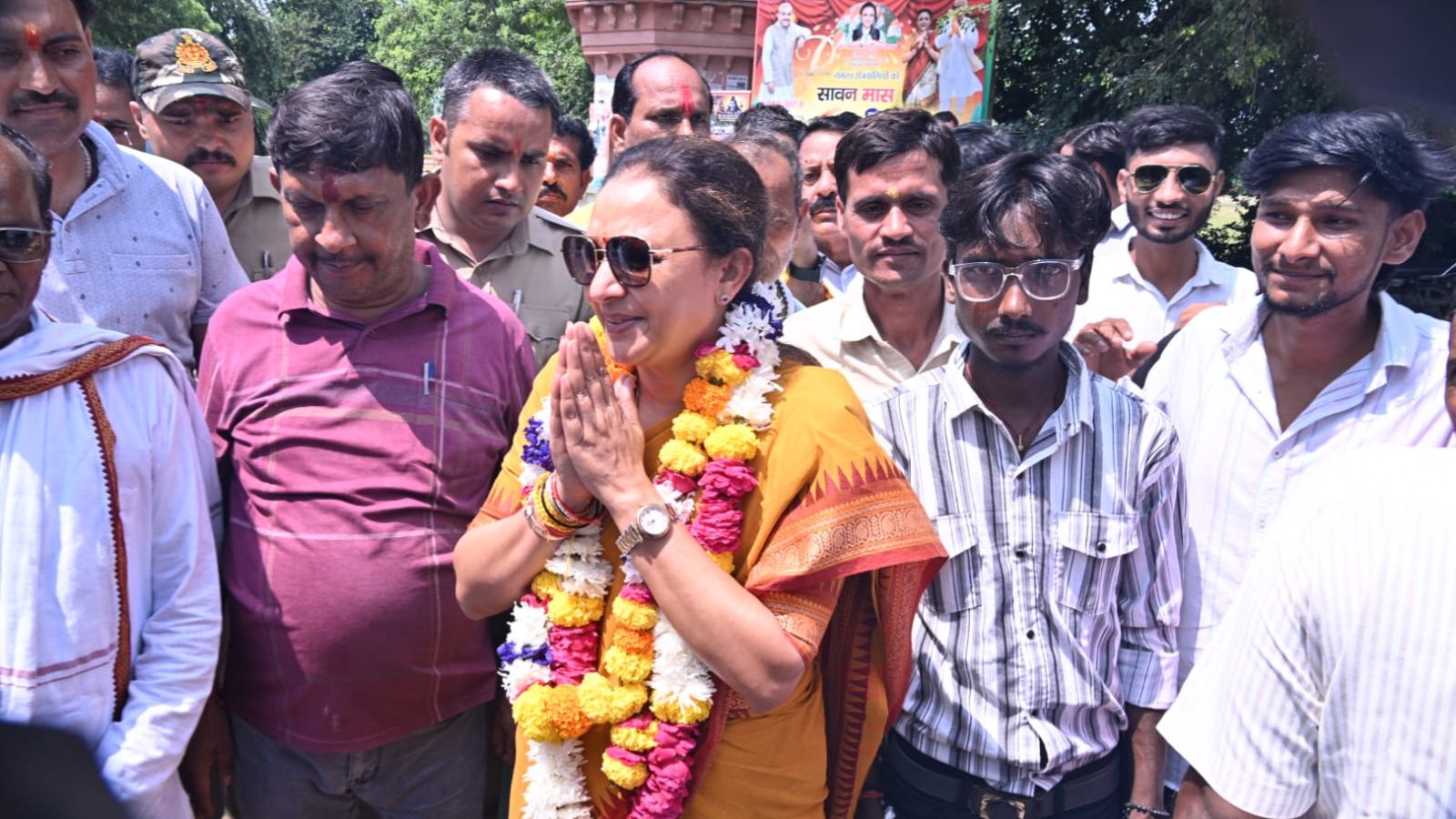
One of the Congress’s two MLAs in the state, Misra, daughter of Rajya Sabha MP Pramod Tiwari, is a three-term legislator from Rampur Khas. The Congress leadership’s move has come ahead of its seat-sharing negotiations with its INDIA bloc ally Samajwadi Party (SP), the principal Opposition in UP, for the Assembly elections. This also signals another attempt to revive its Brahmin-Muslim–Scheduled Caste (SC) coalition, which had traditionally been the party’s defining base over the decades when it dominated state politics.
On December 5, 1989, when Mulayam Singh Yadav took over as the UP chief minister following the then Janta Dal’s win in the Assembly elections, that marked the end of the Congress rule in the state. Since then, the party’s performance and vote share in election after election, whether in the Assembly or Lok Sabha polls, have been on a decline continuously, barring some exceptions.
An analysis of UP’s Assembly and parliamentary poll figures from 1991 to 2024 reveals how a combination of factors – including continued weakening of organisation, loss of support groups, attrition of leaders and workers, frequent leadership changes, and over-reliance on tactical alliances with no focus to build its own grassroots machinery – have led to the Congress being reduced to a marginal player in the state.
Assembly poll trajectory
In the 1991 UP elections, the Congress contested 413 of the 425 seats and won 46, polling 17.32% of votes, which has since remained its best performance so far. In 1993, when the SP and the Bahujan Samaj Party (BSP) had an alliance, the Congress’s tally dropped to 28 seats with 15.08% votes.
In 1996, when P V Narasimha Rao was the AICC chief, the Congress fought the election in alliance with the BSP in 126 seats, won 33 but with just 8.35% vote share. In its aftermath, Congress veteran N D Tiwari split the party and formed his own outfit.
In 1998, Sonia Gandhi took the helm of the AICC. But the Congress’s electoral tallies in UP settled into a low plateau: 25 seats and 8.99% votes in 2002; 22 seats and 8.84% votes in 2007; and a modest recovery to 28 seats and 13.26% vote share in 2012, when it allied with the Ajit Singh-led Rashtriya Lok Dal (RLD) and contested 355 seats.
For the February-March 2017 elections, the Congress had a much-publicised tie-up with the SP. The talks between the two parties for it dragged through January 2017 and were nearly abandoned. Akhilesh Yadav was then the CM and newly in control of the SP after a family split. The talks even involved Mulayam, his aide Amar Singh and political strategist Prashant Kishor. Sonia Gandhi’s intervention through her aide Ahmed Patel produced a breakthrough formula on the poll eve: the SP got 298 of 403 seats, and the Congress 105.
The two allies even had a “friendly fight” with each other on a few seats, though. Their joint campaigning was limited to a handful of Rahul Gandhi–Akhilesh roadshows amid the slogan: “UP ko yeh saath pasand hai”. Eventually, the Congress contested 114 seats, getting just seven with 6.25% votes, while the SP won 47. Their crushing defeat at the hand of the BJP, which took 312 seats, was seen to be caused by organisational weaknesses, poor coordination and a wave in favour of the BJP, which led by Narendra Modi had already stormed to power at the Centre in 2014 by sweeping UP among other states.
In 2022, the Congress fought alone, winning just two seats with 2.33% votes after contesting 399 seats.
Track record in LS polls
The Lok Sabha election results in UP tell a similar story. The Congress won five of 85 seats with 18.02% votes in 1991, five with 8.14% in 1996, none with 6.02% in 1998, 10 with 14.72% in 1999, nine of 80 with 12.04% in 2004, 21 with 18.25% in 2009 – its peak performance in three decades – two and 7.53% in 2014, one and 6.36% in 2019, and six seats – including its traditional strongholds Amethi and Rae Bareli – with 9.53% vote share in 2024, when it contested only 17 seats under its renewed alliance with the SP.
Political wilderness
In the course of its long dominance over national politics, the Congress considered UP its natural fortress in the heartland. The party had won 269 Assembly seats in 1985 following Indira Gandhi’s assassination. In 1989, however, its tally plunged to 94, with the party failing to form its government in the state since.
Driven by Mandal politics, the Ram Janmabhoomi movement, and the rise of regional parties like the SP and the BSP, the post-1989 era saw the Congress losing hold over its old social base comprising the upper castes, Muslims and Dalits.
While a large Dalit section shifted towards the BSP, Muslims rallied round the SP over the years.
The Congress’s marginalisation helped the BJP consolidate the support of upper castes in its favour in UP. While the BJP also broadened its social arithmetic, reaching out to other communities too, the SP and the BSP also became more inclusive. However, the Congress could not stem the erosion of its base, failing to rebuild the party organisation. Its vote shares that routinely exceeded 15-18% in the 1990s dipped below 10% or even 5% afterwards.
The gaps between the Congress’s claims during elections and its preparations have been glaring. In the run-up to the 2017 polls, the party ran the “27 saal, UP behaal” campaign, telling its workers it would fight alone. Within months, it sealed a pact with the then incumbent SP, which came a cropper.
Ahead of the 2022 elections, Priyanka Gandhi’s “Ladki hoon, lad sakti hoon” mobilisation generated visibility, yet the party was decimated.
Congress’s challenges
UP is widely acknowledged as the most politically-crucial state in the country. Nine of 15 Prime Ministers of India have been either from UP or reached Parliament from the state.
The Congress had depended on its governments to rejuvenate its organisation in states, but despite ruling the Centre for 15 years since the 1990s (1991-1996, 2004-2014), it could not revive the party in UP, with many of its leaders switching to the BJP or other parties. The UPCC has seen 13 presidents, but barely anyone has had any significant impact so far.
The appointment of a new state Congress leadership ahead of the 2027 polls has come at a time when there has been an erosion in the BSP’s base. A party section had also called for an alliance with the BSP.
While spearheading the Opposition’s campaign over alleged “vote chori”, Rahul Gandhi, who is a Rae Bareli MP, along with sister Priyanka have hit the streets, indicating a more aggressive brand of politics.
While the Congress is all set to head to the elections riding on its alliance with the SP, such coalitions have only provided temporary cushions to its seat tallies — such as in 1996 and 2012 Assembly elections and 2024 Lok Sabha polls — while the party’s core vote share and fighting capability on its own have steadily declined.
Observers maintain that unless the Congress focuses on rebuilding its organisation and creating its cadre at the booth level independently while aggressively taking up public issues on the ground, it could not regain its lost ground in UP.
KioskNews shows a cleaned-up reading view extracted from the publisher’s page — the original always lives on their site, not ours.