How Taiwan’s military manpower shortage is undermining its ability to fight
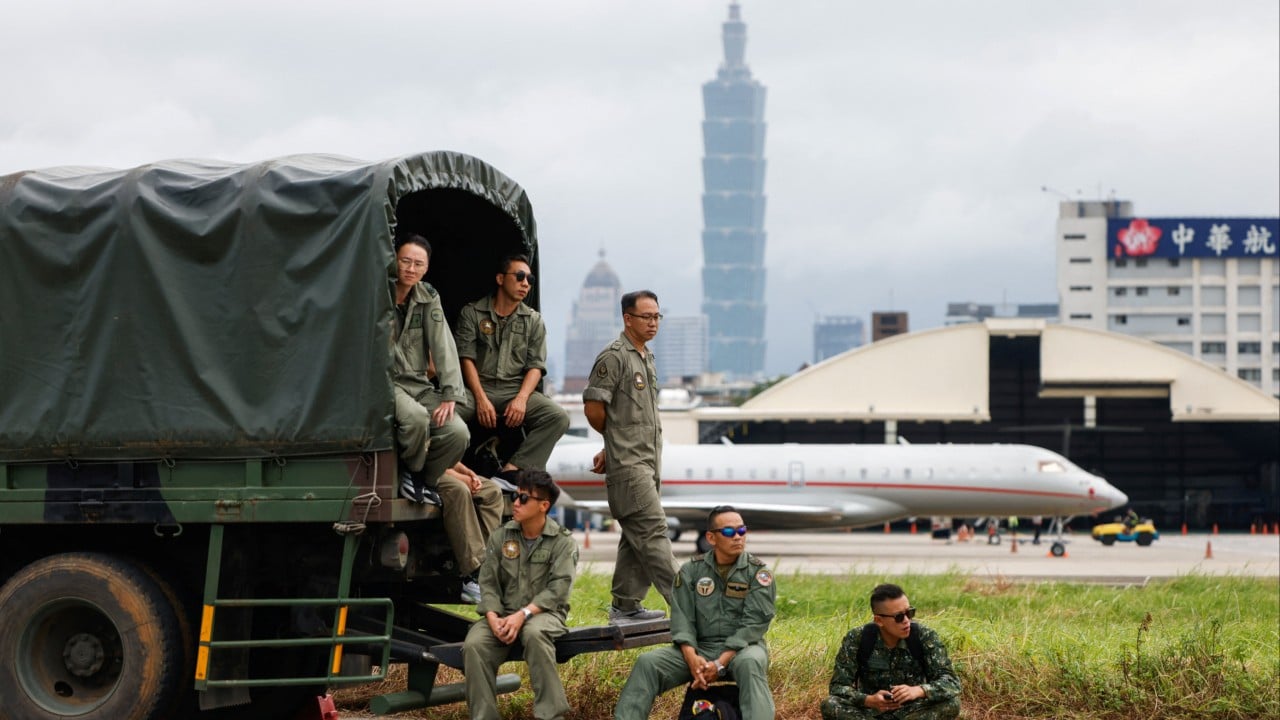
Taiwan’s military is grappling with a worsening manpower shortage, with its volunteer staffing rate remaining below the 80 per cent target for a third consecutive year and concerns mounting over the impact on combat readiness, according to the island’s legislature.
The shortages extend deep into frontline formations – including infantry, artillery, missile and air defence units – raising questions over whether Taiwan will have enough trained personnel to operate and maintain the vast quantities of new weapons entering service, observers said.
A Legislative Yuan Budget Centre assessment of the government’s proposed 2027 budget warned this week that persistent personnel shortages could increase workloads and training demands on serving troops while affecting readiness.
Defence ministry figures cited by the centre showed that the number of staff positions successfully filled by volunteers peaked at 88.52 per cent in 2020 before falling below 80 per cent in 2023. It dropped to 75.93 per cent in 2024 and stood at 77.31 per cent at the end of last year.
A separate Budget Centre assessment of this year’s supplementary budget put the rate at 76.62 per cent at the end of June.
More significantly, numerous Category I formations – elite troops expected to fight on the front line of any conflict – remained below the 80 per cent staffing benchmark.
02:20
US accuses mainland China of targeting Taiwan leader’s family in surveillance case
They included army infantry, mechanised infantry, special operations, artillery, armour, anti-armour and territorial defence units, as well as Marine Corps infantry, armour and artillery formations.
Naval fleet and shore-based missile units, air force missile units and the military police’s 202nd Command were also below the threshold.
The centre warned that the shortages could hinder the training and long-term retention of the specialised personnel needed to operate new weapons as Taiwan accelerates military procurement amid growing pressure from the People’s Liberation Army.
Beijing regards Taiwan as part of China to be reunited by force if necessary. Most countries, including the United States, do not recognise self-ruled Taiwan as an independent state, but Washington is opposed to any unilateral change to the cross-strait status quo by force and is committed to supplying it with weapons.
Analysts said sophisticated weapons required highly skilled personnel who often needed lengthy training.
“If volunteer staffing remains below 80 per cent, it will become increasingly difficult to train and retain enough operators,” said Max Lo, executive director of the Taipei-based Taiwan International Strategic Study Society.
If the situation continued, the island’s armed forces were likely to experience a difficult period in which “there are weapons, but not necessarily enough people to operate them”, he said on Thursday.
Lo said the military should restructure its forces and reallocate manpower rather than rigidly trying to keep its existing organisation fully staffed.
Military analyst Lu De-yun, a former defence ministry press secretary, said shortages directly eroded operational effectiveness.
02:55
Taiwan concludes annual war games, including preparing for PLA sea blockade
“First, you have to extend people’s duty hours, which increases fatigue,” Lu said. “Second, you may have to operate systems with fewer personnel. If a system is supposed to be operated by 10 people, you may have to make do with nine or eight. That will reduce the effectiveness of the weapons system.”
He said shortages were particularly burdensome for junior non-commissioned officers (NCOs), who could simultaneously be responsible for personnel, discipline, training and administration.
The problem could become more pronounced as Taiwan takes delivery of new US weapons, including 66 modernised F-16 fighter jets, while expanding its missile and unmanned capabilities.
Hsu Chiao-hsin, a legislator with the main opposition Kuomintang, has questioned whether the air force will have enough pilots for the new fighters alongside its existing fleet.
The air force, however, has said that despite some pilots leaving early or declining to extend their service, its pilot staffing rate remains above 90 per cent.
Chieh Chung, a researcher with the Taipei-based Association of Strategic Foresight, said the headline figure could conceal a more serious problem – the loss of experienced pilots needed to train and lead younger aviators.
Taiwan plans to form another fighter wing and add 107 flight officers to operate the 66 new F-16Vs ordered from the United States in 2019. The first two aircraft were delivered last week after repeated delays.
However, funding for bonuses designed to retain experienced flight officers would fall by about 4 per cent next year, marking a fourth consecutive annual decline, Chieh noted.
He said the trend suggested the departure of experienced pilots had yet to ease.
“Even if overall pilot staffing meets requirements, flying units could lack enough experienced majors and lieutenant colonels to serve as instructors, flight leads and mission commanders,” he warned.
That meant the air force’s combat capability would not necessarily increase in proportion to the expansion of its fighter fleet, he said.
The manpower shortage is also acute among enlisted personnel, the main pool from which NCOs are drawn.
Chieh said NCO shortages could be particularly damaging because they formed the operational backbone of units and were often more familiar with missions and procedures than newly assigned officers.
The Budget Centre also warned of longer-term demographic pressures. The number of men eligible for compulsory service fell below 100,000 for the first time in 2023 and is projected to fall below 80,000 next year.
Ruling Democratic Progressive Party legislator Chen Kuan-ting said the irreversible decline in Taiwan’s young population meant it was unrealistic to insist on keeping traditional large formations fully staffed.
He called for “greater use of drones, automated surveillance and artificial intelligence systems to reduce manpower requirements in areas including logistics, surveillance and reconnaissance”.
The defence ministry said it had been working to stem personnel losses, improve recruitment and retention, relax some entry requirements, raise allowances for several categories of military personnel and improve pay and living conditions.
KioskNews shows a cleaned-up reading view extracted from the publisher’s page — the original always lives on their site, not ours.