Snack that lets students eat their homework spreading through Chinese schools
Chinese regulators are ordering inspections of shops near schools over a viral snack of edible rice paper printed to look like homework, after national monitoring flagged suspected additive violations.
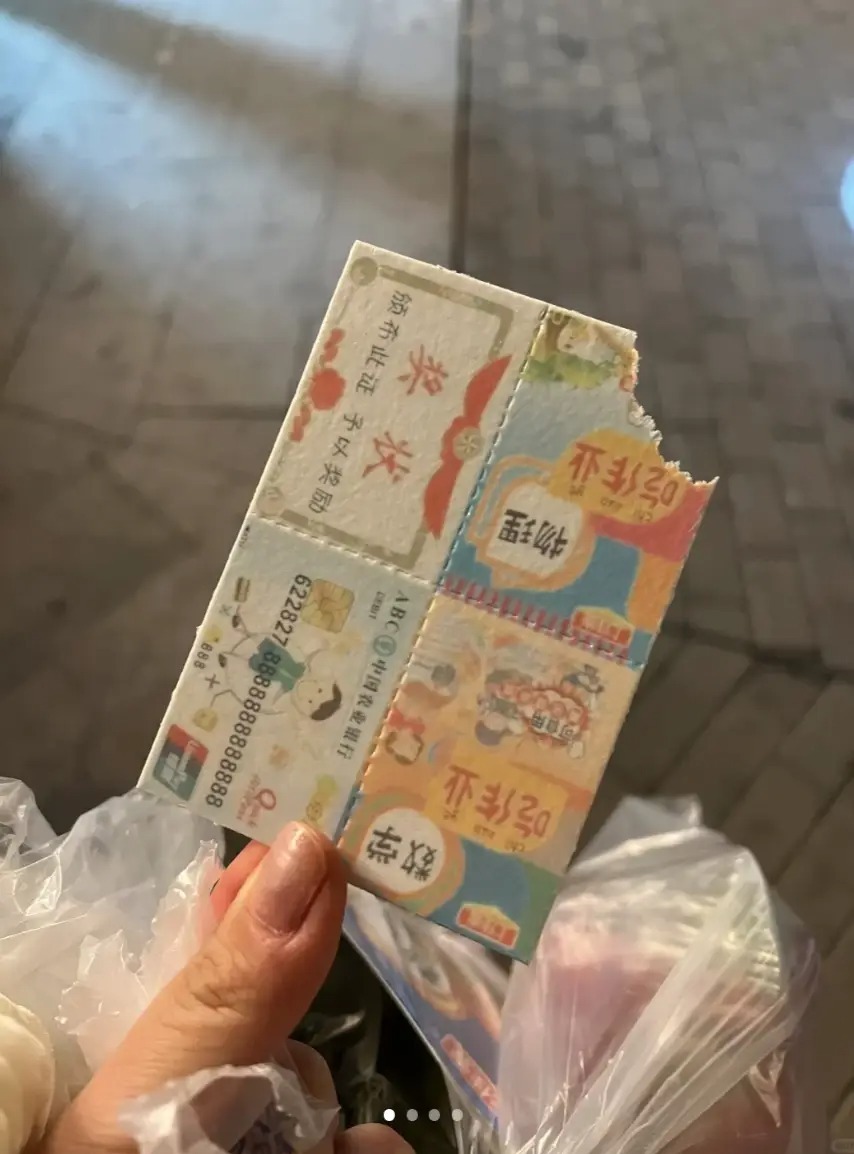
The snack is a sheet of edible rice paper printed to look like a Chinese textbook, exercise book, exam paper or certificate of merit.
It spread among primary and secondary school pupils as the autumn term opened, sold online under slogans including "stress reliever" and "eat knowledge into your stomach," China Media Group's Voice of China radio channel reported.
Monitoring by the State Administration for Market Regulation found significant food safety hazards across the category, the broadcaster reported.
Some products are suspected of using food additives beyond permitted categories and quantities, production processes and environments fall short of national standards, and a small number use non-food raw materials illegally. The items are marketed primarily at children and teenagers.
Market regulators in Guangzhou's Zengcheng District, in Karamay in the Xinjiang Uyghur Autonomous Region and in Lintao County in Gansu Province have each issued food safety alerts urging parents not to buy the snacks out of curiosity.
Guangzhou Daily's Dayang website reported Sept. 3 that the city's Nansha street market supervision office had made illegal sales of edible homework products a priority of its term-opening enforcement campaign, covering convenience stores, snack shops and stationery shops near schools, and that merchants who refuse to clear non-compliant stock will face penalties and have their cases published.
Voice of China reporters found one item declared a starch product whose ingredient list included tartrazine, brilliant blue and allura red, and a second, also declared a starch product, listing beetroot red and gardenia blue.
 |
|
An edible rice paper "homework" sheet with a corner bitten off. Photo from Sohu |
China's national standard on food additive use permits none of those colorings in the starch products category, though identical rice paper may legally carry them when declared as candy.
The snacks are cheap enough that small workshops may print them with non-food-grade or even industrial ink, which can exceed heavy metal limits and is a potential cause of liver and kidney damage in children, Wu Wenbin, deputy director of the spleen and stomach department at the Guangdong Provincial Hospital of Chinese Medicine's Dade Road branch, told Voice of China.
Because the sheets double as playthings, pupils handle them before putting them in their mouths, which regulators say can bring on abdominal pain and diarrhoea.
The products are palm-sized and weigh a few grams a bag, with prices running from well under CNY1 ($0.15) for a single pack to between CNY9 and CNY40 ($1.35 and $6) for boxed sets.
One format encloses plain transparent rice paper inside a textbook-patterned outer shell that is not edible. Another prints textbook contents and illustrations directly onto the edible sheet, producing a far more convincing replica.
In Fujiko F. Fujio's manga and anime series "Doraemon", long popular in China, the robot cat's memorization bread is pressed against a page so the text transfers to it, and whoever eats the bread remembers the contents.
A Guangzhou parent surnamed Ye, whose child is in primary school, told Southern Metropolis Daily she questioned whether the marketing teaches children to resent studying, noting that a pupil who eats a printed worksheet still faces the real one the next morning.
Educators told Dayang the trend amounts to a playful form of emotional venting, and cautioned that it risks teaching children to treat homework as a burden to be destroyed rather than pressure to be managed.
KioskNews shows a cleaned-up reading view extracted from the publisher’s page — the original always lives on their site, not ours.