US flights nearly back to normal after rare no-takeoff order
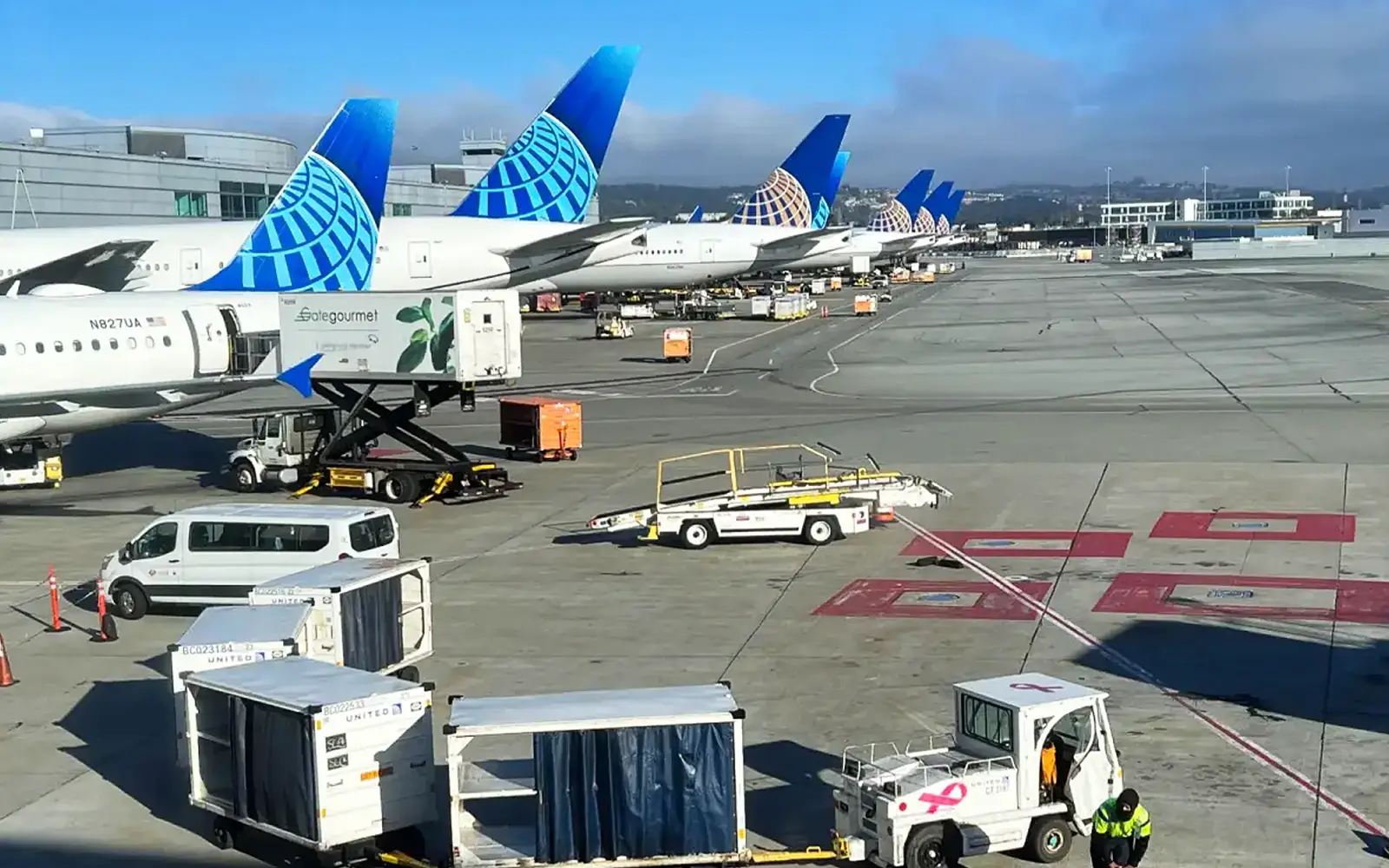
US air travel returned to near-normal on Monday after a rare no-takeoff order left travellers stranded on airport floors from coast to coast over the weekend.
At least 350 flights into, out of, or within the US were cancelled Monday, according to tracker FlightAware, far fewer than the 9,200 cancelled when the ground stop order was handed down on Friday.
As he departed for a trip to China earlier Monday, president Donald Trump blamed “old equipment, broken equipment” and the previous administration for a communications failure that saw federal aviation authorities halt takeoffs nationwide for only the second time since the 9/11 attacks.
“We’ve been trying to get the money for two years to fix it,” Trump told reporters, punting the problem to Congress.
The Wall Street Journal reported Saturday that old networking equipment in Arkansas – and possibly in Texas – became overloaded, creating a communications failure that cascaded across 17 of the nation’s 22 major air control centres.
It was the longest nationwide halt to takeoffs since 9/11, and the cancelations rippled through the industry, with planes stranded at airports where they were not needed and crews reaching limits on how long they could work.
United Airlines separately reported a widespread outage on Monday that briefly delayed departures before it was resolved.
‘Not a cyberattack’
The Trump administration has been at pains to say during Friday’s ground stop that there was no threat to safety and that the disruption was not the result of a cyberattack.
Instead, it was “an old system that went down, and went down everywhere” after “it got overloaded,” transportation secretary Sean Duffy said Friday night, before rebuffing calls for his resignation over the weekend.
Earlier in the week, Duffy had asked Congress for more than US$30 billion to upgrade and modernise the US air traffic control system.
The Federal Aviation Administration (FAA) said “we implemented a nationwide ground stop out of an abundance of caution” and that “throughout the disruption, certain radio frequencies and radar feeds remained operational, allowing air traffic controllers to maintain communication with and track aircraft.”
The nationwide halt was lifted at 8.15pm Friday after about four hours, but untangling the mess of mislocated planes and personnel – and thousands of passengers who needed to be rebooked – continued into Monday.
Lobbying Congress
Duffy upped his appeal to US lawmakers for additional funding late Friday, saying he needed US$50 billion to upgrade and modernise the air traffic control system, and called for Congress, which controls the government’s purse strings, to provide the money.
“This is an emergency. I want Congress to give us emergency funding,” Duffy said at the White House. “This is bipartisan. This is American. I want US$50 billion.”
The last major outage, in January 2023, saw all US departures halted after a different system, the Notice to Air Missions (NOTAM) communications network, malfunctioned.
In that case, the FAA blamed software rather than hardware, saying a “damaged database file” was likely the cause. The takeoff halt lasted just under two hours.
Subscribe to our newsletter and get news delivered to your mailbox.
KioskNews shows a cleaned-up reading view extracted from the publisher’s page — the original always lives on their site, not ours.