The 10 Greatest Wilderness Survival Movies of All Time, Ranked

William likes watching movies and writing about those movies. Anything else is minutae.
Sign in to your Collider account
The survival instinct is thought to be shared among all living creatures. There's an innate desire for self-preservation within us all, and while most of us hope to never be lost in the wilderness, we seem to find it cathartic watching others do it. We enjoy watching someone put up against the elements and surviving through sheer grit and determination. That's why wilderness survival movies exist.
It can be hard to decide which films qualify as a proper wilderness survival movie. Does space count as wilderness? What about those movies where the threat isn't nature itself? It can be a fine line to draw in the sand, but for the purposes of this list, it has to be a movie where characters are lost in the wilderness with nothing but their own two feet, or maybe a canoe, to carry them. From shipwrecks to plane crashes to simply getting lost in the woods, people in movies have been trying to survive the wilderness for decades, and these ten movies are the greatest survival stories.
10 'The Grey' (2011)

The Grey was mis-marketed by the studio to look like a pulpier action movie where Liam Neeson fist fights wolves in the wild. Whoever went to theaters hoping to see that would have been sorely disappointed to find that the movie is a far more somber and contemplative survival thriller about a suicidal man finding the will to live. It's a better movie than the one that was marketed, tautly directed by Joe Carnahan and featuring one of Neeson's best performances from an era in his career that was dominated by action movies.
Neeson plays John Ottway, a man torn apart by grief who works at an Alaskan oil facility as a sharpshooter for the seemingly constant wolf attacks. He's pulled out of his dark depression when his flight home crashes with him and his coworkers on board, leaving them to fend for themselves in the wilderness while a pack of wolves closes in. The Grey was a back-to-basics thriller for Carnahan, who had just come off the failed franchise starter The A-Team. It may be a little too ponderous for its own good, but it's still an enthralling wilderness survival thriller.
9 'The Revenant' (2015)
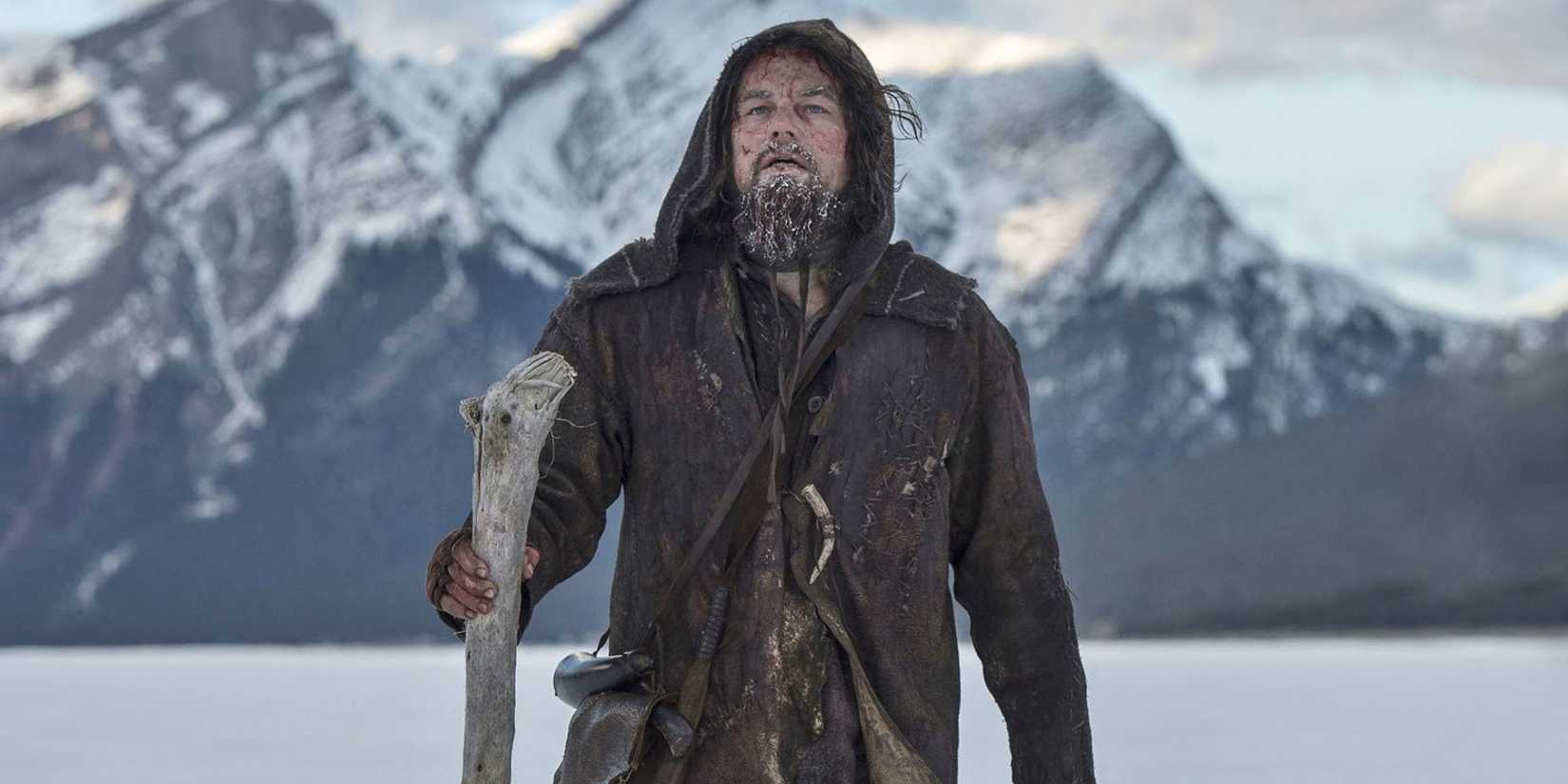
The Revenant is similar to The Grey in that there's very little that's emotionally or thematically illuminating underlying it, but it's effectively visceral. A revenge thriller and survival drama wrapped into one, the film is nominally based on the true story of Hugh Glass, who survived a bear attack and was left for dead. The facts are all but abandoned, other than to give this grim and gritty movie some grounding, but it's otherwise more interested in being a brutalizing cinematic experience, and it is.
Leonardo DiCaprio gives a committed performance as Glass, which won him an overdue Oscar, and director Alejandro González Iñárritu, along with cinematographer Emmanuel Lubezki, stages some staggering set pieces around him. As an action thriller, The Revenant is absolutely intense, but it's also so relentless that it becomes numbing by its third act, where Glass exacts his final vengeance. Even so, there's no denying the incredible visuals and intensity of the lead performance.
8 'Life of Pi' (2012)

Another survival film whose astounding visuals outweigh its dramatic heft, Ang Lee's Life of Pi adapts the philosophical novel by Yann Martel into a 3D CGI-laden adventure. It truly is a sight to behold, even if it lacks some of the novel's ambiguities, thought-provoking spiritual material, and darker elements, some of which would frankly be impossible to properly adapt. Film is often thought of as a solely visual medium, and by that standard, Lee wildly exceeds expectations with Life of Pi.
Pi Patel (Suraj Sharma) is a teenager born in India to parents who own a zoo. When their freighter to Canada sinks, Pi is left alone on a lifeboat with only a tiger he names Richard Parker to keep him company, or so he tells a reporter years later. The journey of Pi is captivating, shot in a giant water tank and, with a heavy amount of CGI crafting the remaining environment, it is a true testament to the artistry of digital effects.
Collider Exclusive · Oscar Best Picture Quiz
Which Oscar Best Picture
Is Your Perfect Movie?
Parasite · Everything Everywhere · Oppenheimer · Birdman · No Country
Five Oscar Best Picture winners. Five completely different visions of what cinema can be — and what it can do to you. One of them is the film that was made for the way your mind works. Ten questions will figure out which one.
🪜Parasite
🌀Everything Everywhere
☢️Oppenheimer
🐦Birdman
🪙No Country for Old Men
01
What kind of film experience do you actually want? The best movies don't just entertain — they leave something behind.
02
Which idea grabs you most in a film? Great films are driven by a central obsession. What's yours?
03
How do you like your story told? Form is content. The way a story is shaped changes what it means.
04
What makes a truly great antagonist? The opposition defines the protagonist. What kind of opposition fascinates you?
05
What do you want from a film's ending? The final note is the one that lingers. What do you want it to sound like?
06
Which setting pulls you in most? Where a film takes place shapes everything — mood, stakes, what's even possible.
07
What cinematic craft impresses you most? Every great film has a signature — a technical or artistic element that makes it unmistakable.
08
What kind of main character do you root for? The protagonist is the lens. Who you choose to follow says something about you.
09
How do you feel about a film that takes its time? Pace is a choice. Some films sprint; others let tension accumulate slowly, deliberately.
10
What do you want to feel walking out of the cinema? The best films leave a mark. What kind of mark do you want?
The Academy Has Decided Your Perfect Film Is…
Your answers have pointed to one Oscar Best Picture winner above all others. This is the film that was made for the way your mind works.
Parasite
You are drawn to films that operate on multiple levels simultaneously — that begin in one genre and quietly, brilliantly migrate into another. Bong Joon-ho's Parasite is a film about class, desire, and the architecture of inequality that manages to be darkly funny, deeply suspenseful, and genuinely shocking across a single extraordinary running time. Your instinct is for cinema that hides its true intentions until the moment it's ready to reveal them. Parasite is exactly that — a film that rewards close attention and punishes assumptions, right up to its devastating final image.
Everything Everywhere All at Once
You want it all — and this film gives you all of it. The Daniels' Everything Everywhere All at Once is one of the most maximalist films ever made: action comedy, multiverse sci-fi, family drama, existential crisis, and a genuinely earned emotional core that sneaks up on you amid the chaos. You are someone who responds to ambition, who doesn't want cinema to choose between being entertaining and being meaningful. This film refuses that choice entirely. It is overwhelming by design, and its overwhelming nature is precisely the point — because the feeling of being crushed by infinite possibility is exactly what it's about.
Oppenheimer
You are drawn to cinema on a grand scale — films that understand history not as a backdrop but as a force, and that place their characters inside that force and watch what happens. Christopher Nolan's Oppenheimer is a film about the terrifying gap between what we can do and what we should do, told with the full weight of one of the most consequential moments in human history behind it. You want your films to feel important without feeling self-important — to earn their ambition through sheer craft and the gravity of their subject. Oppenheimer does exactly that. It is enormous, complicated, and refuses easy comfort.
Birdman
You are drawn to films that foreground their own construction — that make the how of the filmmaking part of the what it's about. Alejandro González Iñárritu's Birdman, shot to appear as a single continuous take, is cinema examining itself through the cracked mirror of a fading actor's ego. You respond to formal daring, to the feeling that a film is doing something that probably shouldn't be possible. Michael Keaton's performance and Emmanuel Lubezki's restless camera create something genuinely unlike anything else — a film that is simultaneously about creativity, relevance, self-destruction, and the impossibility of ever truly knowing if your work means anything at all.
No Country for Old Men
You are drawn to cinema that trusts silence, that refuses to explain itself, and that treats dread as a form of meaning. The Coen Brothers' No Country for Old Men is a film about the arrival of a new kind of evil — implacable, arbitrary, and utterly indifferent to the moral frameworks we use to make sense of the world. It is one of the most formally controlled films ever made, and its controlled restraint is what makes it so terrifying. You want your films to haunt you, not comfort you. You are not interested in resolution if resolution would be dishonest. No Country for Old Men is honest in a way that most cinema never dares to be.
7 'The Snow Walker' (2003)

The Snow Walker is one of the most underrated wilderness survival movies ever made. Based on a short story by Farley Mowat and helmed by actor-turned-director Charles Martin Smith, it offers a tender examination of two people from different cultures who find a connection through their survival experience in the wilderness of Canada. The always undervalued Barry Pepper and newcomer Annabella Piugattuk both bring sincerity to their roles that comes out in their chemistry, which evolves without a shared language.
Pepper plays Charlie, a bush pilot transporting an ill Inuit woman named Kanaalaq (Piugattuk). When the plane crashes, they are left stranded in the unforgiving tundra, where Charlie must rely on Kanaalaq and her knowledge of the land to survive. As they develop a mutual respect, the film avoids falling into easy tropes and allows their relationship to develop slowly through the performances. Smith has a clear strength in directing actors, and The Snow Walker is his most effective film as a director.
6 'Touching the Void' (2003)

Kevin McDonald's docudrama Touching the Void recreates the near-fatal descent of two climbers down the Siula Grande in the Peruvian Andes. Alongside interviews with both men, the film provides recreations of the events, which makes them more tangible. Even with the knowledge of how the events turned out, the film still tells a gripping survival story and offers a look into the mentality required to perform such dangerous feats.
Joe Simpson and Simon Yates were both experienced climbers when they ascended the west face of Siula Grande, which they accomplished without issue. On the climb down, they ran into trouble, with Simpson suffering a broken leg and later falling into a large crevasse, leaving Yates with the impossible choice of either being dragged down with him or cutting the rope. Touching the Void is just as thrilling as any of the more action-packed, fictionalized mountain adventure films, thanks to its adherence to the facts of its real survival story.
5 '127 Hours' (2010)

Aron Ralston had a similar mentality to Simpson and Yates, but also a recklessness that led to his becoming trapped in a canyon wall with his hand pinned by a small boulder. With no one aware of his location and with no way to contact anyone, he was caught quite literally between a rock and a hard place. His struggle is dramatized in Danny Boyle's 127 Hours, with James Franco in the lead.
The challenge of 127 Hours is that its lead character is completely immobilized, robbing it of any of the set pieces that normally provide tension and thrills. The film never becomes inert, however, thanks to the dynamic direction by Boyle and Franco's undeniable charisma and palpable anxiety. Using the video logs that Ralston made during his ordeal as a narrative device, the film gets under the character's skin before he literally has to do exactly that in order to free his hand in the bloody climax. 127 Hours is a one-man survival show that's a tour de force.
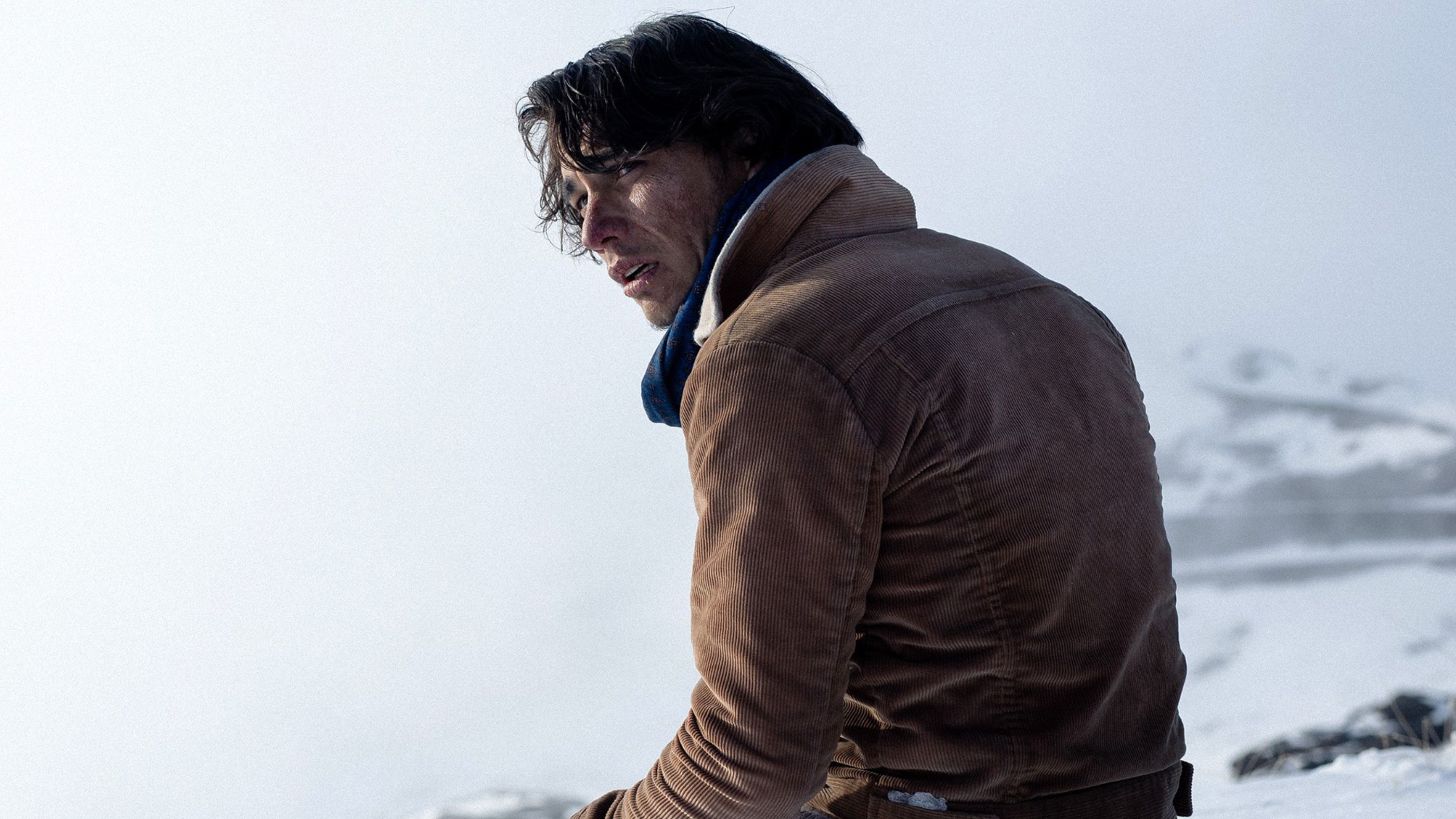
4 'Society of the Snow' (2023)

Another film based on real events, Society of the Snow recounts the fateful plane crash that left a Uruguayan rugby team stranded in the Andes. That story had already been dramatized in two previous feature films, but what makes Society of the Snow necessary is its rigorous research. The result is a film faithful to the truth and respectful of those lost and those who survived. Using a cast of mostly newcomer Uruguayan and Argentine actors, the film maintains its authenticity, and director J.A. Bayona handles the more spectacular sequences of the film with a grace that never overpowers the human drama.
The most sensational detail of the rugby team's survival ordeal is that they had to resort to cannibalism to survive. That fact is not glossed over by the film, nor is it exploited. Society of the Snow is foremost a film about humanity and faith, focusing on the team's cooperation to stay alive under the most extreme circumstances. Even the most macabre moments are treated with emotional sensitivity without shying away from violent reality.
3 'All is Lost' (2013)

Being lost at sea is about as lost as one can get. It's one thing to be lost with solid ground beneath your feet, but an entirely different story when all that surrounds you is a vast body of water that wants to swallow you whole and drag you down to its darkest depths. That hopelessness is palpable in J.C. Chandor's All is Lost, a nearly wordless film with a bravura performance by screen legend Robert Redford as an old man in a battle with the sea.
All is Lost is simple but effective. Redford is the only actor, and it features no helpful narrative devices such as lengthy voiceovers or monologues as some survival films find necessary. We are simply watching a man fight for his life on the open ocean, and the film is all the more effective for it. Redford has always been a compelling screen presence, and All Is Lost may be the purest example, stripping away everything except the actor's physical presence and relying on him to keep the audience hooked.
2 'Deliverance' (1972)

Easily the most notorious survival film ever made, Deliverance is controversial for its inhuman depiction of Appalachia and the people who live there. In many ways, the film belongs in the category of rural horror alongside The Texas Chain Saw Massacre or The Hills Have Eyes, and its depiction of its villains is at the same level of sensitivity. The film should also be viewed in the same way: a harrowing, horrific survival film that examines the true fragility of masculinity and our capacity for violence.
Jon Voight, Burt Reynolds, Ned Beatty and Ronny Cox play the soft city boys out for one last canoeing trip down a Georgia river before the area is dammed. Their conflicts with the locals come to a disturbing head when two of the men are attacked, and one is sexually assaulted, leading them to respond with violence and turning the boys' trip into a fight for survival. In terms of rape-and-revenge thrillers, Deliverance is a vastly different experience given its male perspective. While the notorious scene of assault has become a pop culture punchline, it has lost none of its gruesome effectiveness, just as Deliverance as a film hasn't either.
1 'Cast Away' (2000)

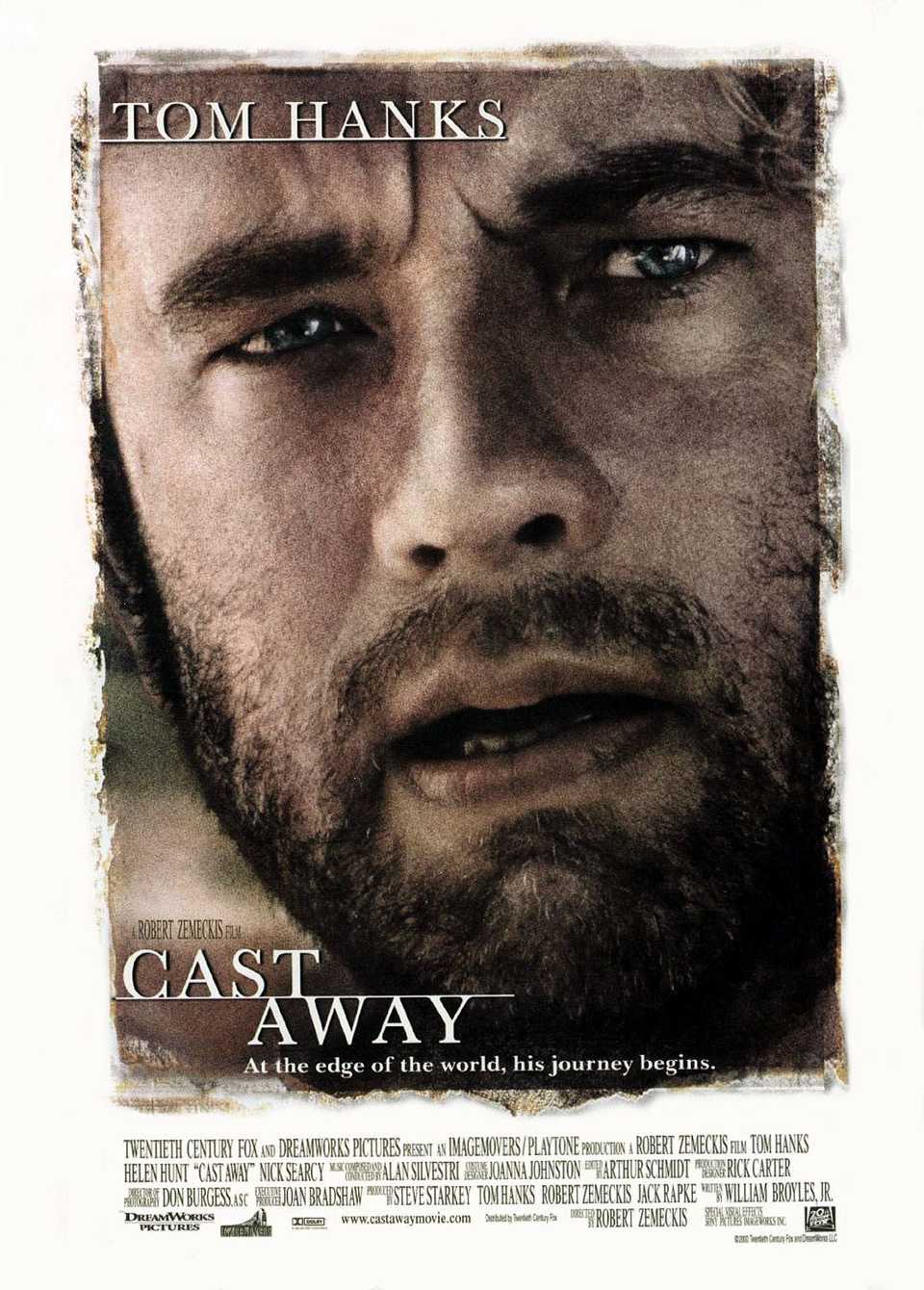
The most iconic survival film is also the best. Cast Away is Robert Zemeckis and Tom Hanks' greatest collaboration and features all the hallmarks of the greatest survival films. Posing both a challenge and opportunity for both the director and the star, the film hinges entirely on Hanks' performance and the film's ability to build tension and excitement around him for the majority of its runtime. Technically impressive and emotionally exhausting, both men are up to the challenge and take full advantage of the opportunity to create a perfect Hollywood survival drama.
Hanks plays Chuck Noland, a FedEx employee who becomes stranded on a remote island after his plane crashes somewhere in the Pacific Ocean. As the only survivor, Chuck has only himself to rely upon and only a volleyball named Wilson to talk to. Hanks manages to have more chemistry and wring more emotion out of his relationship with a sports ball than many flesh-and-blood actors. Cast Away is a testament to Hanks as a performer and Zemeckis as a filmmaker, a blockbuster wilderness survival movie that just happens to be the greatest of all time.
Cast Away
- Release Date
- December 22, 2000
- Runtime
- 143 minutes
- Director
- Robert Zemeckis
- Cast
- Tom Hanks, Helen Hunt, Chris Noth, Paul Sanchez, Lari White, Leonid Citer, David Allen Brooks, Semion Sudarikov, Peter Von Berg, Dmitri S. Boudrine, Nick Searcy, François Duhamel, Michael Forest, Lauren Birkell, Yelena Popovic, Viveka Davis, Jennifer Choe, Nan Martin, Anne Bellamy, Dennis Letts, Wendy Worthington, Valerie Wildman, John Duerler, Steve Monroe, Lisa Long
- Writers
- William Broyles Jr.
KioskNews shows a cleaned-up reading view extracted from the publisher’s page — the original always lives on their site, not ours.