‘Israel is safe’: The Druze Israeli telling Canadians to come visit
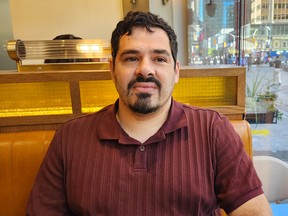
Israel’s new tourism representative in Canada has arrived in Toronto with a difficult assignment: persuading Canadians that Israel remains worth visiting at a time when war, security concerns and disrupted travel have reshaped tourism to the region.
Sign In or Create an Account
Taimur Mansour, the Israel Ministry of Tourism’s director for Canada, is betting that Canada remains a promising market — not only because of the Greater Toronto Area’s large Jewish community, but also because of Christian pilgrimage travel, cultural tourism and interest in Israel’s history, archaeology, food and landscape.
Mansour brings an unconventional biography to the job. A Druze Israeli from Isfiyah, on Mount Carmel near Haifa, he studied social work and Asian studies, spent a year studying Chinese in China, taught Chinese in Israeli high schools, and later qualified as a tour guide. Before coming to Toronto in August, he oversaw the ministry’s media and campaigns department in Jerusalem and coordinated a network of public-relations managers.

Columnist Jesse Kline keeps you up to date with what’s happening in Israel and the effects of antisemitism on life here in Canada. Friday mornings.
By signing up you consent to receive the above newsletter from Postmedia Network Inc.
A welcome email is on its way. If you don't see it, please check your junk folder.
The next issue of Channel Israel will soon be in your inbox.
We encountered an issue signing you up. Please try again
His background, he says, allows him to present Israel both as the Jewish homeland and as a country of intersecting religious, linguistic and cultural communities.
Dave Gordon interviewed Mansour for the National Post:
Many Canadians are concerned about security and flight disruptions. What do you say to someone considering a trip now?
People from all over the world are coming. Flights are resuming. People still have understandable fears. But I think one of our best ways of working with the community is to show people and talk to them, telling them that Israel is safe.
Why is Canada, and Toronto in particular, an important tourism market for Israel now?
One is because the Jewish community here is one of the largest in the world, and among the most loving of Israel, positive toward Israel, and has a good relationship with Israel.
The Christian community here is also strong — Evangelical and some Catholic communities. I know they want to visit Israel. They may be worried about the security situation … but I know they want to go. For me, it was very clear potential that had not been tapped for years, at least since COVID, to bring people from Canada to Israel.
What can the ministry actually do to reboot travel?
The job is to bring more people to Israel — more tourists. That takes time and effort. It is not about a single number; it is about sustainability in tourism, building it for years, so people come to Israel.
Practically, first of all, it means having partnerships in Canada with the tourism industry: agents, wholesalers, online travel agencies, airlines. We work together, because this is the infrastructure you work with. We have them meet Israeli private industry and develop joint projects. That is the bread and butter of the work: meeting the industry here and connecting it to the Israeli industry so they can actually send groups.
Second, there is work with communities and potential travellers. It does not matter if they are Jewish. We want to bring everyone, as much as possible, to Israel.
What about your background gives you a different outlook?
I understand what it is to be a non-Jewish Israeli. I understand how people look at Israel from other places. It allowed me to understand how you can connect to Israel without only being Jewish.
Israel, first of all, is the homeland of the Jewish people, a wonderful place. It is the cradle of all (Abrahamic) faiths. It is a place where you can connect to spirituality of any kind.
Through 70-something years, it has managed to achieve amazing things in medicine, high tech and other areas. Even if you are just a person who wants to support something great or come and see something great, you can come to Israel. You do not need to be Jewish for that. You can come and fall in love with Israel.
For those unfamiliar with the Druze, how would you describe its place in Israeli society?
Most people do not know anything about the Druze. It is a religion. It believes that you need to live in harmony in the place where you live. Usually, this translates into being loyal to, or having a good relationship with, the country where you live.
Druze serve in the army in Israel, but Syrian Druze serve in the army in Syria. Lebanese Druze are Lebanese 100 per cent, and have been very important in the Lebanese government, army, and other places.
I think Druze are a great bridge between different countries because of that. Different Druze communities have good relationships with each other, even when they live in enemy countries sometimes.
Prior to your path in Israeli tourism, there was much professional emphasis on China. How did that shape the way you think about attracting foreign visitors?
I love Chinese culture. I was always a fan, even as a child — like a child’s fantasy of kung fu, calligraphy and other Chinese things. I decided to go because I loved it, but also because I knew it was the future. It was not only something in the past, or cultural. China was growing to be very central on the world stage, even over the last 10 years.
Then I went to study to become a tour guide. For me, that was natural, because I was already guiding people, even not in an official capacity, to those who came to the Jewish villages and to Mount Carmel. I love working with people. I love Israel, history, archaeology, everything to do with Israeli culture, and walking in Israel.
There were almost 150,000 Chinese tourists a year in Israel before COVID. I started working with them. I learned that Israel was fascinating to them. It is the Near East and an ancient culture, and they saw similarities, because theirs is also an ancient culture thousands of years old. In the Chinese outlook, Jewish people are very smart and technological; a small country that managed to achieve great things, which is true.
It is one of the markets still waiting for recovery.
After COVID, I decided to go into work where I could represent Israel and tell our story, but also the story of a Druze person: someone who is a minority, a proud Israeli, lives in Israel, and is integrated. I wanted people to see the culture of Israel that is not Jewish, because for many people outside, they do not know the other cultures living in Israel. So, I decided to apply for the program in the Israeli Ministry of Tourism, to bring tourists to Israel and represent Israel. That is what led me here.
Our website is the place for the latest breaking news, exclusive scoops, longreads and provocative commentary. Please bookmark nationalpost.com and sign up for our newsletters here.
Join the Conversation
This website uses cookies to personalize your content (including ads), and allows us to analyze our traffic. Read more about cookies here. By continuing to use our site, you agree to our Terms of Use and Privacy Policy.
KioskNews shows a cleaned-up reading view extracted from the publisher’s page — the original always lives on their site, not ours.