Close race in Sweden as hard right eyes role in government
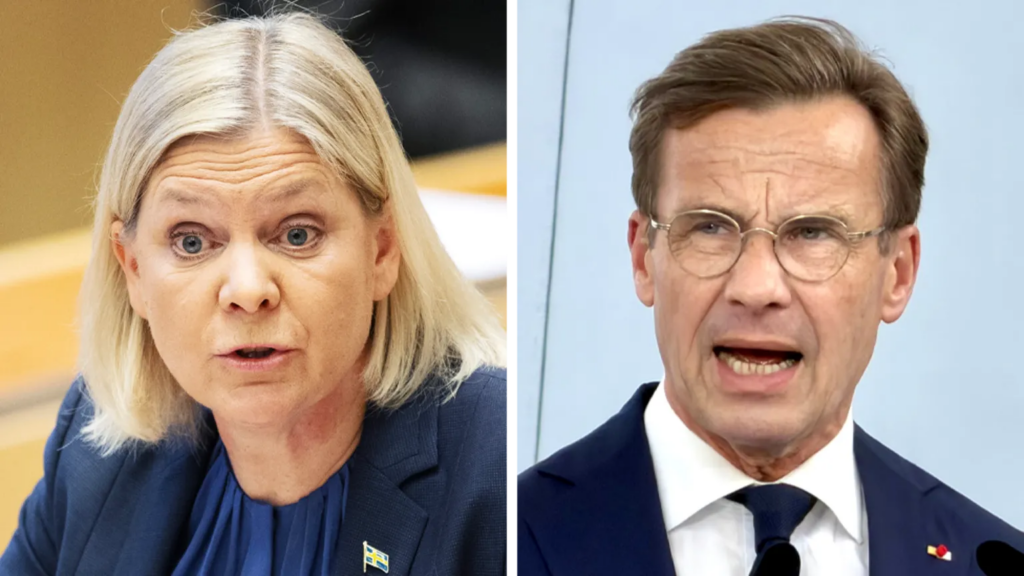
Sweden's left- and right wing political blocs are in a tight race in Sunday's general election, with current conservative Prime Minister Ulf Kristersson promising cabinet jobs for hard-right allies if he remains at the helm.
Latest polls show a narrow lead for the left grouping, which is backing the Social Democrats' Magdalena Andersson to return to power.
Kristersson has been supported in government by the hard-right Sweden Democrats (SD), who have neo-Nazi roots.
National security, gang crime and welfare spending are among the key issues, but the potential for the anti-immigration SD to enter government could also influence the outcome.
In Sweden, there are two major political blocs - with four parties on the right and four on the left, so Swedes are used to coalition and minority governments.
More than eight million people are eligible to vote in the election for Sweden's Riksdag.
A poll on Friday, commissioned by Swedish news service Ekot, shows the left-wing bloc with 50.8% of the vote, compared with the right-wing bloc on 47.6% - a lead of 3.2%.
The centre-left Social Democrats, who have pledged higher public spending, lead the polls, with 28.6%, while on the right the Sweden Democrats are behind them with 18.3%, according to the Ekot survey.
Other opinion polls on Friday also put the left-wing bloc in the lead.
The Social Democrats have regularly led Swedish governments since World War Two and have been the country's dominant political force for much of the last century.
In stark comparison the SD, founded by Nazi sympathisers in the 1980s, were for decades shunned by the mainstream.
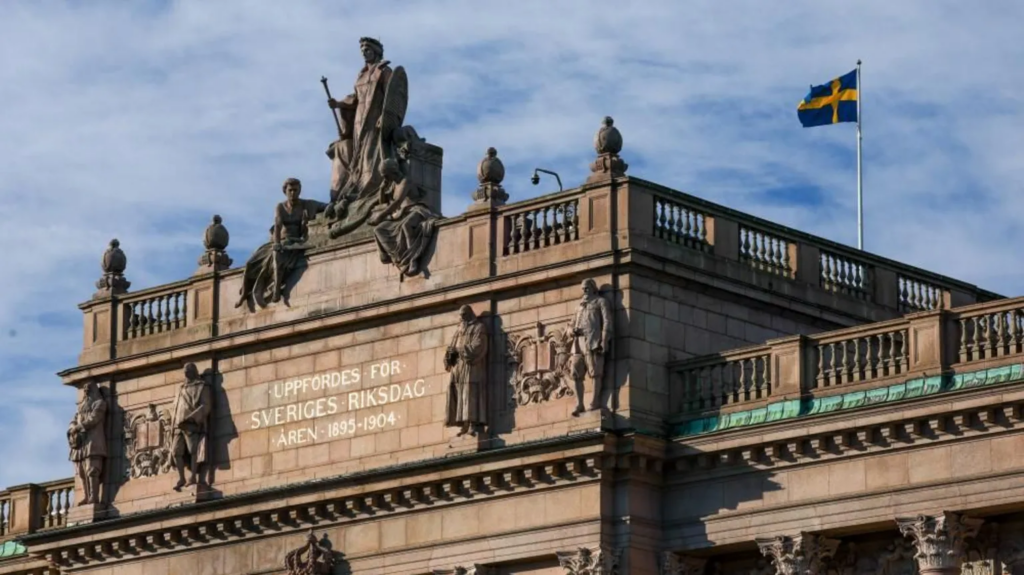
But the last election in 2022 marked a watershed moment, with the SD becoming Sweden's second largest party following a campaign focused on issues around immigration and violent crime.
They have since offered outside support to the current centre-right coalition, which has overseen a dramatic tightening of migration policy, including the abolition of permanent residency for refugees and increased deportations. But the party's MPs have never held ministerial roles.
The Sweden Democrats have experienced controversies during this election campaign, including allegations that a party official spread pro-Russian messages on social media.
Kristersson has said the official should be fired if the claims turn out to be true, while SD leader Jimmie Åkesson said the party was investigating the allegations.
Nicholas Aylott, associate professor of political science at Södertörn University, told the BBC that the party getting into government "would be another big step in the normalisation of the party", but added that it was not the main issue for voters.
"That said, it might still be important for the election outcome," he said.
Aylott explained that some voters who would have backed centre-right parties may well switch allegiance to the opposition, because they are put off by the prospect of SD ministers.
Although he thought they would be few in number, "they might just tip the balance against the incumbent right-wing bloc", he said.
This weekend's election comes a week after Germany's far-right Alternative for Germany (AfD) came close to winning a majority in the eastern state of Saxony-Anhalt.
They topped the poll with almost 44% of the vote, and their local leader Ulrich Siegmund says he is in talks with another party and other MPs in the hope of taking control of parliament.
DISCLAIMER: The Views, Comments, Opinions, Contributions and Statements made by Readers and Contributors on this platform do not necessarily represent the views or policy of Multimedia Group Limited.
Tags:
DISCLAIMER: The Views, Comments, Opinions, Contributions and Statements made by Readers and Contributors on this platform do not necessarily represent the views or policy of Multimedia Group Limited.
KioskNews shows a cleaned-up reading view extracted from the publisher’s page — the original always lives on their site, not ours.