Russia pounds Kyiv during German chancellor’s visit in a new escalation
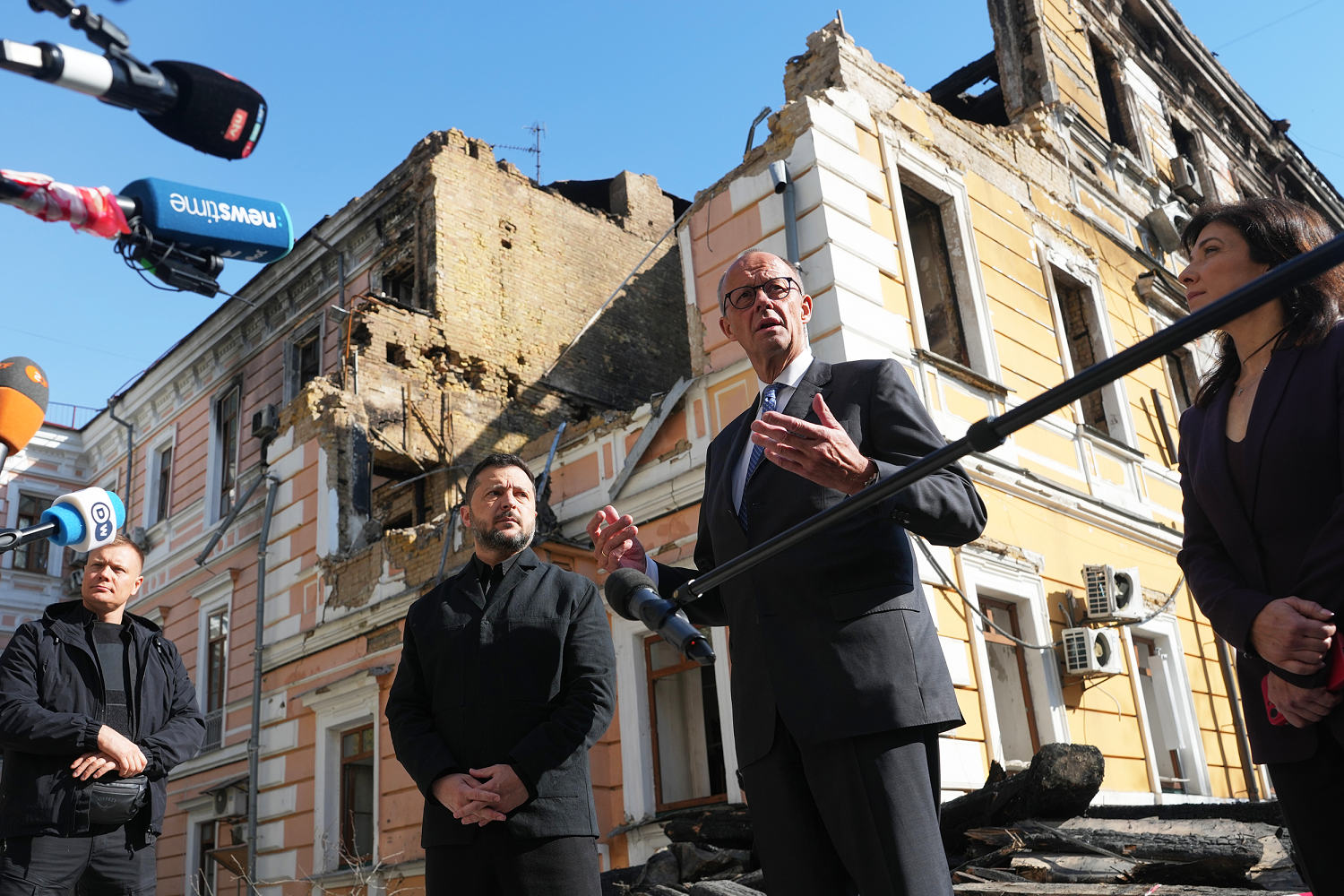
Germany’s leader faced a grim new reality as his train pulled into Kyiv: air raid sirens and the boom of Russian strikes on the Ukrainian capital.
During previous visits by international dignitaries of Chancellor Friedrich Merz’s stature, the Kremlin has paused or dramatically reduced attacks on the city. On Sunday, the sounds of war rang out repeatedly as the German delegation made its way around Kyiv, in what looks to be a new level of escalation by Moscow.
On Monday, Germany’s foreign intelligence chief warned his country was at risk of becoming embroiled in a “violent conflict with Russia,” as Moscow steps up its “shadow war” against European democracies.
Germany has been one of the most ardent supporters of Ukraine since the early days of the invasion, supplying both military and financial aid. The country has also taken in over a million Ukrainian refugees fleeing the war.

02:08
Merz’s visit came as Russia has ramped up its around-the-clock strikes on Kyiv in recent weeks. The attacks and the air raid alerts that accompany them have severely disrupted life in the city, forcing millions to constantly seek shelter and paralyzing the capital’s businesses and transport networks.
Over the last four days, including on the day Merz was visiting, Russia has hit several of Kyiv’s key bridges, with some strikes coming in broad daylight and as traffic was flowing through them — in what appears to be a new tactic to disrupt links between the capital’s two sides separated by the Dnipro River to further disable movement around Ukraine’s largest city.
An air raid alert went off as Merz and Ukrainian President Volodymyr Zelenskyy visited the site of a drone attack on the National Academy of Sciences last week. The dramatic daytime strike on the national landmark saw people clinging to windows to escape flames and thick smoke billowing out of the structure.
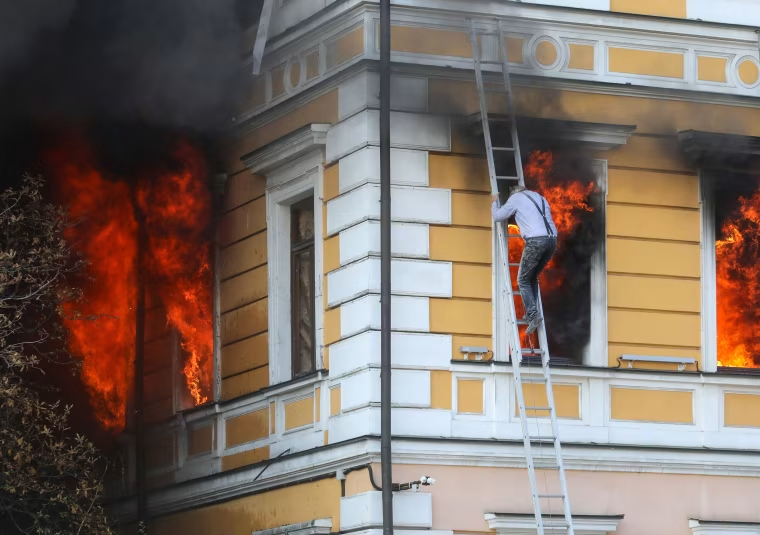
Zelenskyy had to rush Merz off the site, calling it a “dangerous situation,” his office said in a statement.
Merz reaffirmed Germany’s commitment to Ukraine over the weekend, and announced a further $1.1 billion in military aid. Germany, he said, would not be intimidated into abandoning Ukraine because it’s a “matter of Europe’s security” amid an escalating campaign of Russian hybrid warfare on the continent.
Russia’s Defense Ministry said Sunday it has been launching “massive strikes” against Kyiv in response to Ukraine’s threats to intensify attacks on Russian oil refineries. Ukraine’s Defense Ministry said Sunday it has disabled more than half of Russia’s oil refining capacity in a string of successful strikes since this summer that have precipitated a major fuel crisis.
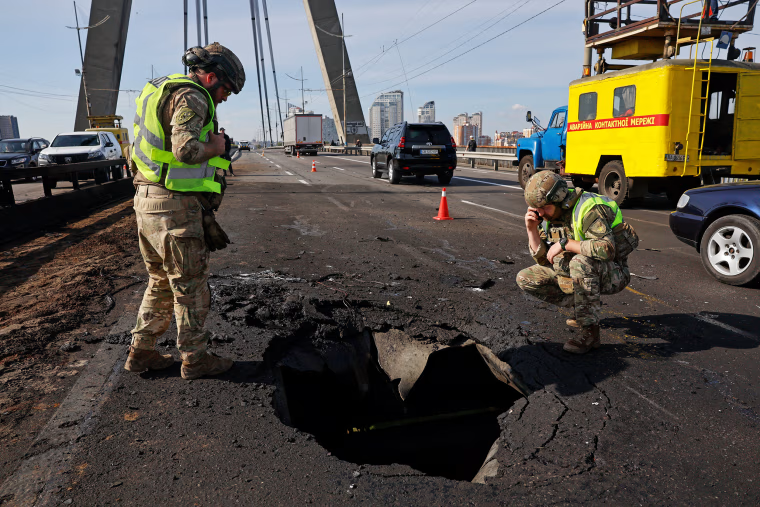
In a separate statement, Russia’s Defense Ministry said one of Kyiv’s bridges that came under attack on Sunday was hit because it’s used to move troops and military cargo.
Earlier, Russia’s Foreign Ministry warned foreign nationals, including personnel of diplomatic missions, to leave the capital, saying Russian forces “will continue to carry out large-scale retaliatory strikes.”
A similarly-worded warning was issued in May when Moscow also called for foreign diplomats to leave Kyiv, threatening an escalation.
“We note with concern that not everyone has taken these warnings into account and that some individuals are knowingly placing themselves in mortal danger,” the ministry said.
But like in May, Ukraine’s European allies are refusing to heed the Kremlin’s call to abandon the city.
“Russia has a message for foreign diplomats in Kyiv: leave, or risk your lives,” Ambassador of the European Union to Ukraine Katarina Mathernova wrote on X. “Our answer: We are staying.”
KioskNews shows a cleaned-up reading view extracted from the publisher’s page — the original always lives on their site, not ours.