Who blinked first? Fragile EU-China trade peace sparks new war of words
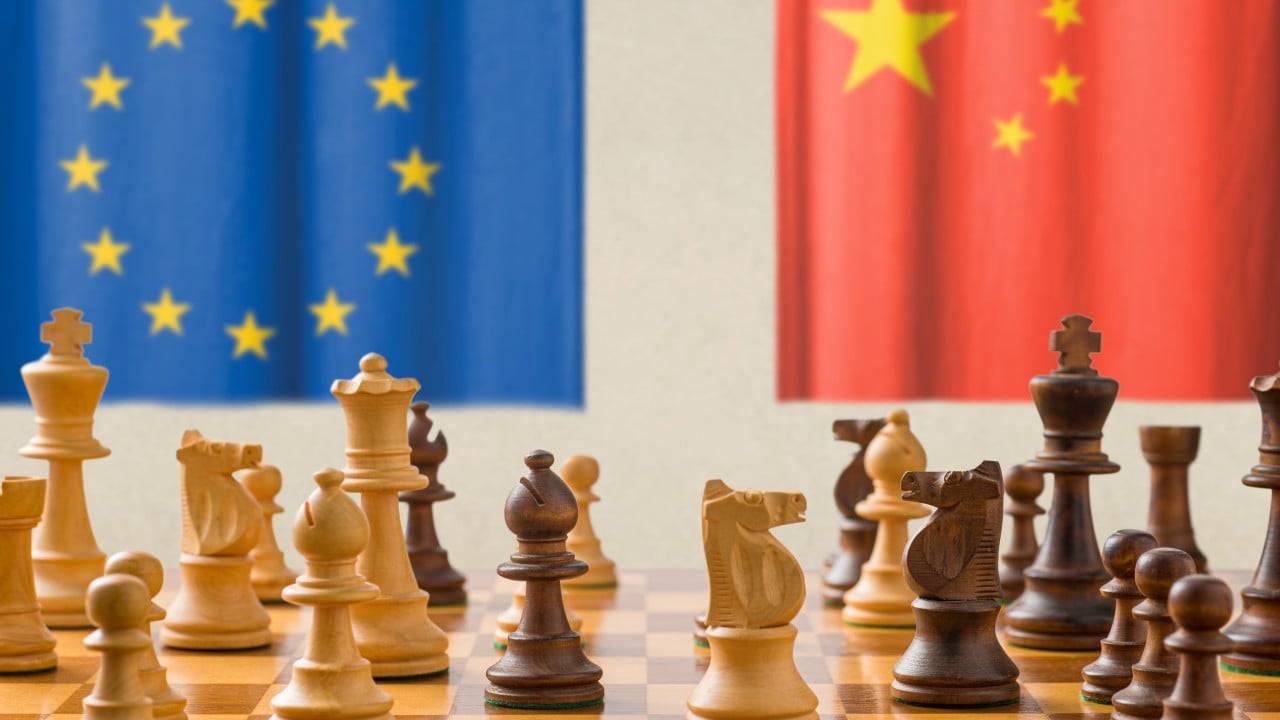
Less than two weeks after Brussels and Beijing struck a surprise deal to avert an escalating trade dispute, their fragile rapprochement has descended into a battle over who blinked first.
In Brussels and Berlin, officials are emboldened by what they consider proof that collective EU pressure can force Chinese concessions. Rather than resting on their laurels, they are cooking up a fresh batch of trade restrictions.
Beijing, on the other hand, has bristled at the idea that it can be strong-armed into yielding to Europe’s demands, even more so the suggestion that further concessions may be coming. State media has carried numerous warnings against European hubris.
It has resulted in an awkward, terse trade peace: an agreement that was supposed to defuse a trade war has led to both sides, rhetorically at least, hardening their positions. With verbal volleys flying back and forth, doubts are already surfacing over whether this delicate ceasefire can hold until the next round of negotiations in January.
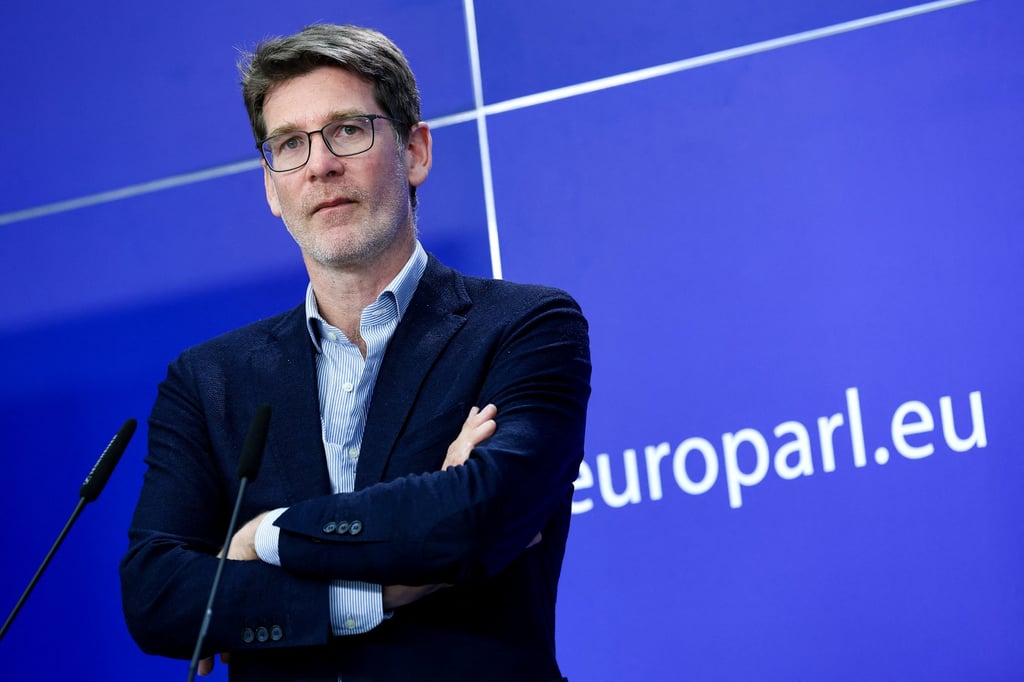
“I can tell you that the French-German paper you refer to was clearly seen from China as ‘OK, now it’s becoming serious’. For the first time, France and Germany agreed on this,” Pascal Canfin, the ranking member on China in the European Parliament’s trade committee, told reporters on Wednesday.
Canfin was referring to a now-famous joint paper between the EU’s biggest powers, which proposed a kill switch that could kick Chinese companies out of the EU market overnight, which has now become an official policy to be proposed in December.
His comments reflected a new-found confidence in Europe on how to conduct relations with China.
“If you just negotiate without the credible possibility to do something differently, then negotiation is not credible at all. If we have the two legs and one voice, I think we are much stronger than we thought, because China is also dependent on the access to our market,” said Canfin, who will join a delegation of trade MEPs visiting China next week.
In Berlin on Wednesday, Chancellor Friedrich Merz said he was “surprised” at the “unanimous support” from EU members at the summit, even as he said Germany did not want a trade war with China.
“The first indication that this could really have an effect on our relations is that obviously the government in Beijing is willing to accept a limited number of car imports to the European Union, which was not the case in the last couple of weeks and months. So we are making progress,” Merz said.
In the run-up to last week’s summit of EU leaders, more than a dozen diplomatic and official sources suggested the bloc had landed on a “two-track” formula of intense dialogue, backed by hard trade action.
The suggestion has been met with fury in Beijing, where official organs have been pushing back strongly against the idea that China could be managed in such a way.
“China’s willingness to make a strategic compromise should not be confused with a willingness to accept an endless series of concessions. Mistaking the former for the latter could turn Beijing’s goodwill into the next source of confrontation,” fumed Brussels Tea House, a newsletter written by Xinhua journalists in the Belgian capital, on Wednesday.
SCMP Plus is a new premium news platform that gives you an
all-inclusive edge to stay ahead on China news.
To access our exclusive content you’ll need to subscribe.
Already a subscriber?
LOG IN
The comments echoed an official commerce ministry statement on Friday, which warned the bloc not to “fantasise” that its pressure had worked. The EU should “harbour no illusions about extracting concessions through pressure, still less underestimate China’s determination and ability to defend its own interests”, the ministry said.
On Wednesday, however, European Commission President Ursula von der Leyen doubled down on the strategy, promising further trade restrictions and new instruments to defend European industries against Chinese competition.
“We see jobs lost in our industrial heartlands. So last week, at the European Council, we agreed a clear approach. First, dialogue where it delivers. Second, action where needed. And third, stronger tools to defend our interests,” von der Leyen said, adding that the commission was “already working closely with our chemicals and machinery sectors”, where further quotas were expected.
The deal will cap the import of Chinese hybrid cars at 350,000 per year from December 1.
The South China Morning Post has been told that quotas will also be applied to South Korea, Japan, Turkey, Britain and Morocco, calculated using last year’s volume of exports plus an additional 15 per cent. The commission would, sources said, be examining these flows for evidence of circumvention by Chinese companies looking to fill out quotas elsewhere.
In her address to the European Parliament on Wednesday, von der Leyen spoke of “the removal of certain EU companies from Chinese control lists”.
The SCMP understands this refers to the German company Sindlhauser, an important supplier to ASML which was added to a Chinese blacklist in July and removed in a tit-for-tat delisting. Bloomberg previously reported that, unable to access Chinese inputs, the company was at risk of going bust.
Some are hoping that the Beijing agreement can be the bedrock of something more substantive.
Bernd Lange, who will lead the European Parliament delegation to China next week, called for further agreements “quite soon”, adding that “negotiations forever make no sense”.
“I remember the negotiation on the so-called CAI, the investment agreement, which is deep in the freezer,” Lange told reporters, referring to the Comprehensive Agreement on Investment, frozen by the parliament after a row over human rights sanctions in 2021.
Lange suggested revisiting the investment provisions of the frozen agreement, including whether Brussels and Beijing could ease restrictions on each other’s investors.
01:52
European carmakers take on Chinese EVs at the Paris Auto Show
Behind the scenes, however, the triumphalism was less apparent. A well-placed official worried that public remarks last week overhyped what negotiators see as a first step, potentially harming the next rounds of negotiations.
Some also wonder if the shift came too late. A deal to cap the import of Chinese hybrid cars is a “pyrrhic victory”, said one senior diplomat, noting that it covered a minute portion of overall trade.
“Look at what is going on in France, [far-right leader Marine] Le Pen could be in next year – I am not sure any of this China hawkishness outlasts [President Emmanuel] Macron in Paris,” they said, with an eye on presidential elections in April 2027, likening the mood in Brussels to a football team celebrating a consolation goal when they are already 6-0 down.
KioskNews shows a cleaned-up reading view extracted from the publisher’s page — the original always lives on their site, not ours.