Popular pantry product can't legally be called peanut butter — here's why
Peanut butter is a spread by definition, but when the word "spread" appears on a peanut butter jar label, it's most likely satisfying a legal requirement rather than acting as a simple descriptor.
Skippy, a well-known name in the peanut butter world, must label its Natural Peanut Butter Spread as such because it contains palm oil.
Regulations set by the U.S. Food & Drug Administration (FDA) state that, in order to be classified as peanut butter, a product must contain at least 90% peanuts — otherwise, the word "spread" needs to be included on the label.
REESE'S FAMILY MEMBER ESCALATES BATTLE WITH HERSHEY OVER CHOCOLATE INGREDIENTS, BLASTS 'PR STUNT'
The Skippy website acknowledges this FDA regulation, saying: "Natural Peanut Butter Spreads can include additional ingredients like palm oil or other oils, which are not hydrogenated."
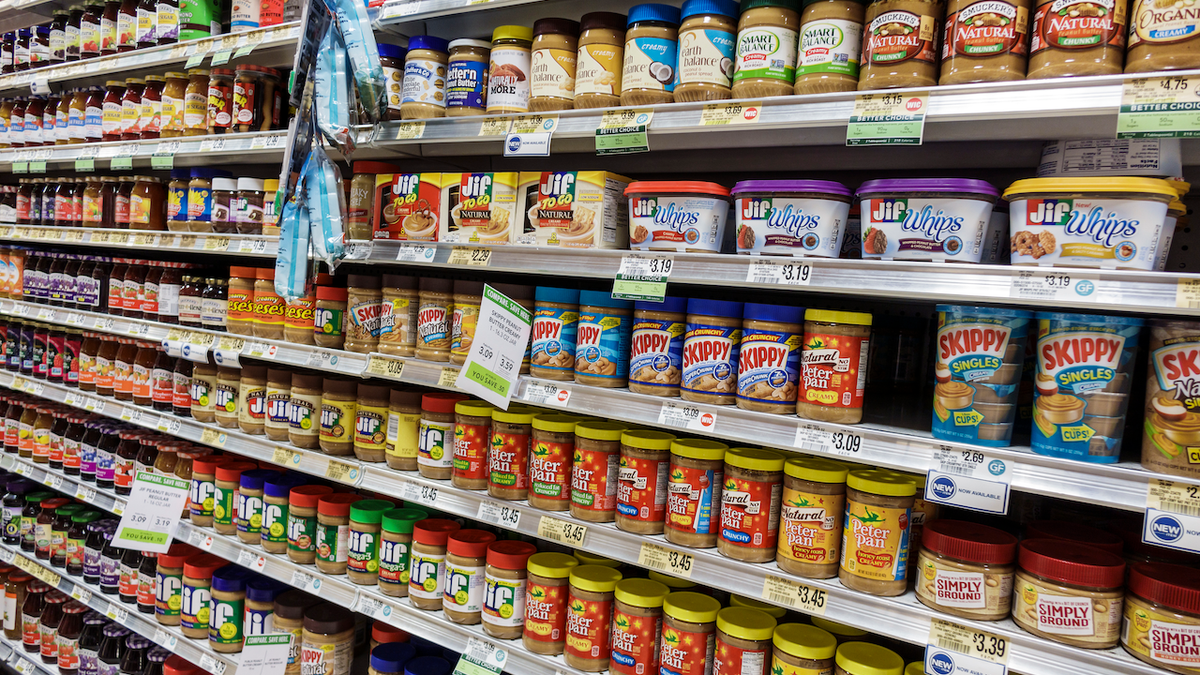
A selection of peanut butter jars are displayed on shelves inside a Publix supermarket in Fort Lauderdale, Fla. (Jeff Greenberg/Universal Images Group)
"These spreads may still contain at least 90% peanuts but include other ingredients that place them outside the standard definition of 'peanut butter,'" the website notes.
It wasn't the smoothest journey to get this regulation set in stone.
CLICK HERE TO SIGN UP FOR OUR LIFESTYLE NEWSLETTER
Back in 1959, an FDA press release included the findings of a survey which showed that "products labeled ‘peanut butter’ had reduced their peanut content as much as 20 percent by substituting cheaper hydrogenated or vegetable oils for expensive peanuts and peanut oil," according to the FDA.
When manufacturers asked about adding glycerin to peanut butter in order to fight oil separation, the FDA responded by stating that, "if glycerin could be added without rendering the food adulterated, its addition would have to be set forth prominently on the product label."
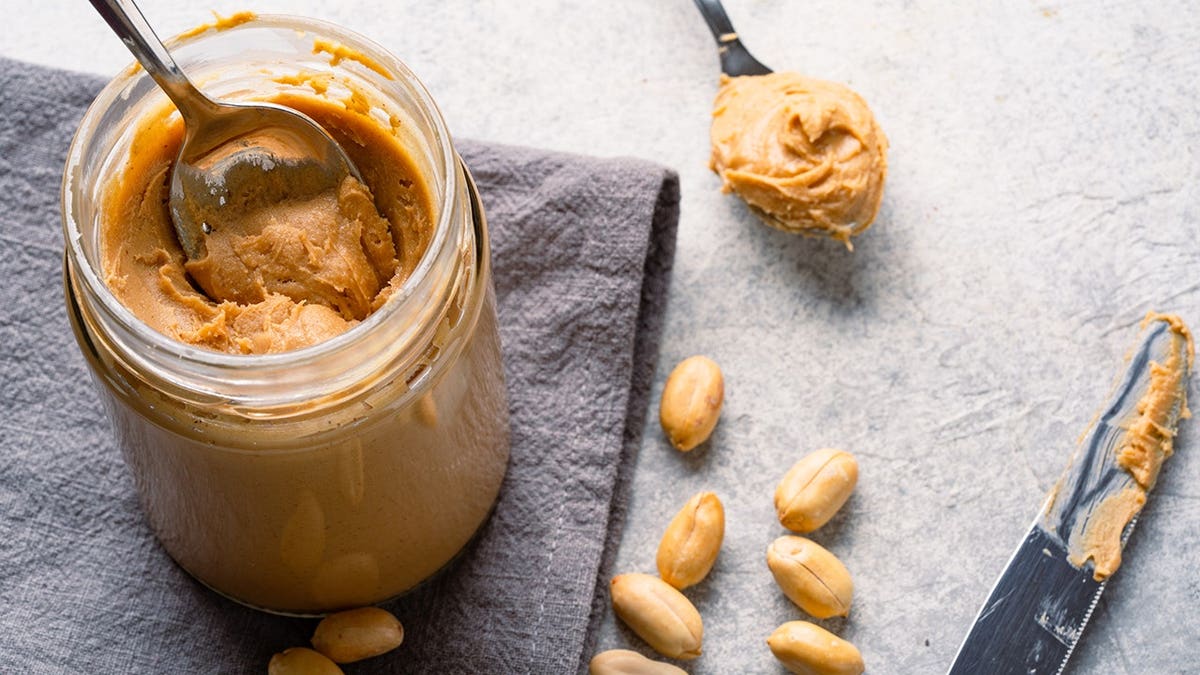
Three peanut butter brands underwent a 20-week court battle with the FDA in 1961 to decide the new standard for peanut content in peanut butter. (iStock)
It became apparent that customers liked peanut butter that spread easily and had a bit of sweetener.
So, in 1961, the FDA proposed a new standard which maintained products consisting of 90 percent peanuts and additional sweeteners would be classified as peanut butter.
CLICK HERE FOR MORE LIFESTYLE NEWS
Upon this proposal, three peanut butter brands — Skippy, Jif and Peter Pan — began a twenty-week public hearing to argue what peanut percentage the new standard would dictate.

Peanut butter that contains less than 90% peanuts must be labeled a "spread," according to an FDA regulation. (iStock)
Eventually, the US Appeals Court approved the FDA proposal to set peanut butter standards "at no less than 90 percent for peanuts and no more than 55 percent fat," according to the FDA.
TEST YOURSELF WITH OUR LATEST LIFESTYLE QUIZ
Today, as shoppers browse supermarket shelves stocked with many different variations of peanut butter, taking a closer look at the label could answer an important question: Is it really peanut butter?
CLICK HERE TO DOWNLOAD THE FOX NEWS APP
Fox News Digital reached out to Skippy's parent company, Hormel Foods, for comment.
Sadie Chafe is a writer on the Lifestyle team at Fox News Digital.
KioskNews shows a cleaned-up reading view extracted from the publisher’s page — the original always lives on their site, not ours.