Physicist proves famous ‘Star Trek’ combat strategy works
Breakthroughs, discoveries, and DIY tips sent six days a week.
By signing up, you confirm you are 16+, will receive newsletters and promotional content and agree to our Terms of Use and acknowledge the data practices in our Privacy Policy. You may unsubscribe at any time.
The most impressive science fiction stories emphasize “science” over spectacle. The Star Trek franchise has featured plenty of examples since the original series premiered 60 years ago this month, but one of its most famous sci-fi moments may prove even more fascinating than fans realized. At Brazil’s Federal University of ABC, physicist Níckolas de Aguiar Alves determined that an early episode of Star Trek: The Next Generation demonstrates an aspect to the theory of relativity even better than its creators likely anticipated.
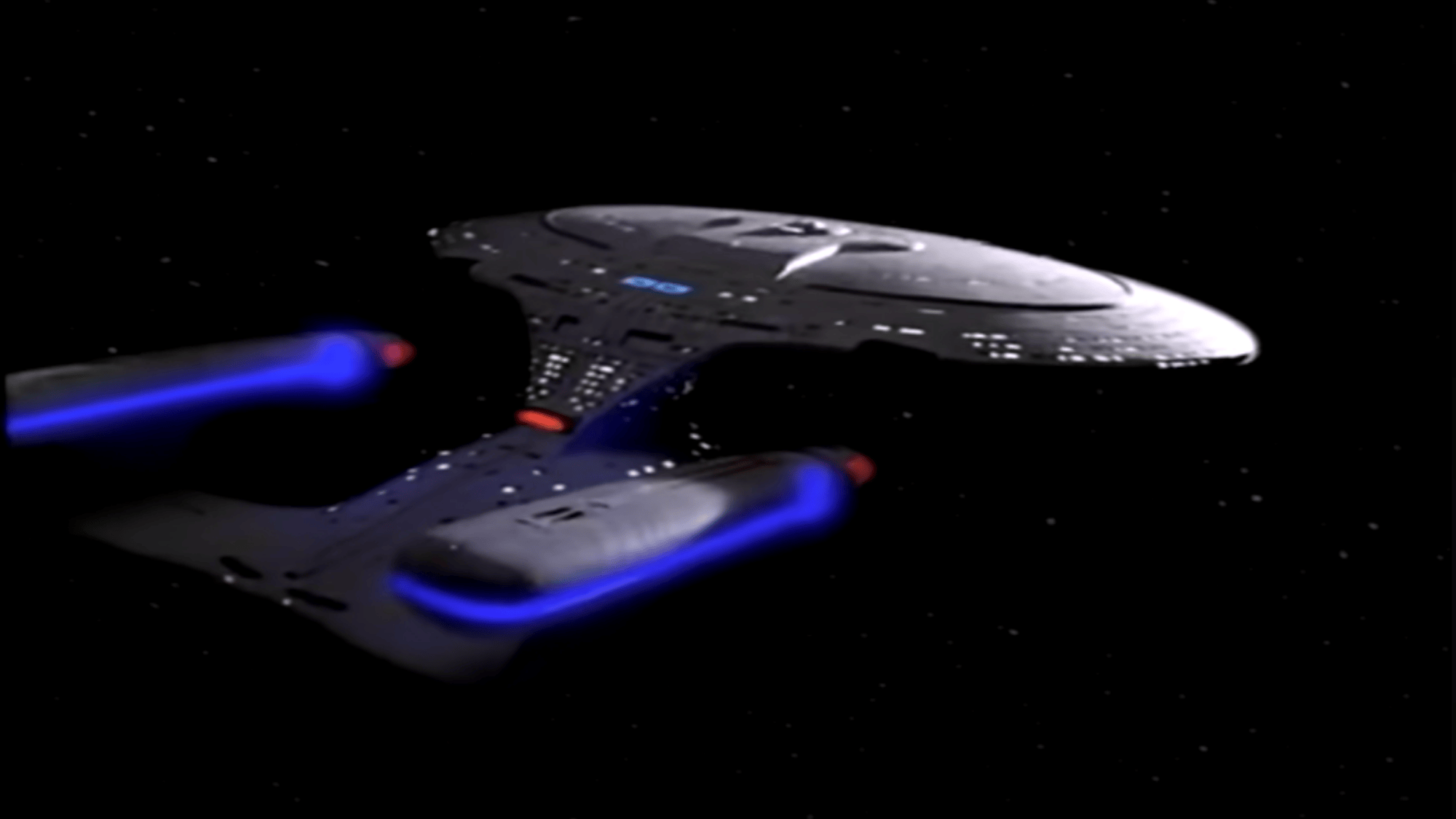
Season One’s ninth episode, “The Battle,” introduces a bit of backstory to Jean-Luc Picard’s illustrious career in the Federation. Years before he became captain of the USS Enterprise, Picard oversaw a ship called the Stargazer when it came under fire from an unknown assailant. Picard needed to navigate closer to the mystery attacker before responding, but the Enterprise’s shields were down.
Star Trek: The Picard Maneuver – Spacedock Short
The captain then quickly improvised what later became known as the “Picard Maneuver.” He ordered his crew to rush their foe at warp speed (faster than the speed of light) then quickly halt and begin firing. Relativistic physics dictated that if Stargazer traveled faster than visible light, it would technically generate two images of the ship from their attacker’s point of view—one Stargazer at the location just prior to warp speed, then a Stargazer where it halted. The operation was risky, but it gave Picard and his crew a 50/50 chance that the enemy would continue firing on an afterimage of Stargazer.
Traveling faster than lightspeed is widely considered impossible, but the underlying principles of Picard’s Maneuver don’t only hold up to expert scrutiny—its depiction in Star Trek is hypothetically less accurate than it should be. According to de Aguiar Alves, Picard’s odds technically would be even higher in such a scenario. But while a fan of the series, the physicist wasn’t intentionally trying to stress test the episode’s logic. Instead, de Aguiar Alves was working on an actual particle physics problem that involved a slower light speed. At one point, he began sketching out the scenario to double check his work.
“And after I drew one or two diagrams, I started noticing, ‘Hey, I think I’ve thought about something like this before,’” de Aguiar Alves said in a recent interview with Ars Technica.
In actuality, Picard’s Maneuver wouldn’t result in two Stargazer ships; it would make three of them. This is because Picard’s crew didn’t travel at a constant speed during the gambit–they first sped up, then stopped closer to their opponent. That means Stargazer technically accelerated not once, but twice. This makes all the difference.
The physicist doesn’t hold it against the episode’s writers. If anything, the overall conceit is an excellent scenario to ponder while studying theoretical physics.
“The main thing they got perfectly, and I think it is a great illustration,” he said.
KioskNews shows a cleaned-up reading view extracted from the publisher’s page — the original always lives on their site, not ours.