Star mathematician Ma Xiao leaves the US for China – and a career pivot to AI
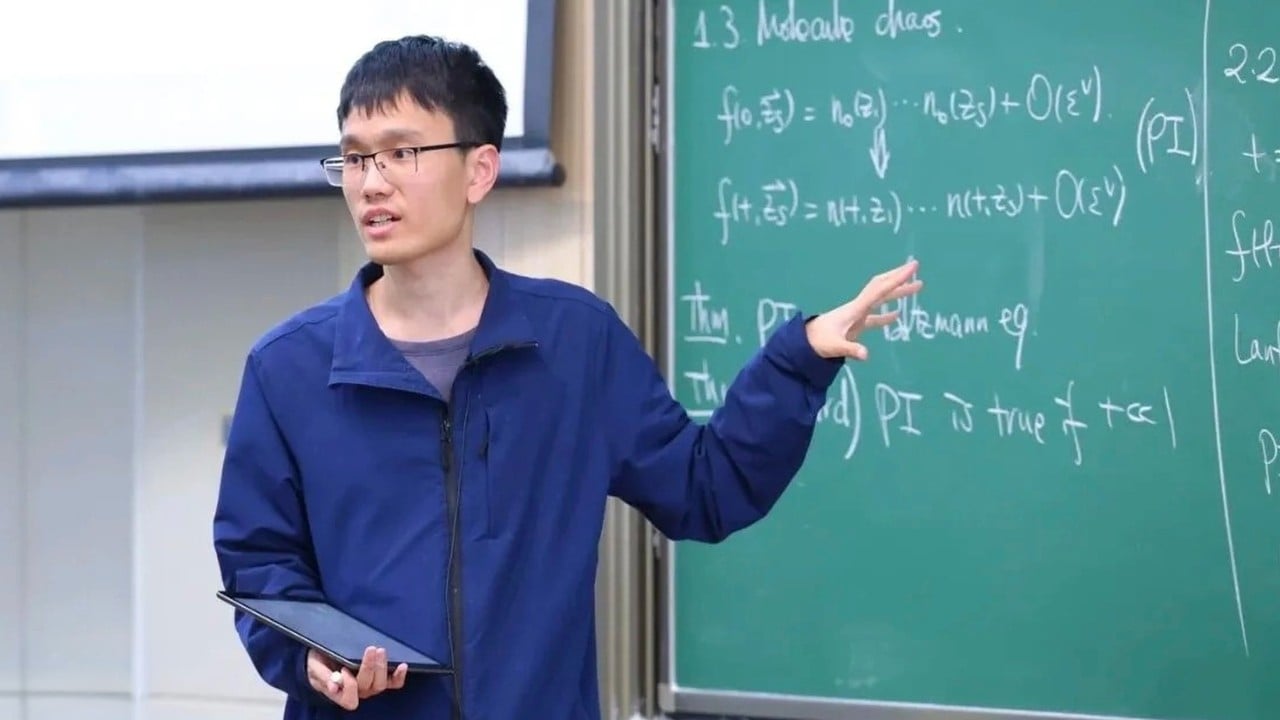
Two years ago, Chinese mathematician Ma Xiao helped crack a century-old puzzle known as the Hilbert’s sixth problem.
The problem – which has baffled generations of mathematical physicists – centres on an elusive bridge connecting the chaotic frenzy of microscopic atoms with the predictable laws of fluid motion.
The breakthrough, published in the Annals of Mathematics, helped propel Ma’s collaborator Deng Yu to the 2026 Fields Medal – the discipline’s highest honour – and secured Ma a coveted faculty post at the University of Michigan.
All the signs were pointing Ma towards a lifetime at the summit of pure mathematics. But instead he has decided, at the age of 28, to take a punt on something new: artificial intelligence.
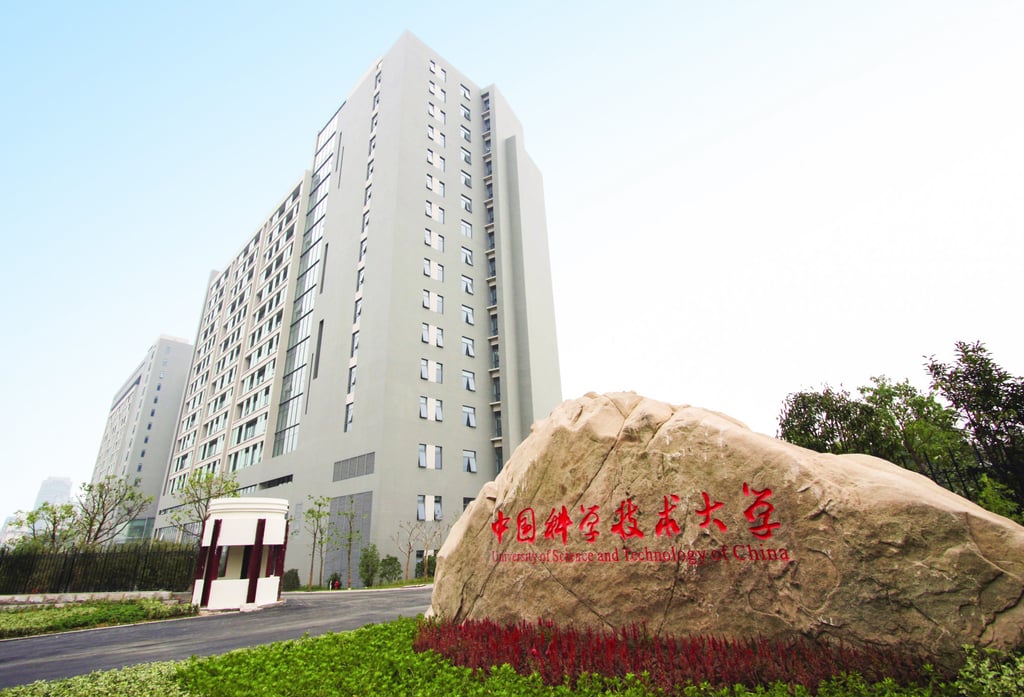
Ma left his job in the United States and this month returned to his alma mater, the University of Science and Technology of China in Hefei.
He has taken up a joint professorship with USTC’s new Artificial General Intelligence Institute and its Institute of Geometry and Physics, according to an announcement from the university on Sunday.
Ma’s return to China represents a dramatic career pivot. Rather than pursuing the next elusive theorem, Ma has positioned himself at the frontier of artificial general intelligence – betting that the future of mathematical discovery will be automated.
The South China Morning Post has contacted Ma for comment.
It was clear from a young age that Ma was a talented mathematician. Born in the central Chinese city of Xinxiang, in Henan, he was reportedly intrigued by a mathematical problem in the sixth grade and began teaching himself university-level calculus.
While other prodigies like Deng went down the path of maths Olympiads, Ma instead enrolled in USTC’s School of the Gifted Young in 2014, when he was 16.
The school was established in 1978 and each year it admits about 40 exceptionally talented children from across China who have not yet completed high school. About 90 per cent of them go on to pursue further studies at academic and research institutions in China and abroad.
After graduating from USTC with a bachelor’s degree in 2018, Ma headed to Princeton University in the US to pursue a doctorate, and in 2022 he began working on Hilbert’s sixth problem.
He worked on the problem with Deng, whom Ma described in an interview with the USTC Alumni Association as a “senior fellow alumnus” from Princeton, and Zaher Hani, his “collaborating mentor during my postdoctoral period”.
Ma graduated with a PhD in Mathematics in 2023, after which he continued his postdoctoral training at the University of Michigan and was appointed to the position of Donald J. Lewis research assistant professor.
He continued working with Deng during his postdoctoral period and in 2024 the team made a breakthrough on Hilbert’s sixth problem. Their results were later accepted by top international journal the Annals of Mathematics.
“Without Ma’s involvement, we would have taken many detours,” Deng told Xinxiang Daily in July after he won the Fields Medal.
02:36
Chinese mathematicians Wang Hong and Deng Yu win prestigious Fields Medal
Now, Ma is taking on a new challenge as he embraces AI in his new role at USTC.
“In the next two to three years, I will likely shift my main focus to agents,” he told DeepTech, the Chinese version of MIT Technology Review, in July.
He said he had already developed an agent system for mathematical proofs called qmd-prover. Ma is also attempting to link idea input, proof, verification, and even paper generation into an automated pipeline.
“I take on students, and Codex, Claude Code and Git are tools they must know,” Ma was quoted as saying. “If you can’t use them, you are very likely an ‘illiterate’ person of the new era.”
USTC launched the Artificial General Intelligence Institute in January, aiming to carry out original research in the field and nurture talent to have an international impact.
KioskNews shows a cleaned-up reading view extracted from the publisher’s page — the original always lives on their site, not ours.