How Brussels sprouts lost their bitterness
Back in the "Leave it to Beaver" days, Brussels sprouts were not exactly America's favorite vegetable. But today they're a runaway hit, with chefs like Ina Garten and Gordon Ramsay singing their praises.
So how did that happen?
We asked Gerardo van den Hoek, a scientist at agricultural seed company Syngenta in Salinas, California, where he's experimenting with future varieties of Brussels sprouts through selective breeding.
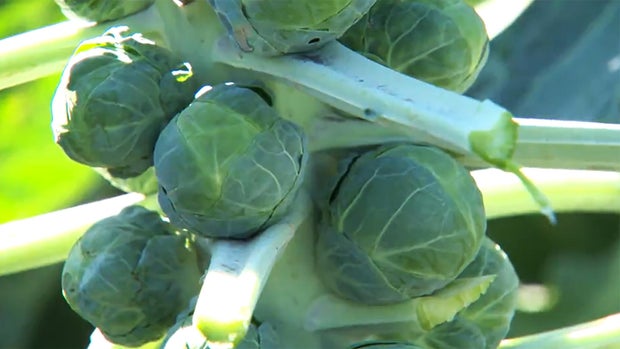
"Decades ago, they started breeding, selecting for sprouts that had less bitterness," van den Hoek said. The plan? "Let's combine a less bitter parent with another less bitter parent and see what happens. And then back and forth, back and forth, back and forth, until you get something that is rather quite nice to eat."
Van den Hoek may be outstanding in his field, but the real genius behind the modern Brussels sprout is a Dutch biochemist named Hans van Doorn. "Most crops get sold and get eaten without any guarantee on taste, flavor or texture," he said. "And my mission is to change that."
In 1988, the company that would become Syngenta hired van Doorn to execute a challenging mission, to "save" their Brussels sprouts. Van Doorn said their request was, "Find out what makes them bitter, and remove it, please,"
Within a year, van Doorn had identified two chemical compounds, sinigrin and progoitrin, that made Brussels sprouts bitter. By 1993, van Doorn had pulled it off: He'd bred the bitterness out of sprouts. When he published his work a few years later, the world rejoiced. "We had a party," van Doorn said, "and I was on the eight o'clock news. I was in the front of the newspapers. It was crazy!"
Thanks to the sweeter sprouts and reinvented recipes, American consumption of Brussels sprouts nearly quintupled. And I like Brussels sprouts now.
"Good to hear," said van Doorn. "And keep on eating them, because they are nice!'
Recipes:
- Brussels Sprouts with Quinoa, Bacon & Grapes (from Hitchcock Farms)
- Orechiette with Brussels Sprouts & Pancetta (from Hitchcock Farms)
- Roasted Brussels Sprouts with Sesame Citrus Salsa (from Hitchcock Farms)
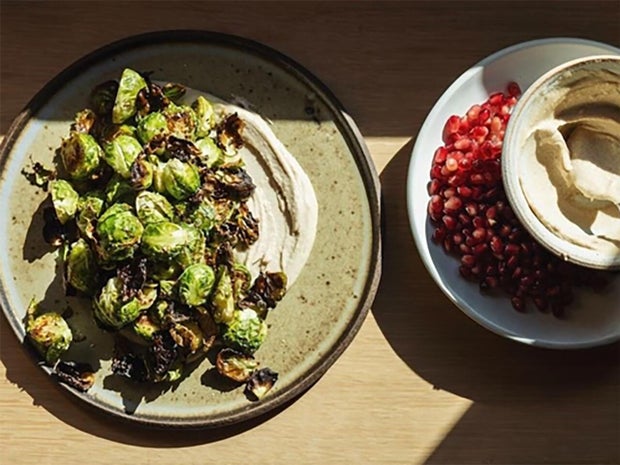
- Roasted Brussels Sprouts with Tahini and Pomegranate (from Hitchcock Farms)
- Sheet Pan Chicken, Brussels Sprouts & Acorn Squash (from Hitchcock Farms)
KioskNews shows a cleaned-up reading view extracted from the publisher’s page — the original always lives on their site, not ours.