Spry 93-year-old Jerusalemite has one message: God's greatest gift is exercise - interview
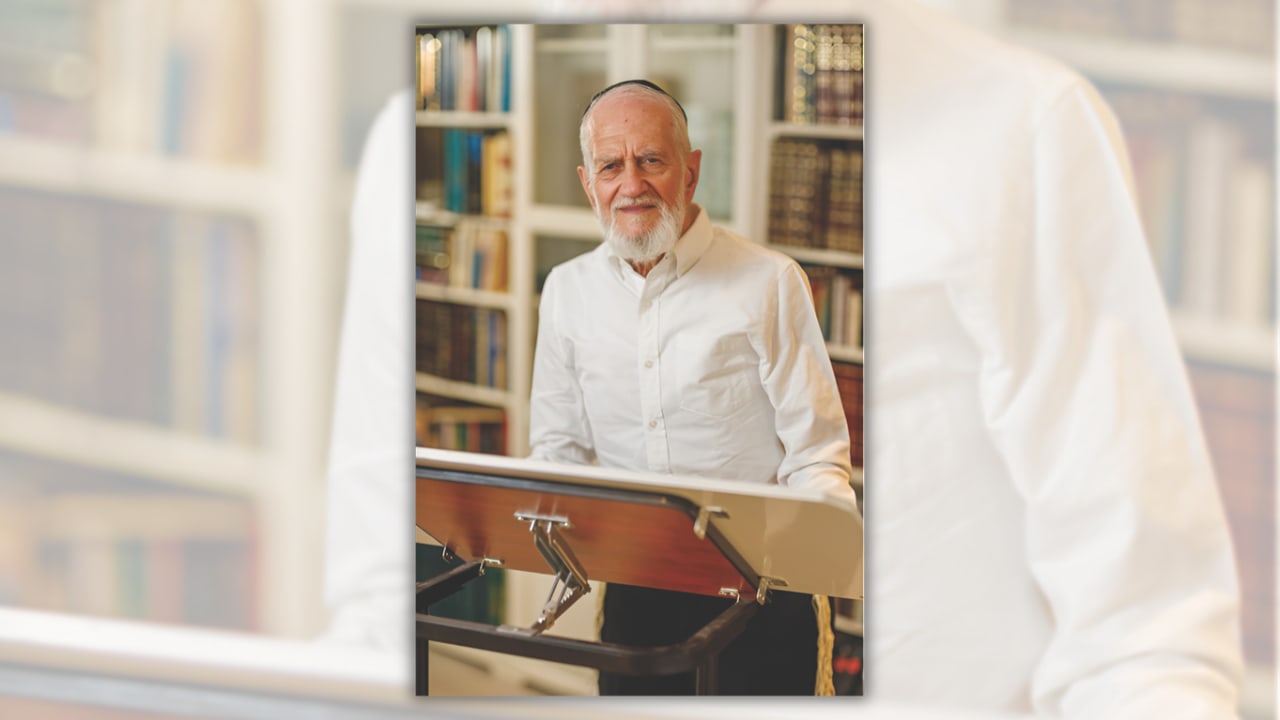
‘The single, most important thing to ensure longevity,” says Michael Kaufman, “is contained in one four-letter word: ‘move.’” While scientific evidence has long shown that regular exercise benefits health and longevity, meeting the 93-year-old Kaufman is living proof.
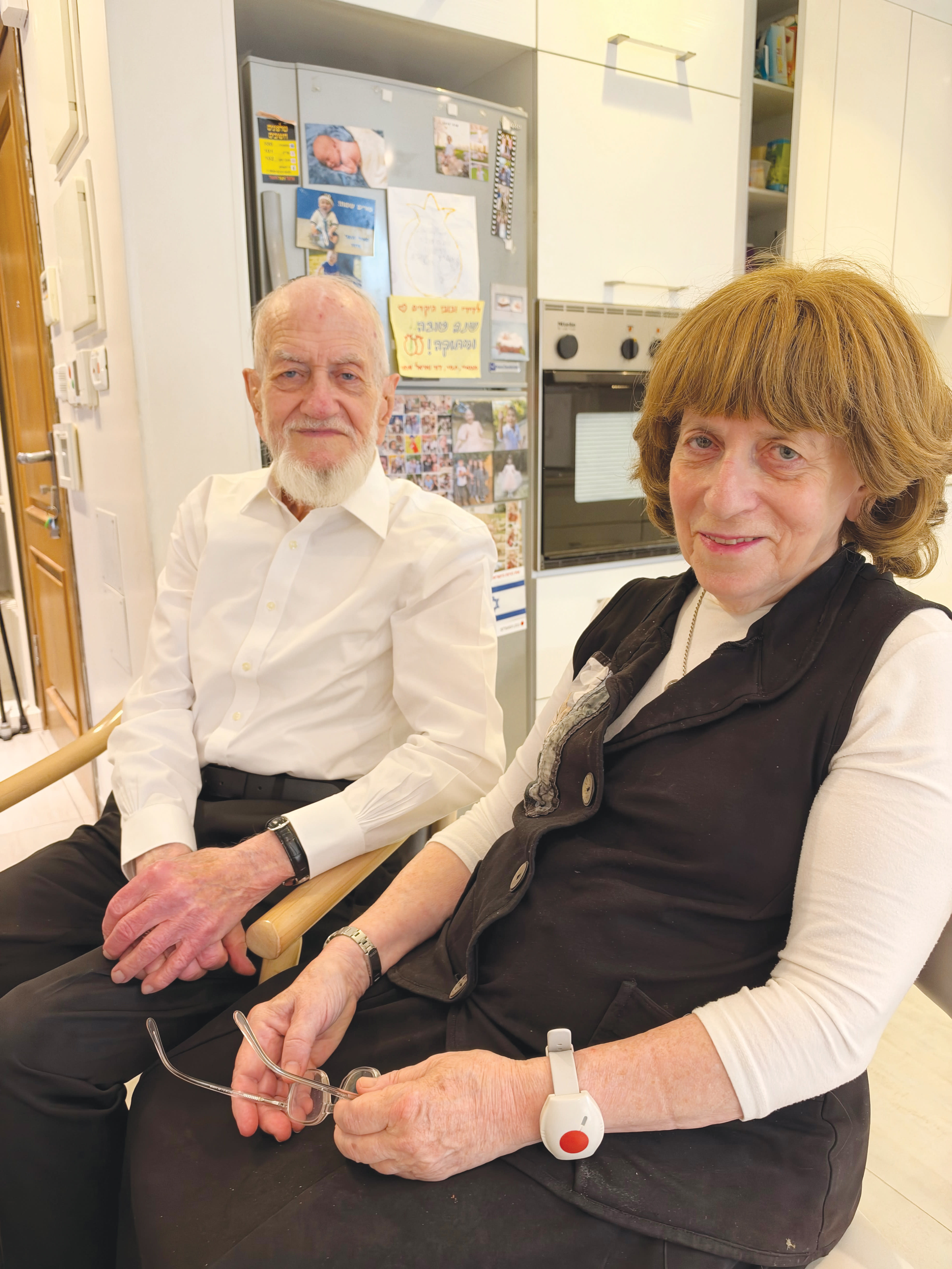
On a recent fall morning, I visited Kaufman and his wife, Marcia, at their spacious apartment in Jerusalem’s Beit Tovei Ha’ir retirement residence to learn about their lives and his strong belief in the benefits of exercise.
Six mornings each week – except Shabbat – the slim and wiry Kaufman, who looks far younger than his years, rises at 4 a.m., recites several preliminary prayers, and then commences a vigorous hour and a quarter of aerobic and anaerobic exercise, beginning with his outdoor ski strider exercise machine, equipped with two foot platforms that move back and forth in smooth motion. Kaufman exercises with beat music playing in his ears to keep him moving at a steady pace. Next, he lifts weights and does chair exercises and calisthenics before heading downstairs to the building’s exercise room, where he uses the rowing machine and does push-ups.
He then returns to their apartment, showers, and walks to the early daily minyan down the street at the Great Beth Midrash Gur. After daily prayers, he returns home, eats breakfast, and works at his computer, which is placed on a lectern so he can work standing up. A sign on a nearby wall shows a figure sitting on a chair inside a circle with a diagonal line through it, with the words “NO SITTING” underneath. On Shabbat, when he does not exercise, he walks to the farthest synagogue he can find in his neighborhood, a 25-minute jaunt each way.
Clearly, Michael Kaufman is an exercise enthusiast. Some might say that he is even a bit extreme. But there is far more to him than meets the eye. Born in Ellenville, New York, in the Catskills, Kaufman grew up in Brooklyn’s Williamsburg section and studied at several well- known yeshivot, including Telshe in Cleveland and Torah Vodaath in New York. He attended Brooklyn College, then moved to Louisville, Kentucky, where he earned his degree from the University of Louisville. Kaufman remained in the Southern city from 1953 until 1956.
Early in his career, Kaufman was a journalist, writing mostly for Jewish publications, including The Jewish Post, a national Jewish weekly. “I was paid one cent per word,” he recalls, smiling.
He also wrote for the Louisville Courier Journal, which was a highly respected newspaper in the 1950s.
Kaufman transitioned from journalism to writing books
Returning to New York several years later, Kaufman struggled to find work in journalism, as most daily newspapers in the area had folded. Reluctantly, he abandoned his journalism career and began writing books on various Jewish topics. Kaufman has penned eight books on topics as disparate as Jewish art, love, marriage and family in Jewish law and tradition, and aliyah. His most recent book, Am I My Body’s Keeper? Be Healthy & Fit, Lose Weight, Live Years Longer, was published in 2018.
In his memoir, In One Era, Out the Other, Kaufman recounts many of the fascinating details of his life, including the prominent rabbis whom he encountered and his interactions with them, his work in Jewish outreach, his visit to the USSR in 1967 to assist the “Jews of Silence,” and his participation in the Selma to Montgomery March with Dr. Martin Luther King in 1965.
Kaufman first visited Israel in 1953 as a member of the US Maccabiah basketball team, and also covered the event, writing for the Jewish Post. Jerusalem had just one traffic light, and he says most people – men and women – wore shorts much of the year because of the heat. “As an observant Jew,” he shares, “I always felt that my home eventually would be in Israel. My parents were not particularly Zionistic, but I just felt it.”
In 1967, several weeks before the Six Day War, Kaufman visited Israel, obtained a Jordanian visa, and managed to convince the Jordanian soldiers at the Mandelbaum Gate, which separated Jewish Jerusalem from the Old City at the time, to allow him to enter through the historic walls.
In 1968, Kaufman made aliyah and opened an antique shop in Caesarea. “It was not profitable except for those pieces that I managed to pick up for myself,” he quips. “I was living in Jerusalem at the time, so it wasn’t easy to run it.” He then opened a series of antique stores in several Jerusalem-area hotels.
Kaufman traveled to the Far East, Asia, and Africa, with his wife, Marcia, seeking quality pieces.
A Barnard graduate and archaeologist who worked on the Southern Wall Temple excavations at the Kotel, Marcia shared an interest in Jewish antiquities with her husband.
Marcia is a talented artist and Hebrew calligrapher, and during my visit, she displayed her impressive portfolio of handwritten, highly decorative marriage ketubot. The couple lived in Shaare Hessed before moving to a spacious apartment opposite the Western Wall, where they lived for 25 years. They then moved to a farm in Moshav Sde Eliezer in the Upper Galilee, and then to Telz Stone. They have lived in Beit Tovei Ha’ir for the past 10 years, and they have four children.
Kaufman's passion: Maintaining health and fitness through exercise
Our discussion soon returns to Kaufman’s passion – maintaining health and fitness through exercise, and persuading others to do the same to be healthy and fit and thereby extend their lives. “As a youngster in the Williamsburg section of Brooklyn, I ran around and played street games with my schoolmates at Yeshiva Torah Vodaath, all of us growing up participating in a variety of sports activities along with our Torah and secular studies,” Kaufman recalls. “We all liked sports, and we were all active as youngsters. It remained a secondary, but very integral, part of my life.
“As I matured, I noted that a lot of people were dying relatively young, including former school friends. It was no coincidence, I concluded, that as they matured, they often became physically inactive adults, and, consequently, their bodies deteriorated. Maimonides, the Rambam, urges people to exercise daily in his monumental code of Jewish law and in many medical works he wrote about 900 years ago. Based on hundreds of scientific studies involving millions of people worldwide, scientists today agree. Regular exercise is life-extending – by years.”
“Kaufman’s book on exercise was published eight years ago, but he still receives calls and emails almost daily from people interested in learning more about his views on the importance of exercise in Jewish life.
“People call me and contact me, and I’m very happy because that’s why the book was written. It certainly wasn’t for any monetary reason. I write because I feel it can help people.”
Interestingly, he has received pushback from some Orthodox Jews who have rebuffed his entreaties to get in shape. “Observant Jews often reply, ‘Look, God takes care of me. He has a time for me, and He knows how long I’m going to live.’”
To those who express this point of view, Kaufman says, “Yes, God does determine how long you live, but you can determine whether to increase that figure or decrease it. God gave us the means.”
Kaufman cites a verse from Deuteronomy (4:15) that reads, “You must guard yourselves greatly.” Says Kaufman, “This tells us to take care of our lives.” Unlike other commandments of the Torah, he explains, the Hebrew text adds the word “me’od,” which means greatly, or much. “God knows human beings, and they need a little push now and then.”
He chuckles as he describes how gym attendance spikes after New Year’s, when people make their resolutions, and then declines in the weeks that follow. The key to maintaining an exercise routine, he says, is to make it into a habit. “Put it between two things in your schedule that you do, that you don’t think about, that are habitual. In between those two items, you fit that in.”
Kaufman extols the value of exercise and says it is the “most healthy pill, most life-prolonging, life-extending pill. You don’t have to pay money for a gym to go ahead and do it, or for a swimming pool. You can do it in your home.”
He gives talks to the residents at Bet Tovei Ha’ir in Hebrew and in English on the value of exercise and encourages them to work out. What if someone doesn’t want to take the idea of exercise to an extreme, I ask. Is walking sufficient?
While a nice stroll is good, he says the best type of walking is moving your arms back and forth while you walk. Kaufman stands up from his chair and demonstrates what truly vigorous walking should look like.
How does Kaufman spend the rest of his day, after exercise? Does he take naps? He speaks highly of the lectures and programs at Bet Tovei Ha’ir and says he is continuing his studies on the Jewish values of exercise. “I’m doing research, and I’m writing in the area of health and fitness. During the day, I will take a five- or 10-minute rest. I have a recliner if I get weary. But work and using the body turns me on. I lead a full life, thank God.”
As our interview approaches its conclusion, Kaufman reveals that he often approaches observant Jews who smoke cigarettes and attempts to convince them to stop. “I know that I have only a few seconds to get my message across. I stand with him, and I arrange so that in those few seconds, I have his attention and interest. He sees that I’m interested in talking with him. I say, ‘You are violating one of the Ten Commandments.” Most people, he says, are puzzled by his comment, and review the commandments in their mind. After a moment, Kaufman says to them, “You are violating the commandment of ‘You shall not murder.’ You are killing yourself.” He admits that he is not certain if his approach is always effective, but he cannot stand by and say nothing.
Kaufman’s approach to health and exercise can be best summed up in the following comment at the end of our conversation. “God’s greatest gift to humans, to human health, is free. And it’s called exercise. And the results are evident.”
Energized by our spirited discussion on the value of exercise, I leave the Kaufmans’ apartment and head upstairs to the main lobby. Shall I take the stairs or the elevator? Why the stairs, of course. ■
KioskNews shows a cleaned-up reading view extracted from the publisher’s page — the original always lives on their site, not ours.