Who will shoulder the debts behind Indonesia’s China-backed Whoosh railway?
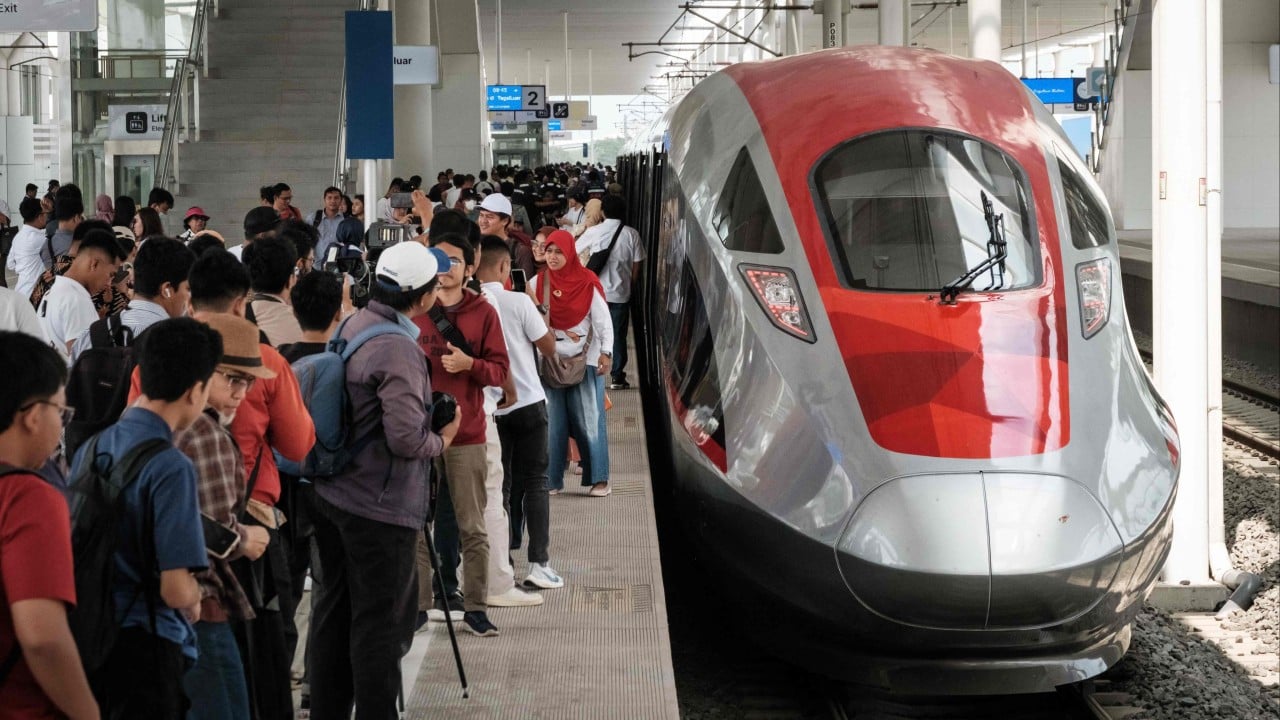
Indonesia’s finance ministry is preparing to absorb debt payments for Whoosh, the China-funded high-speed railway connecting Jakarta and Bandung, in a move officials say will ease financial pressure on the state-owned enterprises that built and operate the line.
The government has argued that the burden is manageable after the debt was restructured over 80 years, requiring annual instalments of about 1 trillion rupiah (US$56.5 million). But the plan has also raised concerns that taxpayers are being left to subsidise a project that has strained state firms after its budget ballooned from an initial US$6.02 billion to about US$7.3 billion.
The railway connects the Indonesian capital to West Java’s provincial capital in 45 minutes, far faster than driving, which can take up to three hours.
Whoosh is operated by Kereta Cepat Indonesia-China (KCIC), a joint venture between a Chinese consortium and an Indonesian state-owned consortium led by national rail operator Kereta Api Indonesia (KAI).
KioskNews shows a cleaned-up reading view extracted from the publisher’s page — the original always lives on their site, not ours.