Booker Prize 2026: 81-year-old M John Harrison becomes oldest-ever winner
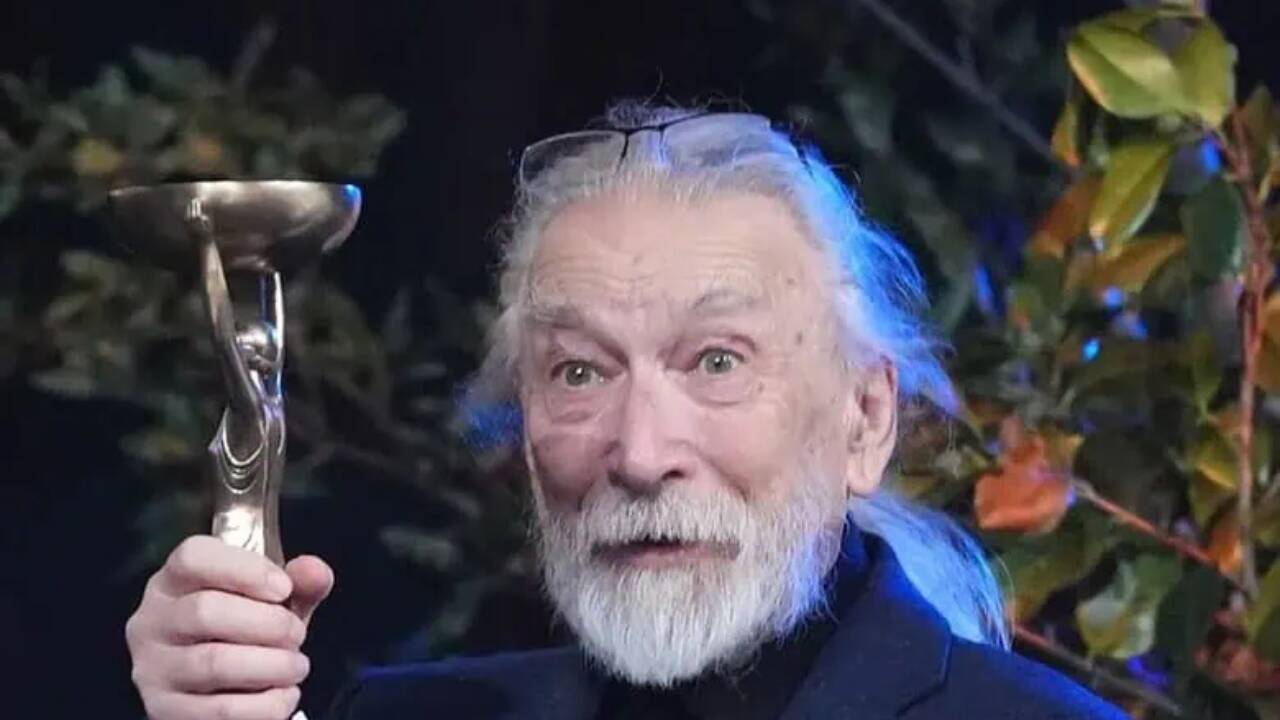
Who is M John Harrison? Meet the 81-year-old Booker Prize 2026 winner, the oldest ever to win the prize
When most writers reach their eighties, you might expect them to be reminiscing about the past, maybe slowing down a bit, or simply taking stock of a long, varied career. Not M. John Harrison.
Instead, he stormed right into history, grabbing the Booker Prize at 81, making him the oldest recipient ever. The win? For his biting, boundary-pushing dystopian novel, ‘The End of Everything’. This isn’t just another trophy for Harrison; it’s a big deal for science fiction in general, breaking the mold of what the Booker usually rewards. He’s the first author from the science fiction world to claim the prize, and suddenly, the established lines between “literary” and “genre” fiction look a whole lot blurrier.The ceremony itself took place at London’s Old Billingsgate on November 9, 2026, with a crowd hungry for drama. This wasn’t just Harrison’s first Booker nomination—it was a landslide win, with every judge voting for him. Classicist Mary Beard, leading the panel, praised his novel’s dark humor, wild imagination, and a surprising slice of optimism that cuts through the gloom. Along with the £50,000 prize and trophy, Harrison outshone heavyweights like Douglas Stuart and Marlon James (both previous winners) plus three other finalists.
After six decades of storytelling, Harrison finally saw his brand of genre-defying magic celebrated at literature’s top table.
Who is M John Harrison?
Born in Rugby, Warwickshire, in 1945, Michael John Harrison, better known as M. John Harrison, has worn just about every literary hat. Novelist, short-story writer, critic, even memoirist. Per The Guardian, Harrison started early, selling his first story back in 1965. By 1969, he was on staff at New Worlds, the UK's legendary speculative fiction magazine.
He stayed until 1978, tangled up in the movement that pushed science fiction and fantasy past their old boundaries, insisting these genres could be as layered and sharp as anything else.Now, Harrison’s writing isn’t easy to categorize. He blends speculative fiction with psychology and social critique, and he doesn’t stick to traditional narrative forms. His stories probe uncertainty, lost memory, alienation, and all the ways people try (and fail) to comprehend their world.
He doesn’t lay things out neatly. Instead, his words challenge you to question everything, and maybe even feel a little lost.He’s had plenty of hits before ‘The End of Everything’. Harrison’s Viriconium series and the Kefahuchi Tract trilogy left deep marks on science fiction and fantasy readers. He’s also put out a stack of story collections, criticism, and, recently, an offbeat memoir titled ‘Wish I Was Here’ that came out in 2023.
Despite never really fitting into the mainstream, Harrison has picked up some big awards: the Boardman Tasker Prize for ‘Climbers’ (1989), the Arthur C.
Clarke Award for ‘Nova Swing’ (2007), and the Goldsmiths Prize for ‘The Sunken Land Begins to Rise Again’ (2020). He even judged the Booker Prize in 2022, which, in hindsight, seems like a role reversal now.
‘The End of Everything’: What is it about?
Harrison’s Booker-winning novel, published by Serpent’s Tail, is set on England’s southeastern coast in the ruins of a future society.
Per AP News, the landscape is battered by a mysterious catastrophe called “the Event,” which changed everything. At the center is Phillip Tennent, a scavenger living with his elderly aunt, Marnie. They survive amid new, cryptic beings dubbed the “iGhetti” — their origins a puzzle, their motives unreadable.
One day, Phillip finds a bizarre, shape-shifting artefact left by the iGhetti. He brings it to Marnie’s home, and things get strange fast.
The artefact starts to grow, then “speaks” in its own disturbing way. Suddenly, Phillip and Marnie are facing a world where nothing makes sense anymore: familiar rules, explanations, social order, all shattered.What’s striking is that it’s a slim novel, with just 198 pages. In fact, it’s the shortest on the Booker shortlist that year. Harrison doesn’t waste space, though. The book is a wild mix of dystopia, satire, speculative drama, and social critique.
The judges were floored. Harrison explained that his inspiration came after the 2008 global financial crisis. He wanted to see what happens when ordinary explanations collapse, but everyday life keeps chugging along anyway.
Why is Harrison’s Booker win matter?
His age, for one. At 81, he blew past Margaret Atwood’s previous record; she was 79 when she split the prize in 2019. But even bigger is the genre: sci-fi has rarely touched the Booker. Sure, some previous winners flirted with futuristic or strange ideas, but Harrison is the first real, dyed-in-the-wool science fiction author to win.
Gaby Wood, who runs the Booker Prize Foundation, calls Harrison a true original, someone willing to shake up those old literary boundaries.
And Harrison himself? He’s spent years arguing that good writing transcends genre, and that science fiction deserves a seat at the grown-ups’ table. His win proves it.
Who else was in the running this year?
The 2026 shortlist was tough, whittled down from 163 submissions. Harrison beat out Marlon James (‘The Disappearers’), Douglas Stuart (‘John of John’), Elizabeth Strout (‘The Things We Never Say’), Luke Kennard (‘Black Bag’), and Rebecca Perry (‘May We Feed the King’).
James and Stuart were especially formidable, both former Booker champs. The judging panel was stacked: Mary Beard, poet Raymond Antrobus, musician Jarvis Cocker, journalist Rebecca Liu, and novelist Patricia Lockwood.
Each shortlisted writer pocketed £2,500, as Harrison took the £50,000 prize.After winning the prize, Harrison spoke about the need to let fiction cross boundaries, refusing to tie stories down to marketing categories. Looking back at his novel’s bleak setting, he left open the possibility of relief, even a glimmer of hope, at the end. For Harrison, who’s never liked fitting in, the victory isn’t just personal; it matters a great deal because science fiction itself gets a nod of respect from the mainstream.
And at an age of 81, Harrison reminds everyone that literary reinvention and recognition aren’t just for the young. Sometimes, the most unexpected triumphs come right at the end of the road.
KioskNews shows a cleaned-up reading view extracted from the publisher’s page — the original always lives on their site, not ours.