Apple TV’s 5-Season Sci-Fi Spectacle Delivers a Masterclass in Worldbuilding


Julio is a Senior Author for Collider. He studied History and International Relations at university, but found his calling in cultural journalism. When he isn't writing, Julio also teaches English at a nearby school. He has lived in São Paulo most of his life, where he covers CCXP and other big events. Having loved movies, music, and TV from an early age, he prides himself in knowing every minute detail about the things he loves. When he is older, he dreams of owning a movie theater in a small countryside town.
Sign in to your Collider account
When watching science fiction, feeling immersed in the story's universe goes a long way in getting the viewer to like it — if you feel like you're part of that world, you'll never forget it. That's the power of worldbuilding, the narrative process through which storytellers create the settings of their stories, from the environment to its "rules." And, right now, there is no better sci-fi work to properly understand worldbuilding than Apple TV's For All Mankind. It's set right here, on Earth, over a timeframe that comprises most of our lifetimes, but in a completely different timeline. While everything is familiar enough for the viewer to feel "at home," its world is wildly imaginative in how it's built, making this series a true masterclass in this subject.
In ‘For All Mankind,’ the Space Race Never Ended
Right now, the world is experiencing a sort of "space age renaissance" of sorts, but in For All Mankind, the Space Race never ended. The series begins with the USSR landing a cosmonaut on the Moon before the US, which is enough to set that world on a completely different path from our own. Now, NASA and the government need not only to understand why they were beaten, but also to double down on achieving the next big milestone and take the lead. The Soviets also don't want to be overtaken, and so the space race continues.
COLLIDERInteractive
Crew Projection
Sci-Fi/Quizzes/Hero Match
PAUL ATREIDESCAPTAIN KIRKPRINCESS LEIAELLEN RIPLEYMAX ROCKATANSKY
Collider QuizWhich Sci-Fi Hero
Are You8 Questions · 5 LegendsFive iconic heroes. Five completely different ways of facing an impossible universe. One of them shares your instincts, your values, and your particular way of refusing to back down. Eight questions will tell you which one.On The Manifest
Paul Atreides
Captain Kirk
Princess Leia
Ellen Ripley
Max Rockatansky
Jump 01 / 080% Plotted
Question 01LEADERSHIP
01How do you lead when the stakes couldn't be higher?The way you lead under pressure is the most honest thing about you.
Pick one, then Next
Jump 02 / 0812% Plotted
Question 02STRENGTH
02What is your greatest strength in a crisis?The quality that keeps you alive when everything else fails.
Pick one, then Next
Jump 03 / 0825% Plotted
Question 03MOTIVATION
03What is the thing you'd sacrifice everything else for?Your deepest motivation is your truest compass.
Pick one, then Next
Jump 04 / 0838% Plotted
Question 04PEOPLE
04How do you relate to the people around you?Who you are to others under pressure is who you really are.
Pick one, then Next
Jump 05 / 0850% Plotted
Question 05THREAT
05You're facing a threat that no one else believes is real. What do you do?How you respond when you're the only one who sees it defines everything.
Pick one, then Next
Jump 06 / 0862% Plotted
Question 06COST
06What has your heroism cost you personally?Every hero pays. The question is what, and whether they'd pay it again.
Pick one, then Next
Jump 07 / 0875% Plotted
Question 07RULES
07How do you feel about the rules of the world you're in?Every hero has a relationship with the system. What's yours?
Pick one, then Next
Jump 08 / 0888% Plotted
Question 08PURPOSE
08When everything is on the line, what keeps you going?The answer is the most honest thing about you.
Pick one, then Next
Your Hero Has Been IdentifiedYour Sci-Fi Hero Is
Your answers point to the iconic sci-fi hero who shares your instincts, your values, and your particular way of facing the impossible.
DunePaul AtreidesArrakis · Dune, 2021The hero who knows exactly what becoming one will cost.
You carry a weight most people would crumble under: the knowledge of what you're capable of, and the burden of what you might have to become.Why This Is You
- You see further ahead than others and you plan accordingly, even when the vision frightens you.
- You are driven by loyalty to your people and a sense of destiny you didn't ask for but can't escape.
- Paul Atreides is not simply a hero. He is someone who understands the cost of power and chooses to bear it anyway.
- That gravity, that willingness to carry what others won't, is exactly you.
From The Collider File
- Dune: Part Three closes Denis Villeneuve's trilogy on December 18, 2026, adapting Dune Messiah.
- Messiah is the book that turns on its own hero, which is why Villeneuve waited to film it.
Sees It ComingCarries The WeightArrakis
Star TrekCaptain KirkUSS Enterprise · Star Trek, 1966The captain who refuses to accept that a no-win scenario exists.
You lead with instinct, warmth, and an absolute refusal to accept a no-win scenario, because you've always believed there's a third option nobody else has thought of yet.Why This Is You
- You take the mission seriously without ever taking yourself too seriously.
- Your crew would follow you anywhere, not because you demand it, but because you've earned it.
- Kirk's genius isn't tactical, it's human. He reads people, bends rules with purpose, and wills outcomes into existence through sheer conviction.
- That combination of warmth, audacity, and relentless optimism is unmistakably yours.
From The Collider File
- Paul Wesley's Kirk took the center chair in Strange New Worlds season 4, which premiered July 23, 2026.
- The producers have confirmed Kirk stays with the show through its final season.
No-Win ScenarioCrew FirstStarfleet
Star WarsPrincess LeiaThe Rebellion · A New Hope, 1977The one who holds the line when the line is all that's left.
You are the kind of person who holds the line when everyone else is losing faith, not because you're fearless, but because giving up simply isn't something you're capable of.Why This Is You
- You lead through conviction. Your voice carries because your belief is unshakable.
- You gave up everything ordinary the moment you chose the cause, and you've never looked back.
- Leia is not a supporting character in her own story. She is the moral center of the entire rebellion.
- That same fierce, principled, unbreakable core is what defines you.
From The Collider File
- Carrie Fisher was 19 when she shot A New Hope, and Leia's first scene in the saga is a refusal.
- Lucasfilm ruled out recreating her digitally, so her last appearance was built from footage she had already filmed.
Holds The LineThe CauseRebellion
AlienEllen RipleyThe Nostromo · Alien, 1979No speeches. Just the person still standing at the end.
You are not reckless, not grandiose, and not particularly interested in being anyone's hero. You just refuse to stop when it matters.Why This Is You
- You see threats clearly, you document the truth even when no one listens, and when the time comes you handle it yourself.
- Ripley's heroism is earned, not performed. She doesn't have a speech. She has a plan and the nerve to see it through.
- You share her composure under the worst possible pressure, and her refusal to pretend the monster isn't there.
- When it counts, you don't flinch. That's everything.
From The Collider File
- FX renewed Noah Hawley's Alien: Earth for a second season, pushing the franchise onto the home planet.
- Sigourney Weaver has said she is seriously weighing a return to Ripley after reading a new script.
No SpeechesHandles ItNostromo
Mad MaxMax RockatanskyThe Wasteland · Mad Max, 1979Lost everything, kept going anyway.
You have been through fire that would break most people, and what came out the other side is something the world underestimates at its peril.Why This Is You
- You don't ask for help, don't need validation, and don't wait for anyone to tell you the rules no longer apply.
- Your loyalty, when it finally arrives, is absolute, but it's earned in silence and tested in action, not in words.
- Max is not a nihilist. He is someone who lost everything and found, against his will, that he still has something worth protecting.
- That bruised, stubborn, ultimately human core is exactly yours.
From The Collider File
- George Miller has a script for the next Mad Max, The Wasteland, but has said only that we will see whether it gets made.
- The 1979 original was shot for a few hundred thousand Australian dollars and became one of the most profitable films ever made.
Outlasts ItEarned LoyaltyWasteland
Crew Match
1· · ·0%
2· · ·0%
3· · ·0%
Copied
A Collider InteractiveCOLLIDERMore quizzes at collider.com
Over five seasons, For All Mankind explores the increasingly dramatic consequences of this historical divergence. Each season is set in a different decade, focusing on the next steps of space exploration. In Season 2, the Moon becomes another battleground in the Cold War. By Season 3, the focus shifts to Mars, with several players competing to become the first to reach it. In the fourth season, humanity attempts to establish a more permanent presence there, while the fifth examines all the implications of human ambitions beyond Earth.
All that might sound like a lot, but it's actually what the series is really all about: imagining what humanity might have accomplished if the technological and political momentum of the 1960s had continued uninterrupted. Its greatest achievement is making this hypothetical and increasingly extraordinary future feel like the natural consequence of events that began with a single different historical moment. The characters and their stories are the vehicle that takes us there, but the world itself is the main sight.
‘For All Mankind’s Premise Makes Worldbuilding a Central Part of Its Story
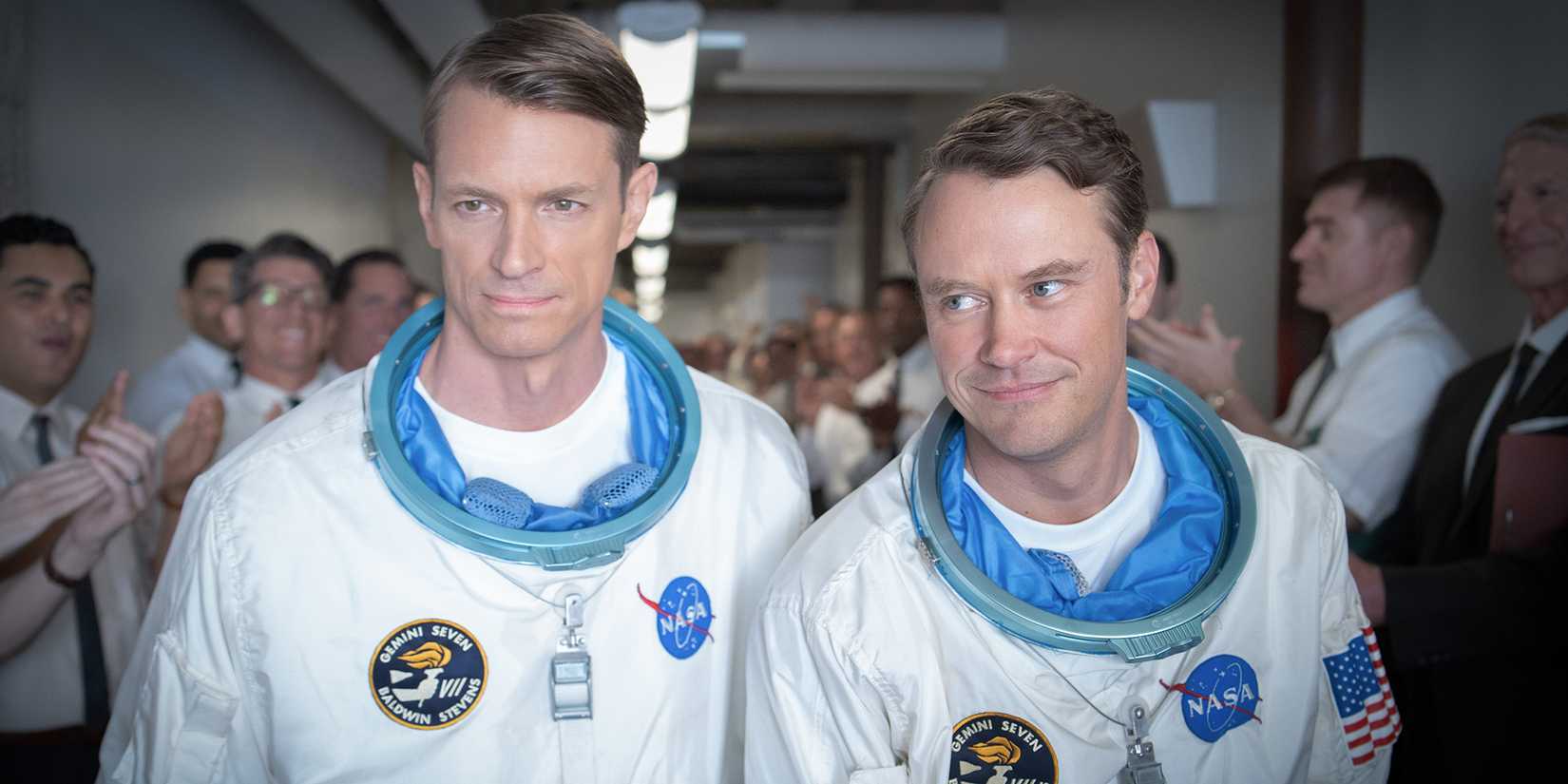
With such a huge timeframe, For All Mankind is more of a generational saga rather than a single individual story, and it's through these people's eyes — especially astronaut Ed Baldwin (Joel Kinnaman) and his family — that we experience how different their world becomes from ours. A lot must happen before any rocket can leave the ground, though. That's where most of the worldbuilding takes place and what makes this series so special, as it spends just as much time setting all that up on Earth as it does among the stars.
The Soviets arriving first on the Moon has some serious ramifications. No US President wants to be the one who "lost the Moon," so investments in space exploration increase on both sides of the Cold War. This leads to technological advancements coming to the population much earlier than they do in real life. Personal computers and electric cars are on the market by the 1980s, for example, as well as screens becoming the norm for long-distance communication instead of phones.
Naturally, the political arena is impacted, too. Space exploration sees the rise of some unlikely heroes on both sides, leading to some crucial (and rather weird) differences from our world. Progressives and conservatives trade places multiple times, with some unlikely candidates becoming world leaders instead of those we learn about in school. Ted Kennedy beats Richard Nixon by cancelling his trip to Chappaquiddick, show character Ellen Wilson (Jodi Balfour) wins the 1992 election over Bill Clinton, and because Ellen wins the election she also pushes forward the legalizing of same-sex marriage in 1998. The series leans into all of the what-ifs of American history without ever lingering too long in any one major change.
‘For All Mankind’ Still Uses Real-World History To Base Much of Its Own Alternative Reality
With every new season of For All Mankind, an archival-style montage helps to ease the viewers into the new decade, getting them up to speed about everything that happened in the world between one season and the other. With every major development, the series' timeline grows more and more distant from ours, but everything is still rooted in real historical foundations. Regardless of how different things might be, there is always some common ground between fiction and reality, including political personalities and NASA personnel.
Among the many what-ifs, it's particularly interesting how the series uses real-world events like the rise of tech billionaires in the private sector to add new players to its imagined Space Race. By the 1990s, they are already a key part of exploration, with enough power to stand up to both the US and the USSR, sometimes even forcing them to cooperate. Soon enough, other space-faring countries also rise to prominence, just as developing countries like the BRICS became important in the international arena in the 2000s, too.
Worldbuilding in alternate history, like For All Mankind, is a challenge in itself, as it demands a solid foundation in reality. Finding the balance between what is real and its plausible imagined ramifications can be tricky, but For All Mankind does it in a way that allows it to become an inspiration instead of a dark mirror. Instead of feeling detached from our world, this makes us even more connected; what separates us from that are only a few different outcomes and decisions, so why not chase them?
For All Mankind is streaming on Apple TV.

For All Mankind
- Release Date
- November 1, 1989
- Runtime
- 80 minutes
- Director
- Al Reinert
KioskNews shows a cleaned-up reading view extracted from the publisher’s page — the original always lives on their site, not ours.