Hong Kong lawmakers defend CUHK ordinance changes as move to boost governance

Lawmakers have defended proposed amendments to the ordinance of the Chinese University of Hong Kong (CUHK), saying the changes will strengthen how the institution is governed.
Legislators Jonathan Leung Chun and Bill Tang Ka-piu, who sit on the institution’s governing council, said on Thursday that much of the ordinance’s content had failed to keep pace with current societal and legislative changes, necessitating the amendments.
They also said the amendments aligned with the city’s ambition to become an international education hub.
“We hope to excel in our role as this international education hub, so the amendments precisely demonstrate our commitment to promoting internationalisation and the expansion of industry-academia-research collaboration,” Leung said.
“We hope that after we amend the ordinance, we can enhance our governance effectiveness while respecting the history of CUHK.”
The proposal was submitted last week to the Legislative Council by Leung, Tang and two other lawmakers who also sit on the council.
Under the proposal, the statutes, regarded as the by-laws or governing regulations of CUHK, would no longer be treated as subsidiary legislation, which must be introduced and vetted by the Legco.
The amendment would also make the council the “supreme governing and executive body” of the university.
The changes will give the institution greater autonomy over its governance and the hiring and firing of top management, bringing it in line with most of the city’s other public universities.
If the bill passes, the governing council would only need to meet the vote thresholds required at council meetings to change the rules governing CUHK’s student union, senate, colleges and other matters.
Under the proposal, the power and duties of the university senate, which is the highest academic governing body of an institution, would be subject to “direction by the council”, instead of “review by the council” as before.
The council would also have the power to directly dismiss the vice-chancellor, pro-vice-chancellors, college heads or faculty deans on grounds including misconduct, incompetence and inefficiency, by meeting the vote threshold.
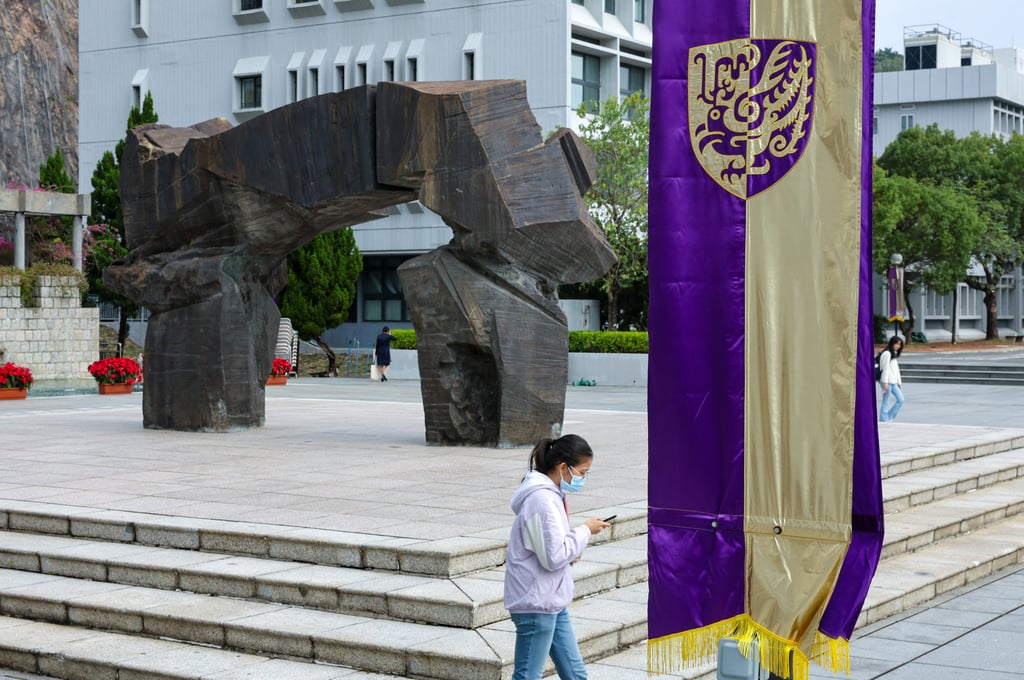
Under the current rules, the council must, if requested to do so by the individual or by any three council members, appoint a committee of council and senate members to investigate and report the allegations before removing a senior officer or professor.
Leung said a purpose of the amendments was to streamline procedures, and the change would not lead to a lack of checks and balances.
“Our entire governing council is taking on the full responsibility to carry out this action, and as always, there are many different appeal mechanisms in place,” he said.
The proposal also prohibits the unauthorised use of the university’s title to safeguard its reputation, goodwill and intellectual property rights.
Tang explained that its intent was to prevent unauthorised parties from misappropriating or hijacking the university’s name, whether for commercial or other purposes.
“University development places a strong emphasis on knowledge transfer and industry-academia-research collaboration,” he said.
“If CUHK is constantly or too easily utilised by commercial enterprises or various organisations for differing purposes, I believe it will create uncertainty for one of our fundamental development goals – knowledge transfer and research translation.”
The proposal will be discussed by the Legco’s panel on education on December 4.
KioskNews shows a cleaned-up reading view extracted from the publisher’s page — the original always lives on their site, not ours.