Meloni’s test: Italy’s street violence and Europe’s crisis of power - opinion
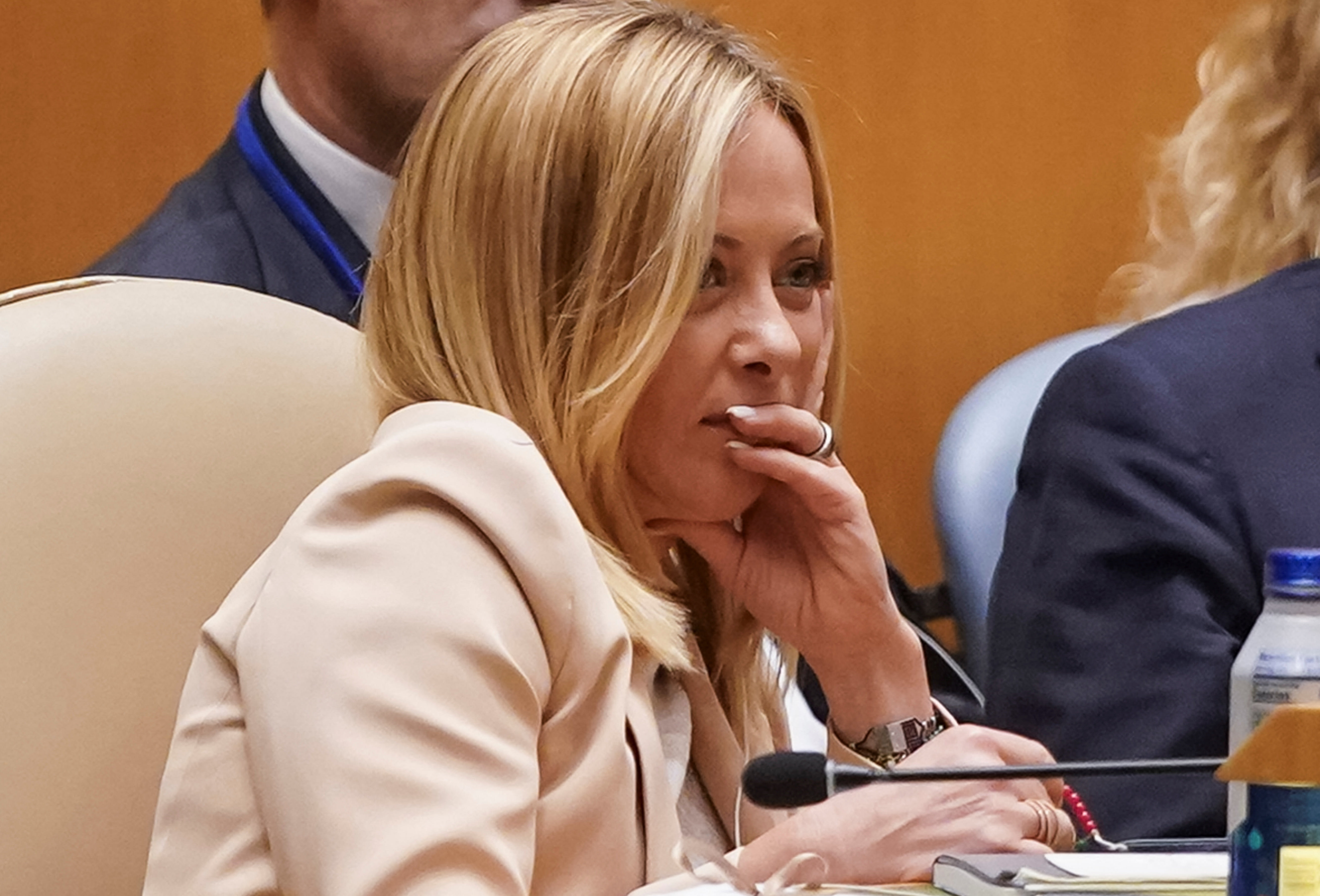
“Hooligans exploiting protests to sow chaos, attack those responsible for security, and hold entire cities hostage.” This was how Italian Prime Minister Giorgia Meloni described the wave of violence unfolding across Italy’s streets. “The right to protest is legitimate; turning our cities into ruins is not,” she wrote on X/Twitter.
What began as localized unrest in Milan is rapidly escalating into a national crisis, spreading to Rome, Turin, Bologna, Naples and Florence. Italy now stands at the center of a geopolitical snowball rolling across Europe.
In Rome, the Italian General Confederation of Labour (CGIL) trade union confederation’s call for a general strike on November 20 – just days before expected elections on December 4 – adds an explosive political catalyst to an already volatile atmosphere.
The Middle East war as a force multiplier
In Milan, Italy’s economic engine, damages are already estimated in the millions of euros following looted shops, torched infrastructure, and severe blows to the city’s image as a global capital of fashion and tourism.
Simultaneously, street violence, labor strikes, and truck-driver blockades in the south are choking supply chains, halting factories, and fueling inflation.
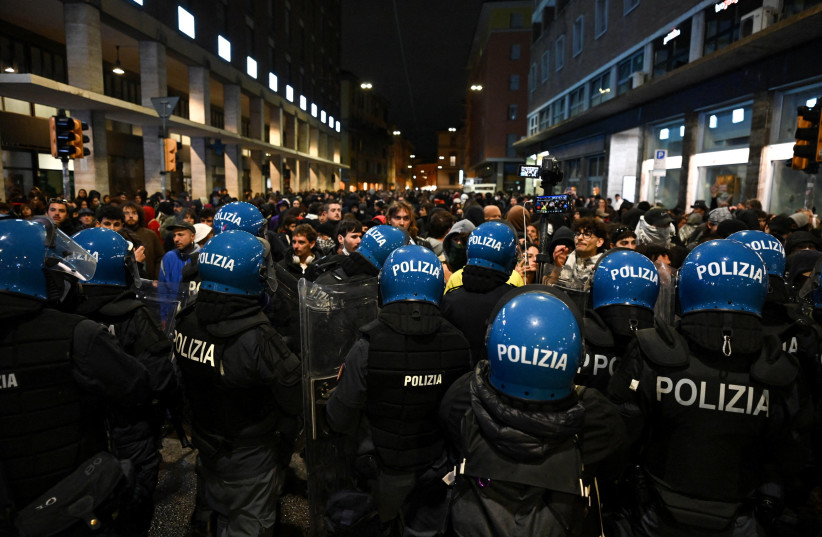
The war in the Middle East acts as both a catalyst and a force multiplier. Economically, surging fuel and energy prices deepen public hardship. Politically, the conflict provides an ideological and rhetorical framework that fuses anger over the cost of living and rising defense budgets with anti-Western radicalism and pro-Palestinian solidarity.
Scenes of violence – marked by the burning of Israeli and American flags, Hamas-aligned messaging against the war in Gaza, and anti-migrant incitement – are straining public budgets, deterring foreign investors, and undermining the sense of social stability.
This is not a passing episode; It is a fundamental crisis of state legitimacy.
Meloni’s hard line vs. European hesitation
In response, Meloni’s government has taken a firm course: deploying hundreds of soldiers to urban centers, enacting emergency decrees, and imposing harsher criminal penalties of up to five years in prison alongside heavy fines.
Meloni has also pledged to toughen the response to attacks on police officers and business owners. This strategy stands in stark contrast to France’s hesitant approach, which has struggled to project authority or contain urban anarchy.
Meloni’s hardline approach may serve as a model for center-right and right-wing governments across Europe seeking to restore public order.
This need is particularly acute given the rapid mobilization on social media, where a disparate coalition has emerged: students, social activists, pro-Palestinian organizations, the radical Left, neo-fascists, and extremist elements within migrant communities.
Italy, for now, has become Europe’s testing ground in the struggle to preserve state authority before unrest escalates into a regional tsunami.
Economic strain and geopolitical risk
The convergence of street riots, transport disruptions, and heavy-handed enforcement carries severe macro-level consequences. As the European Union’s third-largest economy (with a GDP of $2.55 trillion in 2025), Italy carries the eurozone’s heaviest debt burden: roughly €3.095 trillion, or 137.1% of GDP.
Internal turmoil threatens to deepen political polarization, damage trade and tourism, and rattle financial markets, transforming a national crisis into a systemic shock for the eurozone. For both France and Italy – the block’s strongest economies after Germany – domestic instability directly undermines monetary stability, placing immense pressure on the European Central Bank.
Furthermore, domestic turmoil limits Rome’s foreign policy maneuverability. It threatens Italy’s ability to meet its commitments to Ukraine and NATO – even after reaching the 2% GDP defense-spending target in 2025 and targeting 3.5% by 2035.
The resulting friction erodes both EU cohesion and NATO’s ability to present a united front against global threats, including Russia, China, Iran, energy insecurity, and cyber warfare.
Israel and the shifting Middle East balance
The escalation of unrest – and especially the involvement of radical elements in the protests – directly impacts Italy’s Middle East policy.
In Rome, radical pro-Palestinian youths and “anti-imperialist” groups recently stormed the Colosseum, waving Palestinian flags and chanting against the government.
Meanwhile, masked Black Bloc anarchists have infiltrated demonstrations, burning property and throwing stones and Molotov cocktails at police.
A Pew Research Center survey indicates that roughly 75% of the Italian public now holds a negative view of Israel, up from 66% in 2025. This rapid radicalization places Meloni’s government in a political trap.
Mounting public pressure – compounded by the presence of troops on the streets –
could force Rome into a more cautious, distant stance toward Washington and Jerusalem as it attempts to balance ties with Israel against support for Palestinian statehood.
This diplomatic tightrope narrows Italy’s scope to counter Iranian influence and weakens its standing as a strategic player across the Mediterranean, Red Sea, Persian Gulf, and North Africa.
High stakes for Israel
For Israel, the stakes are high. Bilateral trade with Italy reached approximately $5.2 billion in 2025. Yet, Rome’s decision in April to freeze its bilateral security cooperation agreement signaled a troubling decline in its willingness to back Israeli positions within the EU, raising concern that Israel may gradually lose a key European ally.
Meloni, however, faces strict constraints. Distancing Rome too far from Jerusalem risks alienating Washington, while aligning too closely with Israel threatens economic ties with key Gulf partners. Italy’s trade with the United Arab Emirates reached $9.2b. in 2024, alongside $7.2b. with Saudi Arabia.
Italy and Europe at the existential crossroads
The spreading unrest across Spain, Portugal, Albania, and particularly France magnifies the crisis. French President Emmanuel Macron’s inability to contain Parisian street violence, together with his hesitant policy, highlights a profound governmental vacuum at the heart of the continent.
As France falters and Italian governance is tested, opportunistic powers like Russia and China gain openings to expand their influence through disinformation campaigns, economic pressure, and strategic infrastructure investments.
This instability hampers Italy’s ability to manage migration flows, counter terrorism in Africa’s Sahel region, and secure key maritime energy routes in the Persian Gulf. All of these undermine Italy’s geopolitical role as a credible mediator between Washington and Brussels, and crack the foundation of Europe’s security architecture.
Europe at a crossroads
Europe now stands at an existential crossroads: Will it continue to offer sluggish, reactive responses to socioeconomic discontent and radicalization as its state capacity erodes? Or will it forge a decisive, strategic vision to restore order, as Meloni is attempting to do?
Italy has become the central testing ground. If Meloni’s model of firm law enforcement and diplomatic maneuvering fails, the European tsunami will not stop in Rome. It threatens to fracture NATO cohesion, destabilize the EU, and erode Western resilience in an increasingly hostile global landscape.
European leaders must reclaim control of the urban spaces without allowing enforcement to trigger further escalation – a delicate test of fragile governing capacity in a transforming democratic era.
The writer is a global geostrategic adviser, Israel-GCC Chamber of Commerce & Innovation.
KioskNews shows a cleaned-up reading view extracted from the publisher’s page — the original always lives on their site, not ours.