Jensen Huang’s departure may signal tighter US controls on AI chip exports to China
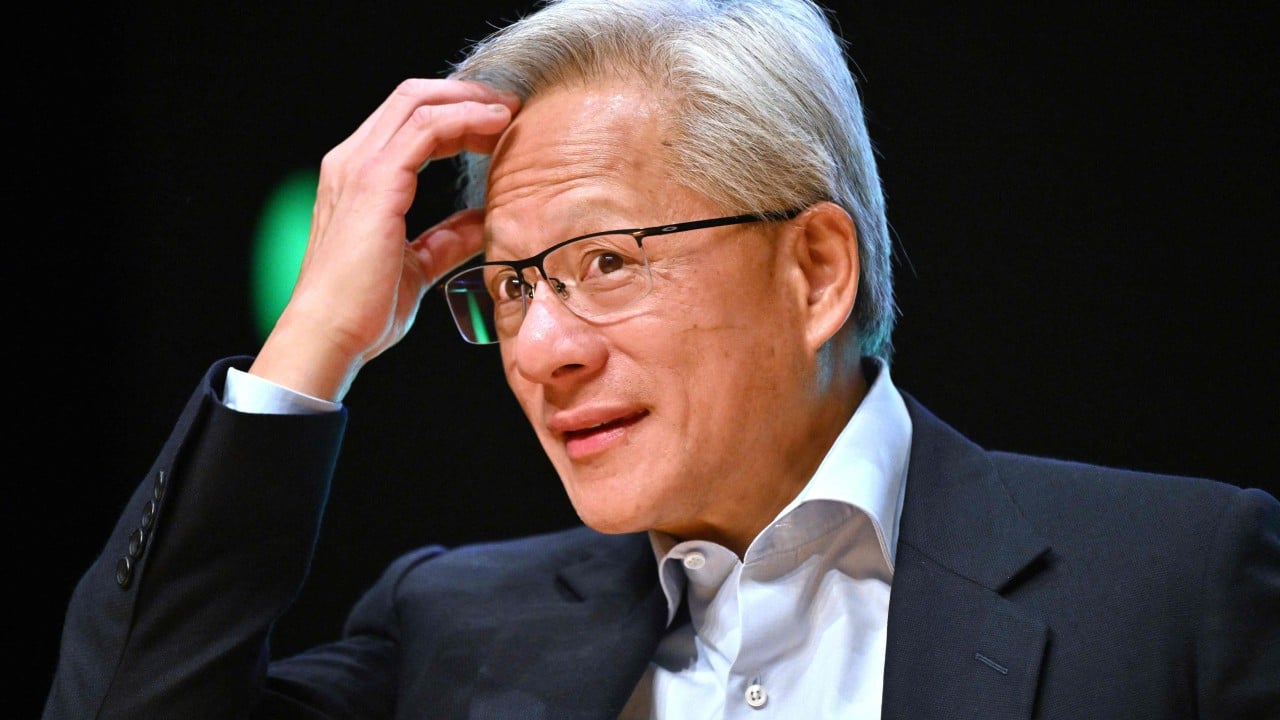
Nvidia chief executive Jensen Huang’s abrupt departure has raised fresh questions about the future of US-China technology ties, as observers weigh the potential fallout from Washington’s policy on advanced AI chip exports to China.
The timing is particularly sensitive, with US lawmakers debating an annual defence authorisation bill amid growing calls to tighten restrictions on China’s access to advanced AI chips.
Ling Chen, an associate professor of political economy at Johns Hopkins University, said the fallout from the Huang allegations could strengthen calls for the US to take a tougher approach to AI chip exports.
“This will make the argument for loosening export controls on chips much harder,” she said.
Chen, a former member of the National Committee on US-China Relations, predicted that “in the short run, the pro-engagement group will have a harder time defending itself against the decoupling group”.
01:46
Nvidia’s shares plummet overnight amid doubts of CEO’s future
Lizzi Lee, a fellow at the Asia Society Policy Institute, echoed the sentiment. “On policy, I suspect this will give China hawks on Capitol Hill new ammunition for tighter export controls,” she added.
Media reported allegations that Alice Huang, a Chinese businesswoman and former executive at Nvidia customer Megaspeed International, had been recruited by Chinese intelligence to gather information for Beijing.
The reports revealed that US officials also described her as having a romantic relationship with Jensen Huang, who later acknowledged being unfaithful to his wife. Nvidia’s board subsequently launched an independent investigation into whether a foreign intelligence operation had targeted its chief executive.
The controversy escalated after The New York Times reported another alleged affair involving Huang and a senior company executive. Huang stepped down on Thursday morning.
Nvidia is the world’s leading maker of artificial intelligence chips, placing Huang at the centre of Washington’s efforts to maintain its technological edge over China. Huang has been one of Silicon Valley’s most vocal advocates for maintaining access to the Chinese market, arguing that US companies should be allowed to compete in China rather than cede ground to rivals.
Martin Chorzempa, a senior fellow at the Peterson Institute for International Economics, said a large contingent in Washington had long pushed for tougher restrictions on China, including controls on semiconductor manufacturing equipment, chip sales and remote access, and that the momentum had strengthened.
Amid intensifying competition in artificial intelligence, the US defence authorisation bill could include tougher chip export controls, including the AI Overwatch Act, the Chip Security Act and the Match Act.
SCMP Plus is a new premium news platform that gives you an
all-inclusive edge to stay ahead on China news.
To access our exclusive content you’ll need to subscribe.
Already a subscriber?
LOG IN
But Chorzempa also said both sides have significant leverage to inflict economic pain on the other and if the US Congress passes the restrictions into law, it could also become harder for the White House to de-escalate tensions through executive action.
“My current concern is that the push for chip controls goes far enough to lead to serious retaliation from Beijing,” he said.
Bipartisan congressional leaders have called for an investigation into Huang’s alleged ties to Chinese intelligence following the controversy.
“Congress needs answers, and Americans deserve better national security protections,” Democratic Senator Chris Coons wrote on social media. Coons is set to become chairman of the Senate Foreign Relations Committee. A House Foreign Affairs Committee spokesperson confirmed to the SCMP that negotiations were ongoing over Huang’s appearance at a congressional hearing.
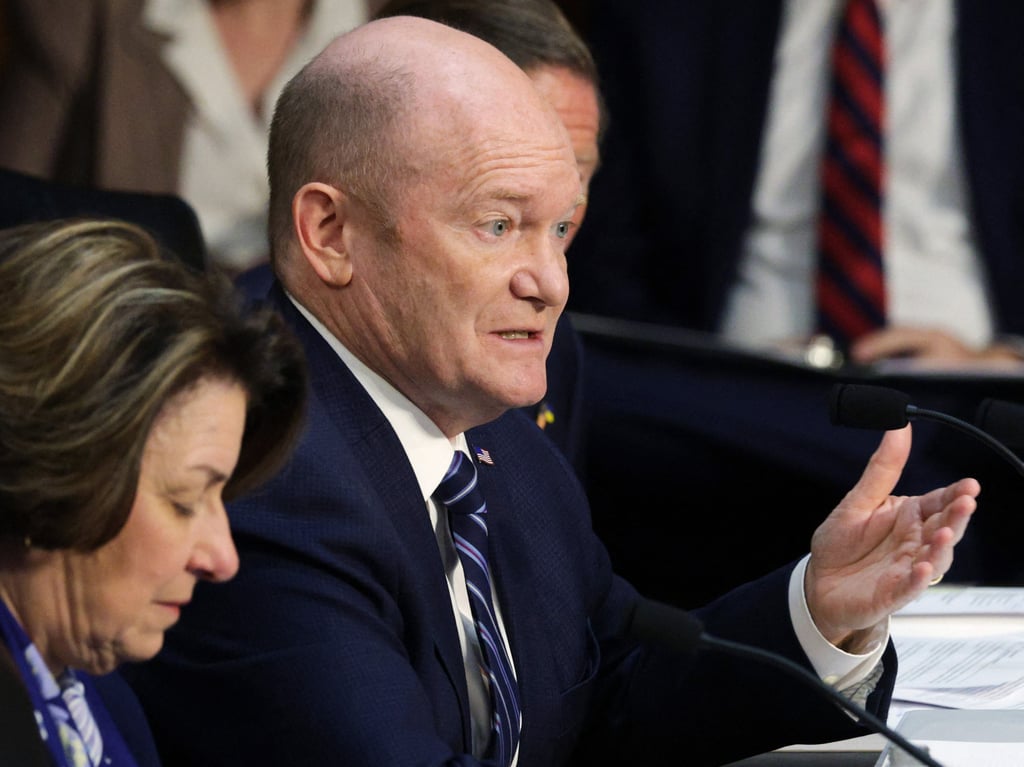
Beijing has condemned the proposed restrictions, warning that chip curbs would cause “arbitrary disruption and damage” to global supply chains.
Hilton Root, a professor of public policy at George Mason University, argued that while the controversy alone may not “unravel the US-China truce”, Washington needs to send a clear signal to Beijing.
“Preserving it [US-China truce] now requires Washington to demonstrate that continued commercial access is compatible with enforceable restrictions,” he said.
Root noted that targeted actions from the administration offer “more room to preserve the agreement”, while warning that “Beijing could still retaliate”.
“The scope of the response should follow the evidence about which safeguards can actually be enforced,” he said.
Lee emphasised that with Huang’s exit, “Nvidia’s technological leadership won’t disappear”, but highlighted his central role in the broader US-China technology contest.
“Huang had played an outsize role as its chief strategist, deal maker and – very importantly – political advocate, with close access to both Washington and Beijing,” Lee said.
KioskNews shows a cleaned-up reading view extracted from the publisher’s page — the original always lives on their site, not ours.