‘Melbourne showed us how to welcome the world’: Australia’s Olympians reflect on 70-year legacy
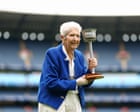
When the Brisbane Olympic Games arrive in 2032, it will have been three-quarters of a century since Australia first hosted the world’s biggest sports event in Melbourne in 1956.
Sunday marked the 70th anniversary of the opening ceremony and more than 30 of Australia’s 54 surviving 1956 Olympians gathered at the Melbourne Cricket Ground to celebrate and reminisce, most proudly wearing their original Olympic blazers.
Age may have wearied their limbs over seven decades, but the likes of triple Olympic swimming gold medallist Dawn Fraser and Olympic medal-winning sprinter Marlene Mathews remain bright of eye and full of spirit.
So what can Brisbane learn from the first Olympic Games to be held on Australian soil, even 75 years later?
“Melbourne showed us how to welcome the world, and Brisbane can learn from that,” Fraser said.
Wheelchair-bound after a fall in 2024, 89-year-old Fraser remains the cheerleader-in-chief of the Australian swimming team.
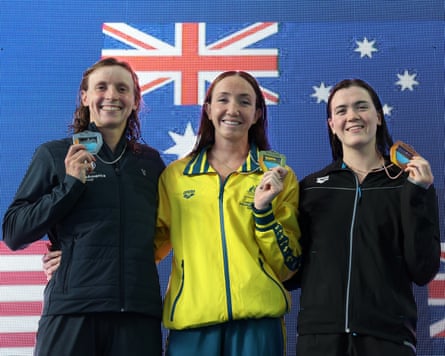
She is directly connected through her goddaughter Lani Pallister, one of the leading lights of the current team after she won the 400m, 800m and 1500m freestyle treble at the Glasgow Commonwealth Games in July before upsetting the greatest distance swimmer in history, Katie Ledecky, in the 800m at the Pan Pacific Championships in California weeks later.
Asked for her best advice to the generation of athletes now preparing for a home Games in Australia, Fraser replied: “Be excited about it and train hard.”
“The younger kids coming through now are very competitive, and I think that’s going to show.”
At 92, Mathews’ undimmed competitiveness shines through in her continued regret that she was omitted from the gold-medal-winning 4 x 100m relay team in Melbourne, despite winning the bronze medal in both the individual 100m and 200m behind her teammate Betty Cuthbert.
“It still hurts,” she said. But she demonstrated a champion’s resilience to bounce back and win the 100m and 200m at the 1958 Commonwealth Games. She also broke world records over 100 yards, 200m, 400m and 440 yards.
“The fact was, I was determined that I wasn’t going to let Betty beat me in a 100 again,” she said. “It’s in you, the fact that you want to run, you want to run fast.”
Training methods and technology have advanced since her heyday, but that innate desire is recognisable across every era.
These days, Mathews is delighted to see the long-awaited resurgence of Australian sprinting, led by Commonwealth silver medallist Lachlan Kennedy, bronze medallist Torrie Lewis and world junior record-holder Gout Gout.
“Isn’t it wonderful?” she said. “We’ve got men and women doing well. I don’t see any reason why we haven’t done well [before] because we’ve got good coaches, but no, it’s coming good.”
after newsletter promotion
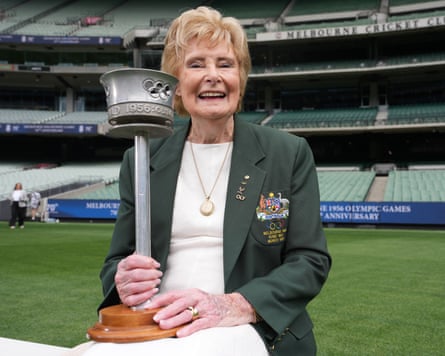
Having experienced the highs and lows of Olympic competition, she advises the current generation to think of the Games as “just another race, without having to do anything special”.
Australian Olympic Committee president Ian Chesterman said Melbourne’s legacy was apparent both in the city and in Australia’s lasting reputation as a fine host of global sport, evidenced by the awarding of the 2000 Olympics to Sydney and the 2032 Games to Brisbane.
“Melbourne became an Olympic city, and that became integrated into so many different parts of society,’’ he said. “So I think if Brisbane can walk away at the end with the pride, the confidence, the memories, and the capabilities that come from being a host city, which Melbourne did – albeit in a very different time – then that’s an incredible outcome.
“[Melbourne] set up Australia to host in Sydney and Brisbane. I always say that the rest of us stand on the shoulders of the Olympic team at ‘56 in the Melbourne Games. That’s the reality… It’s because of that reputation, which all started here.”
The 309-member Melbourne team, which won 35 medals including 13 gold (and swept the freestyle events in the pool), finished third on the 1956 medal tally and was Australia’s most successful until the Sydney Olympics.
Fraser and Mathews would love to see that success repeated for a third time at home, in Brisbane.
“I just hope I’m still alive to be able to go in 2032,” Mathews said. “I’ll be nearly 100.”
KioskNews shows a cleaned-up reading view extracted from the publisher’s page — the original always lives on their site, not ours.