Global Investors Sell Indian Assets Amid Rising Oil Prices And Yields
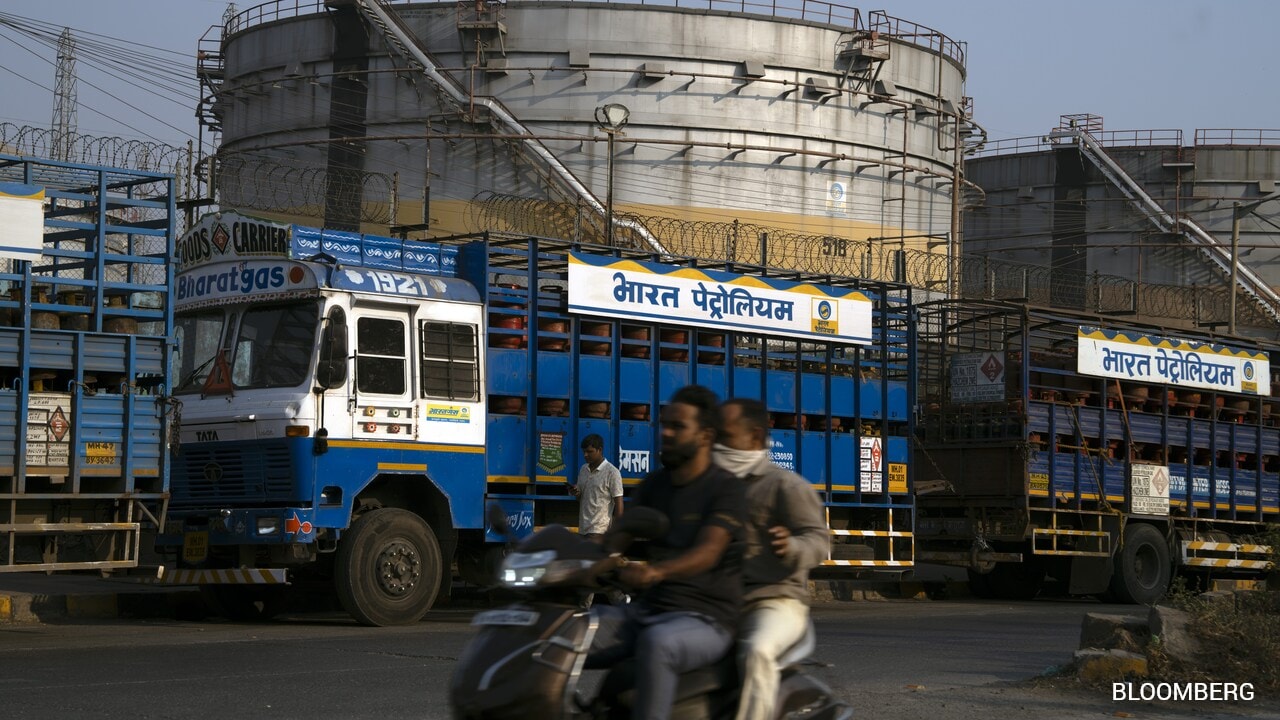
Overseas investors are turning sellers of Indian assets again as surging oil prices and rising global yields threaten to derail a recent revival in demand.
Global funds have sold $2.1 billion of local equities so far this month, following two straight months of purchases. Outflows from index-eligible sovereign bonds are also picking up, with foreigners selling $1.1 billion this month - on track for the biggest outflow since March - after record inflows in June. The rupee is among Asia's worst performers this quarter despite robust inflows from a special dollar deposit program, while the 10-year government bond yield hit a two-year high this week.
The renewed selling is snuffing out a nascent recovery in foreign demand following an unprecedented stretch of underperformance by Indian stocks against regional peers. Resurgent oil prices are weighing on the rupee and stoking inflation in an economy heavily reliant on imports, leaving policymakers with limited scope to cushion markets despite a series of earlier measures to attract foreign capital.
"Oil will be the biggest factor determining whether India sees renewed foreign outflows," said Gautam Chhaochharia, head of global markets India at UBS Group AG. The bank expects Indian stocks to remain range-bound in the near term, with valuations, share supply and high oil prices likely to limit the scope for gains.
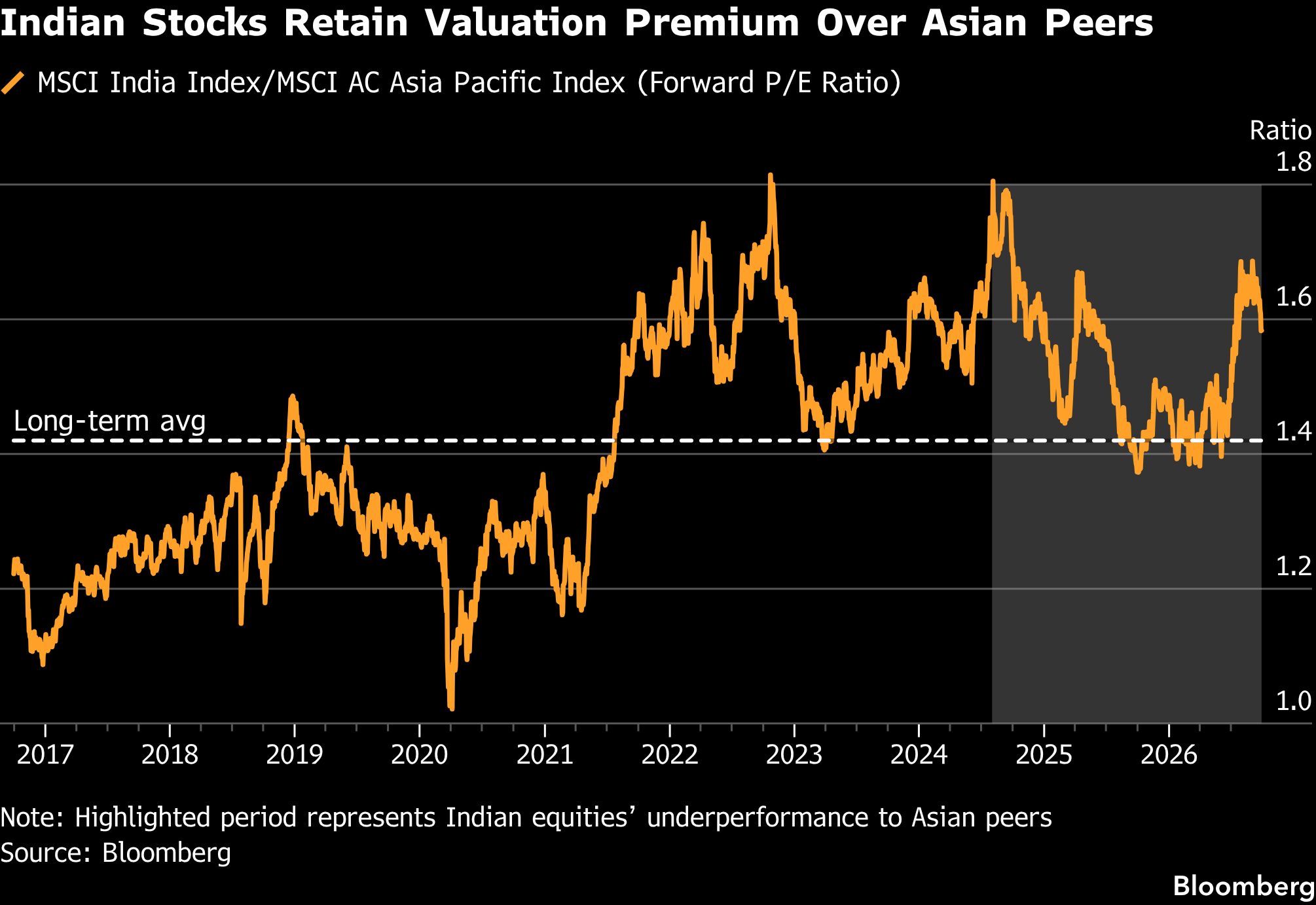
Photo Credit: Bloomberg
The retreat by global funds isn't confined to India, with markets from Korea to Taiwan also seeing outflows after attracting money in August. The reversal in the South Asian nation follows an improvement in foreign demand earlier in the quarter. Despite September's selling, overseas funds have bought a net $2.7 billion of Indian shares since July, putting the country on track for its first quarterly inflow since April-June last year.
Policymakers have also taken steps to support the rupee. Banks garnered $133 billion from a special diaspora program. The dollars have been swapped with the Reserve Bank of India, which briefly pushed up reserves to a record $785.7 billion. Still, the central bank has been selling dollars to support the rupee as elevated energy prices weigh on the currency.
"The recent foreign selling should be viewed primarily in the context of the broader global bond-market correction, rather than as a fundamental reassessment of India," said Fesa Wibawa, investment manager of fixed income Asia at Aberdeen Investments. The pullback offers an opportunity to gradually increase exposure, he said.
Even so, higher global yields are making it hard for India to attract overseas capital as investors pull away from most emerging markets. Foreign funds have yanked more than $45 billion from Indian stocks since the end of 2024, partly as money flowed toward northern Asian markets with exposure to the artificial intelligence trade.
The higher returns available on Treasuries are particularly relevant for India because US-based investors account for the largest pool of foreign portfolio equity assets. Rupee weakness and the cost of hedging against further declines also erode dollar returns on Indian assets. Meanwhile, rising bets on interest-rate hikes by the central bank are adding to unease over the growth outlook for both bond and stock investors.
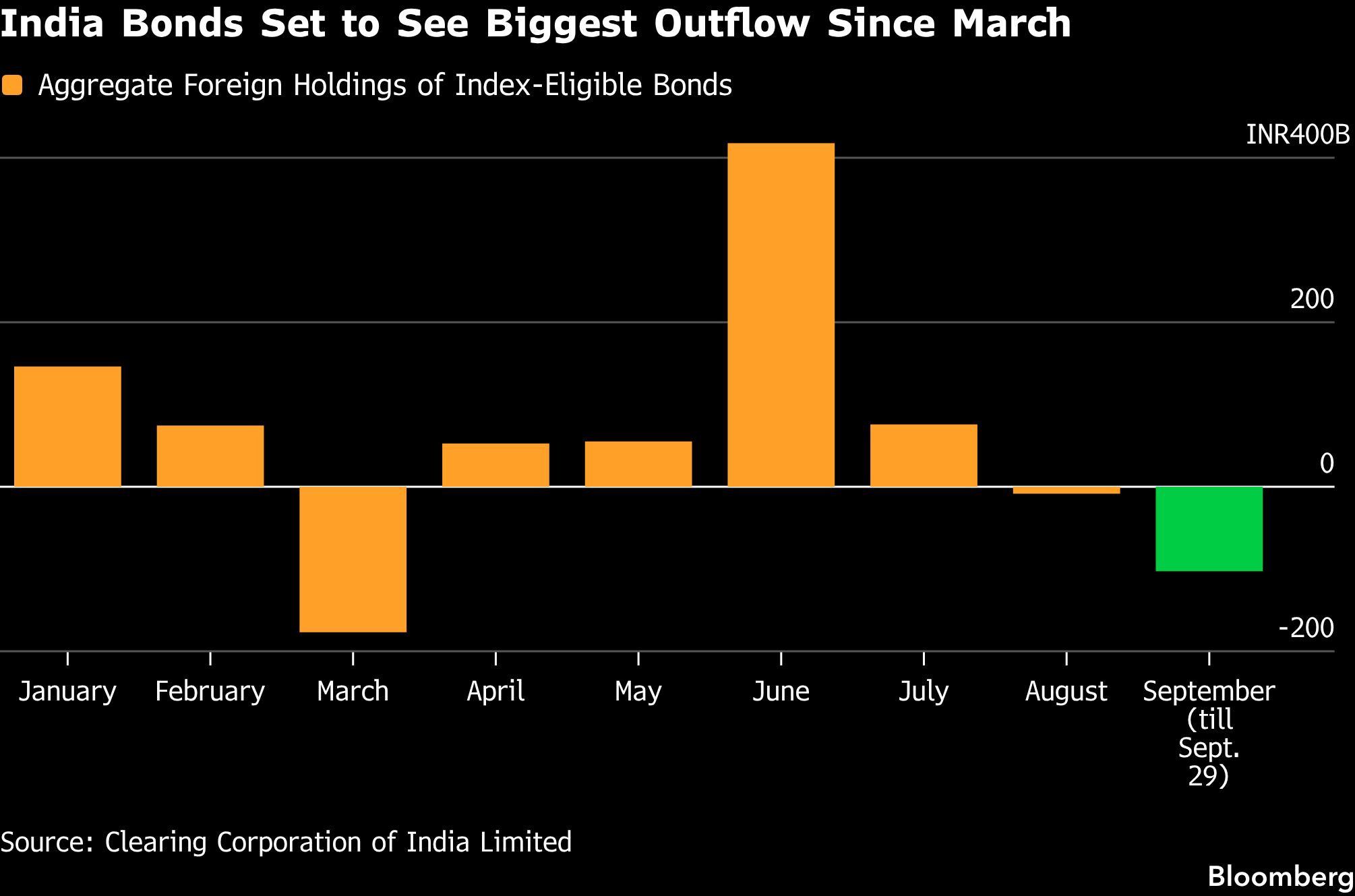
Photo Credit: Bloomberg
Equity valuations add to the challenge. MSCI Inc's broader gauge of Indian equities still trades a premium to Asian equities despite heading for its worst year since 2011. Earnings for the 160-plus member gauge are expected to climb 13% in 2027, the slowest among major peers including China, South Korea and Taiwan. With developed-market yields elevated, investors are demanding stronger earnings growth to justify that premium.
"Though India's macro buffers have increased with FCNR flows, capital-flight risks have also risen with rate hikes in developed markets," Kunal Vohra, strategist at BNP Paribas SA wrote in a note this week. "Rising oil prices and commodity inflation remain a material challenge for India in the near term."
(Except for the headline, this story has not been edited by NDTV staff and is published from a syndicated feed.)
KioskNews shows a cleaned-up reading view extracted from the publisher’s page — the original always lives on their site, not ours.