Sainsbury’s expects challenging run-up to Christmas as households feel squeeze
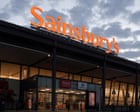
Sainsbury’s has warned of a “pretty challenging” market in the run-up to Christmas as households are “finding it tough” and food producers face rising costs.
Simon Roberts, the chief executive of the UK’s second biggest supermarket, called on the government not to “further aggravate” pressure on costs for business in this month’s budget. He said it was “important this government does not repeat what we have seen in previous budgets” in raising business rates and employers’ national insurance contributions. “That’s been really hard,” he said.
After Sainsbury’s and other industry leaders met government ministers last week, Roberts said he believed “this government is really listening to business” especially on helping to create more jobs for young people.
Roberts added that food inflation was not “anything like” some of the high levels forecast earlier in the year but suggested high energy and fertiliser costs could push up food prices next year.
Roberts said that in a more unsettled global environment the UK needed to “improve food resilience and grow and produce more at home”. He called on the government to increase tax breaks that support investment in technology – including irrigation and reservoirs – on farms as the climate crisis is expected to lead to more hotter, drier summers such as this year’s.
Shares in Sainsbury’s slid by 3.7% on Thursday as the retailer revealed slower than expected sales growth of 2.6% in the six months to 12 September, with growth almost halving to 1.9% in the second quarter from 3% in the first. Strong online grocery sales – up 9% – and a 6% rise in sales of the retailer’s premium own-label Taste the Difference range helped with growth.
Roberts said sales had slowed as shoppers had kept a tight rein on the number of items they bought amid a “focus on the cost of living” and had reined in spending on clothing and “big-ticket” items, such as furniture, at Argos. Sales at the catalogue shop were down 1.8% and Sainsbury’s general merchandise and clothing sales were down 3.4% in the half.
The growth figures for grocery and clothing were also dented by comparison with last summer, when Sainsbury’s and other retailers experienced a boost to trade when Marks & Spencer and the Co-op were affected by cyber-attacks.
Pre-tax losses for the half year widened to £63m from £14m a year before. However, the company reported a 5.2% rise in underlying profit to £366m, excluding the Argos catalogue shop, which is in the process of being sold off. The deal is expected to complete in February and the businesses to be totally separated by 2029.
Sainsbury’s said it now expects an annual underlying profit of at least £1.02bn, slightly more than the £975m previously outlined.
after newsletter promotion
Charles Allen, a senior retail analyst at Bloomberg Intelligence, said the figures suggested Sainsbury’s was not expecting to increase profits in the second half of the year against a “tougher competitive backdrop as inflation returns and rivals prioritize sales growth”.
Roberts refused to comment on speculation that Sainsbury’s was set to buy one of its rivals – amid reports that it had entered, and ended, talks to buy Morrisons earlier this year.
However, the group said it planned to open 10 supermarkets and 25 convenience stores by March, which some analysts said reduced the logic of seeking a merger with a rival.
KioskNews shows a cleaned-up reading view extracted from the publisher’s page — the original always lives on their site, not ours.