Christiane Amanpour exits CNN with controversial legacy for Jewish, Israeli viewers
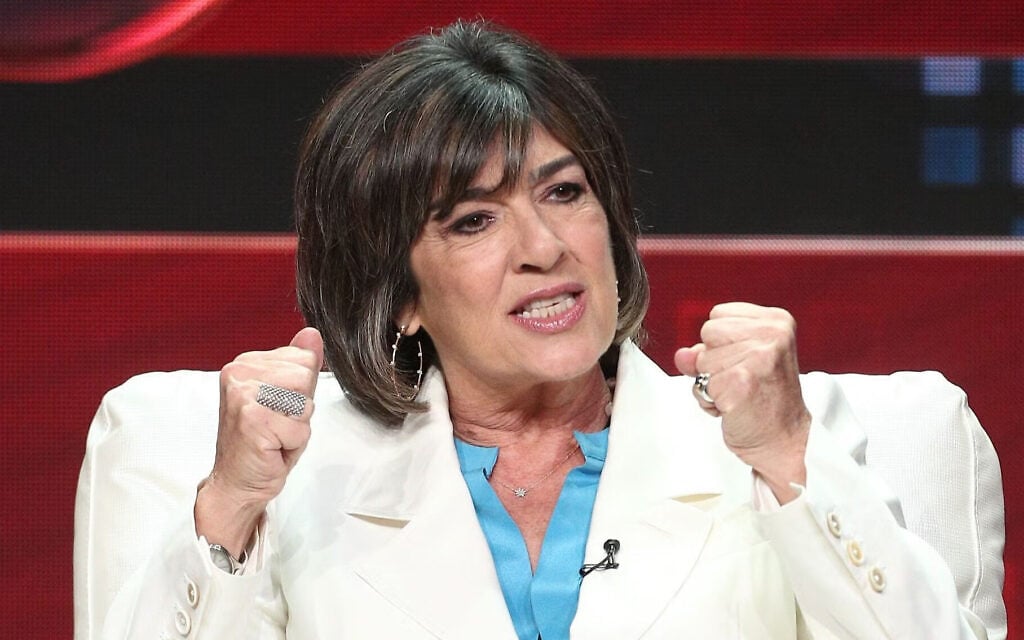
JTA — Christiane Amanpour, CNN’s chief international anchor, is leaving the network after 43 years, closing a chapter in a career that made her one of television journalism’s most celebrated war correspondents — and one of its most controversial figures among Jewish and pro-Israel viewers.
For many viewers, Amanpour’s legacy is that of a fearless correspondent who brought the human costs of war into American living rooms, from the first Gulf War to Bosnia, Rwanda and Ukraine.
But her coverage of Israel and the Palestinians has long drawn sharp criticism from some Jewish viewers, who accused her of giving insufficient weight to Israeli security concerns, mischaracterizing events and disproportionately presenting Israeli religious nationalism in an especially unflattering light.
0:00 / 0:00
Promoted: JPPI, Rabbi Sharon Brous

Amanpour, 68, announced Monday that she will wind down her daily CNN International program early next year, conclude its weekly successor in May and leave the network in June 2027. Her PBS program, “Amanpour & Company,” will end at the close of this year. However, she will continue her podcast, “The Ex Files,” with her ex-husband, Jamie Rubin, a former State Department official.
Amanpour did not give a specific reason for her departure, which comes as CNN enters a new era under Paramount Skydance ownership.
Get The Times of Israel's Daily Edition by email and never miss our top stories
By signing up, you agree to the terms
“Always be truthful, not neutral,” Amanpour wrote in her farewell message, summing up a philosophy that has animated her reporting — and helped make her a polarizing figure.
Amanpour’s admirers would argue that the same qualities that make her coverage uncomfortable for some Jewish viewers — skepticism toward official accounts, attention to civilian suffering and willingness to challenge powerful governments — are essential to journalism.
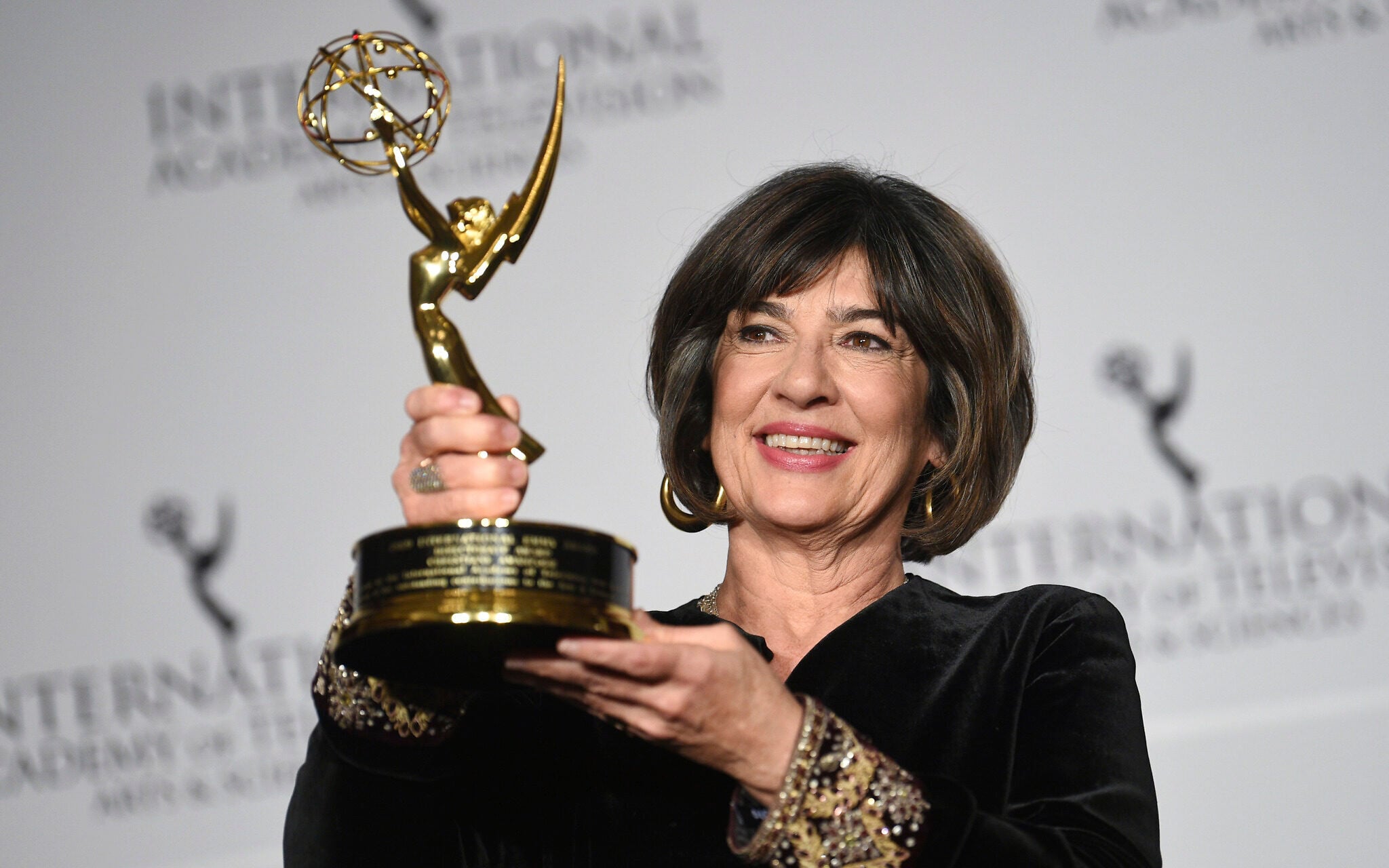
When the National Press Foundation honored her in 2025 with its Sol Taishoff Award for Excellence in Broadcast Journalism, its judges called her “a gold standard for international broadcast journalism” and praised her tough questioning of world leaders. The Committee to Protect Journalists, which honored her in 2016, likewise celebrated her commitment to press freedom.
Amanpour, who was raised in Iran and England by her Iranian Muslim father and British Roman Catholic mother, joined CNN in 1983 as a desk assistant and rose through the ranks to become one of its most prominent correspondents. Her reporting from the Bosnian war in the 1990s helped establish her reputation for confronting officials and challenging the language governments use to justify military action.
Some of the sharpest criticism of her work came in 2007, when Amanpour hosted “God’s Jewish Warriors,” the opening installment of a three-part CNN documentary series examining the role of religion in politics and conflict.
Andrea Levin, president of the Committee for Accuracy in Middle East Reporting and Analysis, or CAMERA, condemned the program as a biased portrayal of Jewish religious life and Israeli settlers. A 2010 Jewish Telegraphic Agency commentary revisited the controversy, with Ron Kampeas noting that “the only explicitly religious people she interviewed were ultranationalist settlers,” and that Amanpour ignored religious Jews who opposed the settlements.
Kampeas also said the program’s treatment of the pro-Israel lobby in Washington exaggerated the power of groups like AIPAC and downplayed the shared strategic and moral imperatives that drove the US-Israel alliance.
“God’s Jewish Warriors” became Exhibit A in the case against Amanpour’s work. Legitimate criticism of Israeli policy, her detractors asserted, was framed in a way that left Jewish viewers feeling that Jewish religious identity, political advocacy, or national aspirations were inherently suspect.
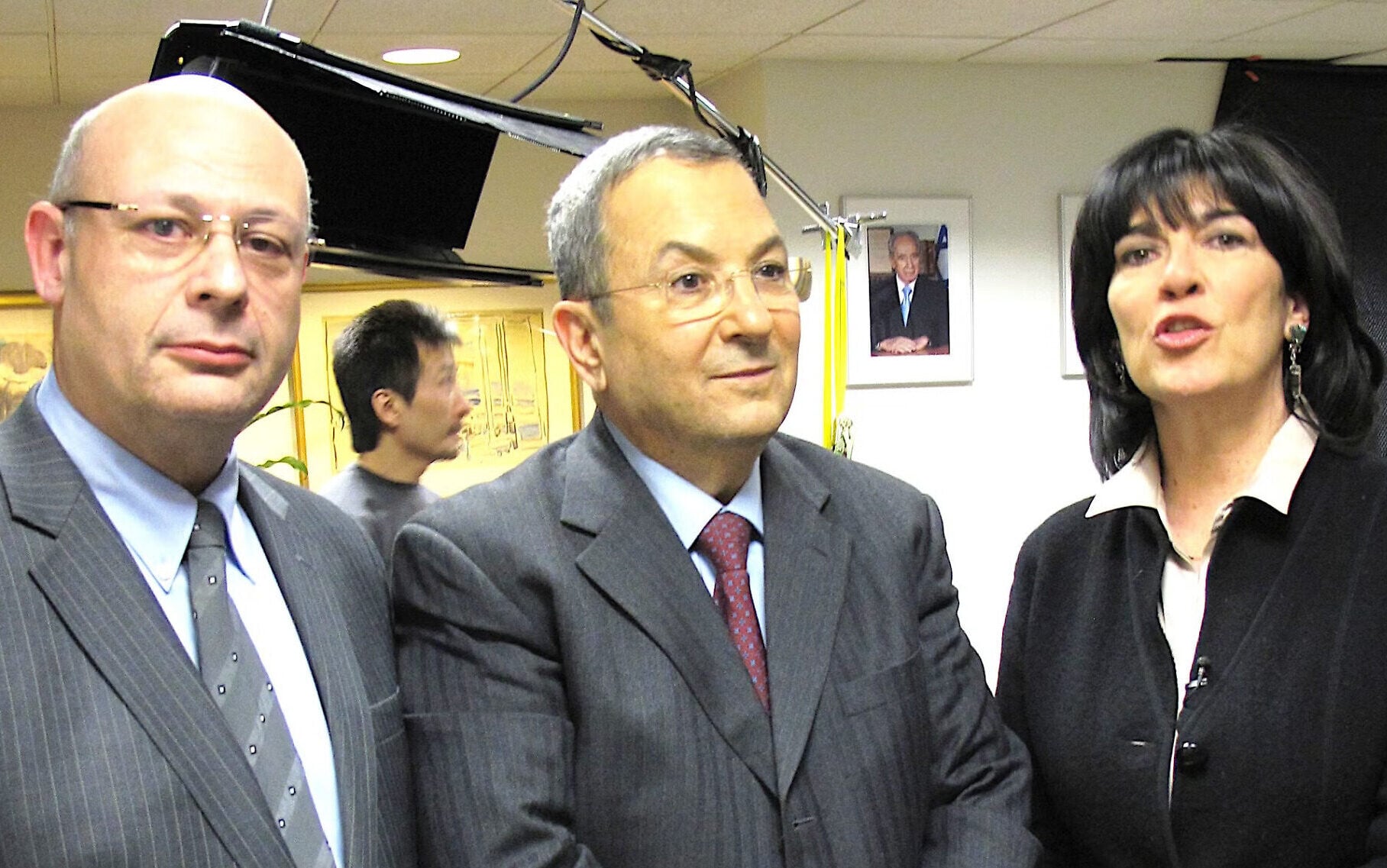
Reporting from Lebanon during the 2006 war between Israel and Hezbollah, Amanpour was part of a CNN team whose work rekindled a longstanding debate over how journalists should cover conflicts in which a state military fights an armed group embedded in civilian areas.
Even as Amanpour at times acknowledged the difficulty of covering such “asymmetrical warfare,” Israeli officials and supporters argued at the time that images of destruction and civilian suffering in Lebanon obscured Hezbollah’s role in initiating and sustaining the conflict. Those objections anticipated similar complaints, aimed at CNN and other outlets, over coverage of Israel’s devastating war in Gaza after the Hamas-led massacre of October 7, 2023.
Critics have continued to document what they see as a pattern. CAMERA has maintained a collection of complaints about Amanpour’s reporting, while HonestReporting, another pro-Israel media-monitoring organization, has accused her of repeated anti-Israel distortions.
Although both organizations have a clear advocacy perspective, they often provide specific examples of errors, and often extract corrections.
One example came in April 2023, when Amanpour described the killing of Israeli Lucy Dee and her daughters Maia and Rina in a Hamas-linked West Bank terrorist attack as a “shootout.” The women were driving on a highway when Palestinian gunmen opened fire on their vehicle. Amanpour subsequently apologized on air for her inaccurate characterization.
In 2024, Amanpour also drew criticism for a social media post about Marwan Barghouti, the imprisoned Palestinian political leader convicted by an Israeli court of involvement in deadly attacks. “To many Israelis, he’s a terrorist. To many Palestinians, he’s their Mandela,” she wrote.
The comparison accurately captured Barghouti’s sharply different reputations among Israelis and Palestinians, but critics argued that it risked reducing the gravity of the attacks for which he was convicted.
Complaints about CNN’s Gaza coverage gained a striking new dimension in February 2024, when Amanpour reportedly joined CNN colleagues in accusing the network of a pro-Israel bias in its coverage of the Israel-Hamas war.
According to reporting by The Intercept and The Guardian, journalists at an internal CNN meeting raised concerns that the network’s editorial procedures were favoring official Israeli narratives and making it harder to convey Palestinian perspectives. CNN’s process required coverage of the conflict to pass through its Jerusalem bureau; Amanpour was heard on tape saying that the process led to “changing copy, double standards, and all the rest.”
At the same time, some pro-Israel viewers saw CNN and Amanpour as too willing to accept Palestinian claims and too quick to foreground Gaza’s devastation.
In response to the reports, CNN defended its coverage of the conflict. “We remain absolutely committed to reporting all sides of this immensely challenging, complex and emotive story,” it said in a statement. “We absolutely reject the notion that any of our journalists treat Israeli officials differently to other officials.”
Amanpour again apologized on air in October 2025 for having said that surviving Israeli hostages released from Hamas captivity were “probably being treated better than the average Gazan, because they are the pawns and the chips that Hamas had.” Following backlash from political figures and organizations, Amanpour retracted the statement, calling her remarks “insensitive and wrong.”
Last month, in a rare long-form interview about her career with the podcaster Sam Fragoso, Amanpour discussed CNN’s coverage of the Gaza war. In the immediate aftermath of the October 7 onslaught, she said, the network was “practically wall to wall with horrendous stories from the victims in Israel. I mean, just horrendous.”
But as Israel’s military response ground on, “the story flipped,” she said. “As the destruction of Gaza took place and the bodies piled up, most particularly the women and the children, the tone of the coverage reflected the reality.” At the February 2024 meeting with CNN executives, she said her colleagues expressed frustration that the network took too long to cover the Palestinian side.
In the same interview, Amanpour also walked back an apology she made in 2020 — not about CNN’s Mideast coverage, but for a commentary on the 82nd anniversary of the Kristallnacht attacks. In that segment, she juxtaposed the Nazis’ anti-Jewish pogrom with what she called President Donald Trump’s “attacks on history, facts, knowledge and truth.” After Jewish groups, including the American Jewish Committee, complained that she had “instrumentalized” the Holocaust with a faulty comparison, Amanpour said on air that she regretted any pain her statement may have caused.
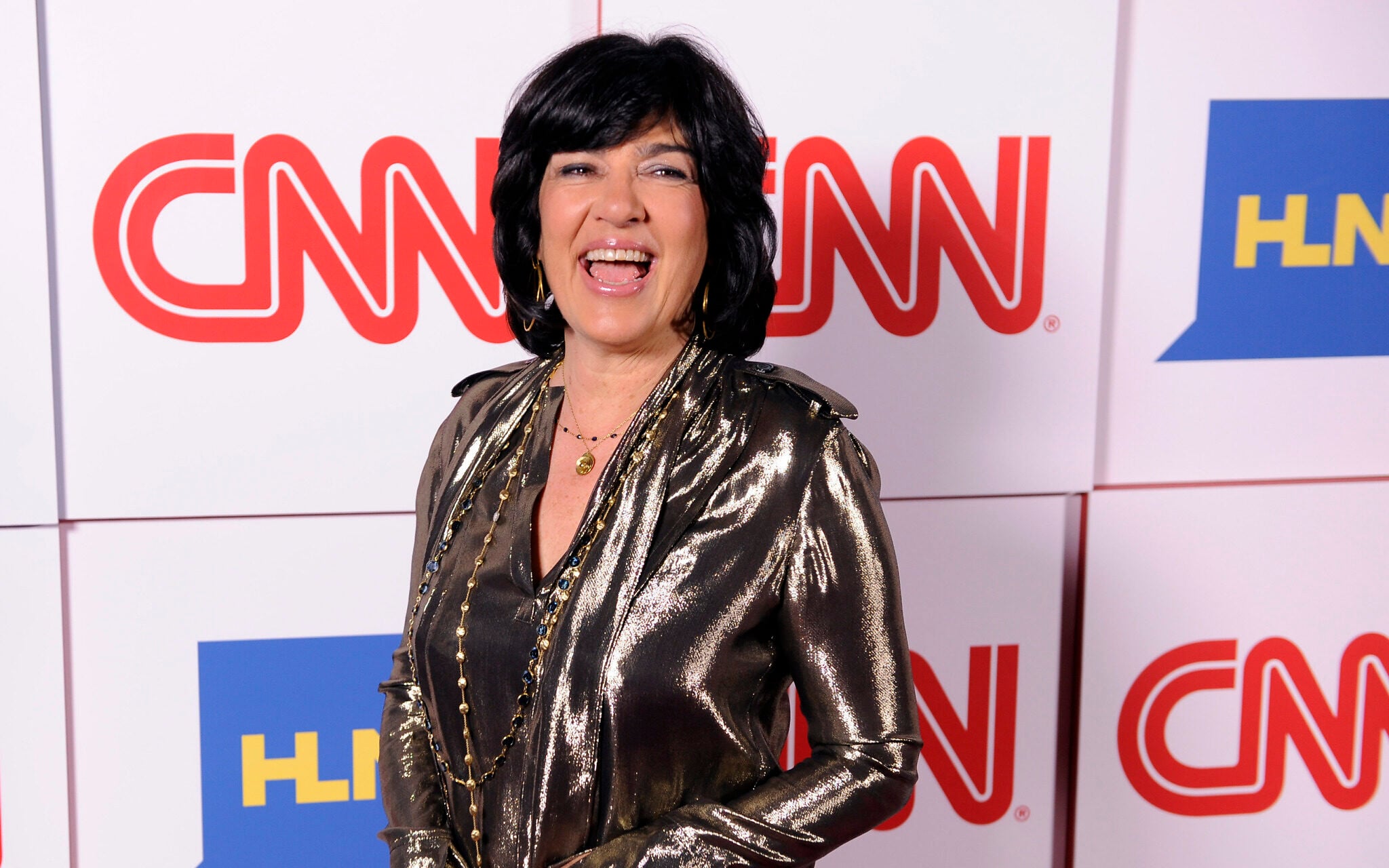
Speaking last month with Fragoso, Amanpour said that she stands by her assertion that Kristallnacht demonstrated how quickly “democratic values can slowly slip away.” She also suggested that her employers had bowed to outside pressure and instructed her to apologize.
“There were people, you know, in various communities in regard of this,” she said, referring to her critics, “who decided that I need to be slapped around and pull[ed] down a peg. But I think that’s just because some people are afraid of the truth.”
Amanpour’s departure comes at a moment of uncertainty about CNN’s future under its new corporate owner. Paramount Skydance’s $110 billion merger with Warner Bros. Discovery, CNN’s parent company, has raised concerns among journalists about political influence and editorial independence, particularly given new owner David Ellison’s ties to Trump and the changes he has overseen at CBS News.
Amanpour herself expressed concern in May about what she called an “ideological realignment” at CBS News under its new leadership. “So clearly, obviously, I’m concerned,” she said, speaking at an investigative journalism conference in London. “I would like to think that we would have the very basic, which is editorial independence. I’m hoping for that. I know many of us at CNN are incredibly — including leadership — are very, very committed to that, clearly.”
For some Jewish and pro-Israel observers, however, the same changes have raised hopes that CNN’s coverage of Israel might become more favorable. Bari Weiss, who became CBS News editor-in-chief after Paramount acquired her strongly pro-Israel publication, The Free Press, has long argued that mainstream news organizations have mishandled Israel and antisemitism.
Amanpour didn’t mention the merger in her announcement. But she noted how her background shaped her perspective.
“Because of my upbringing — I’m half-Iranian and half-British — I’ve had the great privilege of being able to see the world from two very distinct perspectives,” she said. “I’ve always spoken out about the need to bridge gaps. I know we can live in a world that’s not 100% tribalized.”
KioskNews shows a cleaned-up reading view extracted from the publisher’s page — the original always lives on their site, not ours.