NTUH releases simplified medical care guidelines
TRIAGE TIME: The guidelines, which address more than a thousand common symptoms, should help people to choose the most efficient treatment option
By Lee I-chia / Staff reporter


The National Taiwan University Hospital (NTUH) yesterday released the Healthy Taiwan Guidelines for Appropriate Use of Healthcare Services, providing healthcare recommendations for 1,067 common symptoms.
The NTUH Referral Management Center released the guidelines with the aim of addressing the phenomenon of seeking treatment at large hospitals for mild illnesses and at medical centers for non-emergency conditions.
The center’s deputy director Jan Chyi-feng (詹其峰) said the center invited 256 medical experts from different levels of care for conducting a comprehensive review and held an in-person consensus meeting attended by 80 experts to finalize its conclusions.
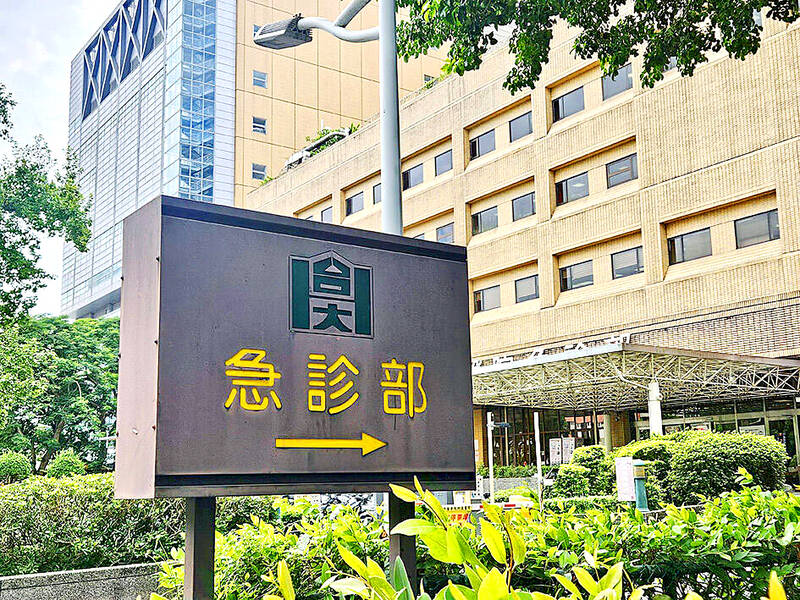
A sign for National Taiwan University Hospital’s emergency department is pictured in Taipei in an undated photograph.
Photo: CNA
The 1,067 symptoms are categorized into four levels of recommended care — about 13.8 percent can be managed by self-care and observation, 31.9 percent should seek treatment at community primary care clinics, 7.9 percent at hospitals’ outpatient departments and 46.5 percent require emergency medical attention, he said.
Overall, 45.7 percent of the symptoms can initially be managed through self-care, observation, or community-based primary care, and do not require a visit to a major hospital or medical center, Jan said.
The hospital announced that it would launch a public healthcare consultation hotline at (02) 2356-2891 on Oct. 1, to assist the public in finding appropriate healthcare.
The hotline would operate from 8am to 5pm daily and the service would be staffed by nurses and healthcare professionals, who would assess callers’ symptoms and urgency and provide guidance on the appropriate course of action, including the four levels of medical attention, it said.
NTUH deputy superintendent Huang Kuo-chin (黃國晉) said the hospital is promoting five practices for intelligent healthcare use.
They include encouraging everyone to have a long-term and trusted family physician who can provide ongoing and comprehensive healthcare, and to check with the hotline when unsure if they need medical attention or which department to visit, he said.
The other three are: Turn to primary care clinics for minor illnesses, recognize red flag emergency conditions, and follow the healthcare workers’ referral recommendations for appropriate healthcare institutions for evaluation and treatment, he said.
Red flags include symptoms such as severe chest pain, difficulty breathing, altered consciousness, sudden weakness of a limb or sudden speech abnormalities, Huang said, adding that people should seek immediate medical attention if they experience these.
He said the goal is to ensure efficient allocation of healthcare resources through a tiered medical system, preventing patients with mild conditions from overcrowding emergency rooms, while ensuring timely emergency care for those who need it.
KioskNews shows a cleaned-up reading view extracted from the publisher’s page — the original always lives on their site, not ours.