Piki Lopez ring-fences the Lopez Holdings board
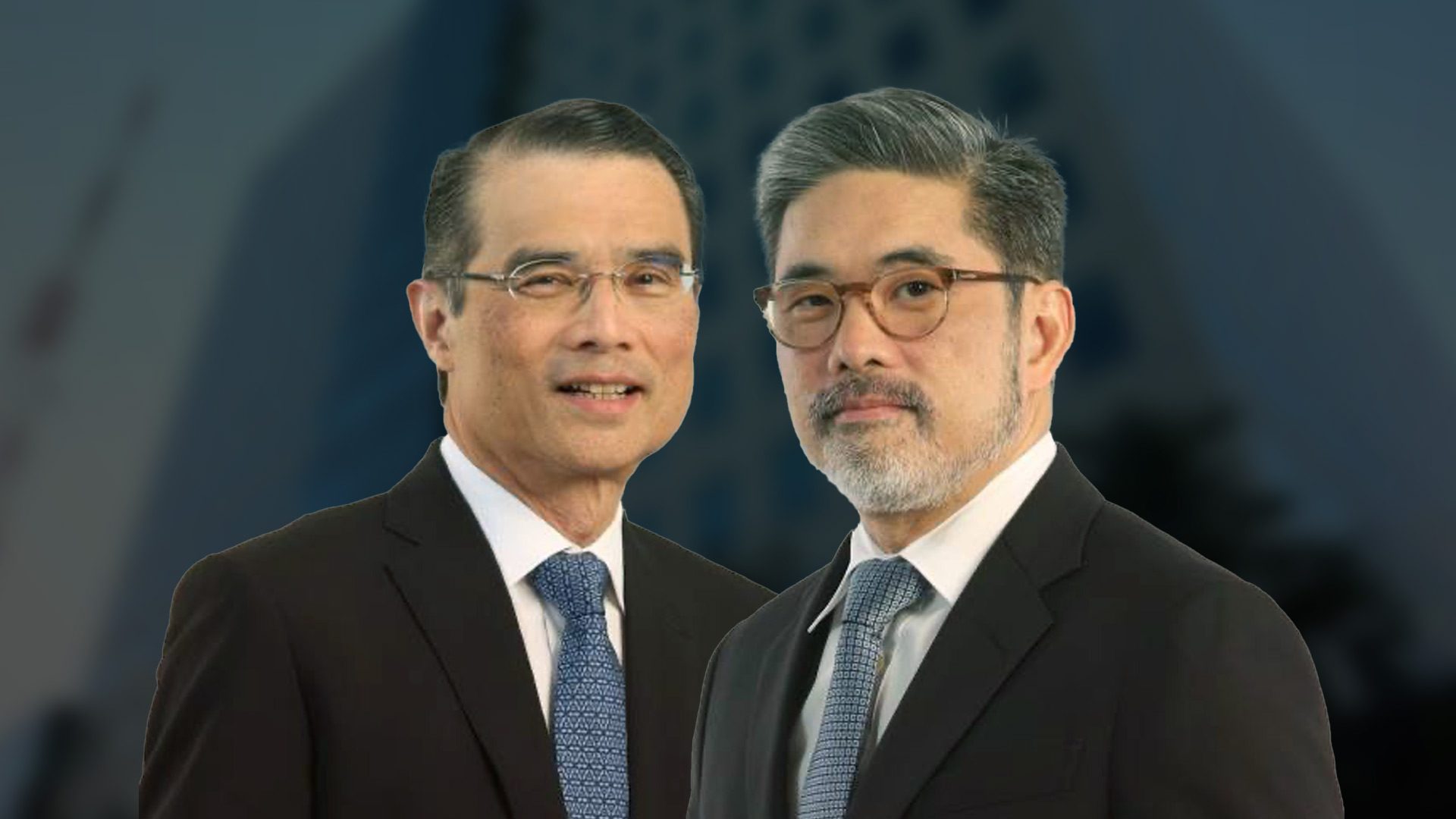
Federico “Piki” Lopez has consolidated his hold on Lopez Holdings, the listed company that controls the family’s businesses.
The Monday, September 14 board election at Lopez Holdings put 3 of 7 seats in the hands of Piki and two siblings. The newly elected board named his brother Benjamin “Jay” Lopez president, chief operating officer (COO) and chief finance officer (CFO), replacing Salvador Tirona, a professional manager who announced that he was leaving after 26 years with the Lopez Group. The two brothers now occupy the company’s top executive positions: Piki as chairman and CEO, and Jay as president, COO and CFO.
The 4th of the 7 seats went to a cousin from another branch. The 3 remaining seats went to independent directors, one of whom spent most of his career as a finance chief inside the companies Piki chairs.
The cousin who had held a family seat until that morning, Rafael “Raffy” Lopez, chairman of the private parent company Lopez Inc. and brother of Gabby Lopez, is no longer on the Lopez Holdings board. He did not lose the election. By the time shareholders voted, he was no longer a candidate.
That decides a great deal. Lopez Holdings owns 60.67% of First Philippine Holdings, which controls First Gen, which owns the country’s largest clean energy business, including the geothermal, hydro, wind and solar plants of Energy Development Corporation. Lopez Holdings’ 60.67% stake will be decisive when First Philippine Holdings holds its own long-delayed board election on September 25.
The situation is different at ABS-CBN. Lopez Holdings has an economic interest in the media company through Philippine depositary receipts (PDRs), but the PDRs themselves carry no voting rights over the underlying ABS-CBN shares. Those shares remain registered to Lopez Inc., which exercises the votes. Piki remains an ABS-CBN director, but controlling Lopez Holdings does not give him control over the votes attached to Lopez Holdings’ economic interest in the network.

The board before and after
| Before (2025 annual report, filed April 16, 2026) | After (September 14, 2026) | |
| Family seat | Federico “Piki” Lopez — Croslo, the Oscar branch | Federico “Piki” Lopez — Croslo |
| Family seat | Martin L. Lopez — Mantes, the Manolo branch | Martin L. Lopez — Mantes |
| Family seat | Rafael L. Lopez — Crème, the Geny branch | Benjamin R. Lopez — Croslo |
| Non-family seat | Salvador G. Tirona, president and CFO | Mercedes Lopez-Vargas — Croslo |
| Independent | Michael Jack B. Garcia | Michael Jack B. Garcia |
| Independent | Consuelo D. Garcia, resigned May 5, 2026 | Emmanuel S. de Dios |
| Independent | Roberto L. Panlilio, resigned late April 2026 | Nestor H. Vasay, lead independent director |
Lopez Inc. was historically held through four family investment companies. One of those stakes — Crème’s 25.68% — was sold to Ramon Ang in August. Here is how the four family branches are now represented on the Lopez Holdings board.
Croslo, the branch of the late Oscar Lopez, went from one seat to three.
Mantes, the branch of the late Manuel “Manolo” Lopez, kept its single seat through Martin Lopez.
Crème, the branch of the late Eugenio “Geny” Lopez Jr., went from one seat to none.
Presta, the branch of Presentacion Lopez-Psinakis, had no seat before and has none now.
That accounts for 4 of the 7 seats. The other 3 belong to independent directors, and one of them, Nestor H. Vasay, spent most of his working life as a finance chief inside the companies Piki runs.
Who is in
Three of the 7 seats must go to independent directors under the company’s governance rules. That leaves 4 non-independent directors namely:
Federico “Piki” Lopez stays as chairman and chief executive. He also chairs and runs First Philippine Holdings and First Gen, chairs Energy Development Corporation, and remains president of Lopez Inc., with a Mandaluyong court injunction preventing his replacement while the underlying case is pending.
Benjamin “Jay” Lopez is his brother, and he is the one whose arrival changes how the company works day to day. He is now its president, chief operating officer and chief finance officer, and he remains co-chairman of Lopez Inc. and vice chairman of First Philippine Holdings. He is also the only family member on any of the three board committees, which means the Lopez branch that now runs the company is also the only family director with a seat where risk decisions get examined before they reach the full board.
Mercedes “Cedie” Lopez-Vargas is their sister. She runs the Lopez Museum and Library and sits on the First Philippine Holdings board. Her election gives the Oscar branch its third seat.
Martin “Mark” Lopez is the lone family director from another branch, the Manolo line, and he kept the vice chairmanship. He chairs ABS-CBN and Sky Cable, and he is one of four Lopez Holdings directors Piki took to court in April. His survival is the clearest sign that the September 14 annual stockholders’ meeting result was not a clean sweep.
Of the three independent directors, one matters more than the others.
Nestor H. Vasay was chief financial officer and treasurer of Energy Development Corporation and a senior vice president of First Gen until around 2018. He spent well over a decade as the finance chief of companies Piki chairs. The other two independent directors then made him lead independent director and chairman of the audit committee, which is the committee that oversees the outside auditor and signs off on the accounts. He meets the 5-year cooling-off period required before a former executive can qualify as independent, although his professional history ties him closely to the energy businesses Piki has led.
Michael Jack B. Garcia is the one independent director who did not resign this year. He is also one of the 4 directors Piki sued. He finished with more votes than anyone on the ballot. His 4.162 billion votes — about 867 million more than Piki — show that some shareholder or shareholders deliberately concentrated cumulative votes on him. The published results do not identify who.
Emmanuel S. de Dios, a University of the Philippines economist, is new, and he arrives with a recent connection to the other institution at the center of the cousins dispute: ABS-CBN. He was an independent director there until the media company’s own annual stockholders meeting in August. He had signed a March 2026 statement by the ABS-CBN board rejecting claims that had surfaced in court records from Piki’s case against his cousins. He now chairs the Lopez Holdings corporate governance committee.
The division of roles is notable. Executive leadership is now concentrated in the Oscar branch: Piki is chairman and CEO, while Jay is president, COO and CFO. But the board’s principal oversight committees remain largely in independent hands. Vasay chairs Audit, De Dios chairs Corporate Governance, and Garcia chairs Risk Oversight. Jay, who sits on Risk Oversight, is the only family member on any of the three committees. The arrangement gives the Oscar branch control of the top executive posts while keeping the most visible governance and oversight functions with independent directors.
The board also retained former prime minister Cesar Virata, now 95, as board adviser and adviser to all three committees, providing some institutional continuity as Tirona leaves after 26 years with the group.
Who is out
Rafael “Raffy” Lopez is the departure that counts. He chairs Lopez Inc. He was a sitting director until that morning. He belongs to the Geny Lopez branch, whose Crème Investment Corporation sold its 25.68% stake in Lopez Inc. to Ramon Ang on August 10.
Five weeks later, the branch has no seat on the listed company Lopez, Inc. controls. He did not attend the meeting.
Salvador Tirona announced his departure in the middle of his final report. “After 26 meaningful years with the Lopez Group of Companies, the time has come for me to move on and say goodbye,” he told shareholders, adding that he had always sought to uphold “fairness, integrity, good governance, and professionalism.” He had been the company’s finance chief since 2005 and its president since 2010, the only director who was not a Lopez, and one of the 4 that Piki took to court. Nobody asked him a question. An hour or two later, his successor had been named, and it was the chairman’s brother.
Six others were nominated in August and never reached the ballot. Eugenio “Gabby” Lopez III is the former chairman of ABS-CBN and the most visible figure among the cousins who voted to remove Piki, and it was his branch that sold to Ang. Miguel Ernesto “Mikey” Lopez, Martin’s brother, is treasurer of both Lopez Holdings and Lopez, Inc. Catherine Lopez is a senior finance executive at ABS-CBN. Ricardo Tan Jr. and Angel Ong were also put forward as regular directors, and Cirilo Noel as an independent director.
Lopez Holdings has not disclosed why the 7 other names that appeared in the August nomination materials did not reach the final ballot — whether they withdrew, declined to proceed, failed to qualify, or were otherwise removed from consideration.
Within the family, that narrowing is the strongest evidence yet of a de-escalation. Eight Lopezes were nominated in August for four family seats. By September 14 there were four, and all four were elected. No cousin had to stack votes against another cousin. Whatever produced that outcome happened quietly and before the meeting, which is the opposite of how this dispute has been conducted since February. Martin Lopez keeping the vice chairmanship points the same way, and so does Miguel Lopez, who lost his place on the ballot but was re-elected treasurer by the new board anyway.
Why this board matters
Older investors may remember Lopez Holdings better by its former name: Benpres Holdings.
The company was incorporated in 1993 as the family’s publicly listed holding company, with interests that over the years stretched across broadcasting, telecommunications, power, property, toll roads and other businesses.
“Benpres” combined the names of Benito Lopez and Presentacion Hofileña Lopez, the parents of Eugenio “Eñing” Lopez Sr. and of former vice president Fernando “Nanding” Lopez, and the great-grandparents of the cousins now fighting over the family businesses.
Benpres changed its name to Lopez Holdings in 2010 to identify the listed company more directly with the Lopez Group. Its place in the corporate structure did not change. It remained the listed holding company through which the family’s interests in First Philippine Holdings and ABS-CBN were held.
Above it sits Lopez Inc., the private company owned by the different family branches. Lopez Inc. holds 54.74% of Lopez Holdings and votes that block as one. First Philippine Holdings itself holds another 15.76%. Lopez Holdings in turn holds 60.67% of First Philippine Holdings, which controls First Gen, which holds 65% of the votes in Energy Development Corporation.
That makes the September 14 election more than a fight over 7 seats in a holding company. It was a fight over the board of what generations of investors once knew as Benpres, the Lopez family’s publicly listed corporate house.
The same board will have to consider whatever comes next for Energy Development Corporation, including the roughly US$5-billion unsolicited offer Indonesia’s Barito Renewables made for it in July, and whatever follows KKR’s sale of its entire First Gen stake on September 10. (READ: KKR exits First Gen, sells stake to Gateway-linked firm for P25.8B)
There is one important limit to what control of Lopez Holdings gives Piki: ABS-CBN. Lopez Holdings has a 53.55% economic interest in the media company through Philippine depositary receipts (PDRs), but the PDRs do not carry the voting rights of the underlying shares. Those shares remain registered to Lopez Inc., which exercises the votes. Piki himself sits on the ABS-CBN board, but his position there is as a director; control of Lopez Holdings does not give him control over the voting power behind Lopez Holdings’ (LPZ) economic stake in the network.
The distinction has become even sharper financially. Tirona disclosed that Lopez Holdings stopped recognizing its share of ABS-CBN’s results through the PDRs at the end of 2024, meaning the network’s continuing losses are no longer being picked up in Lopez Holdings’ results. LPZ retains the economic exposure, however, even as ABS-CBN prepares for a September 30 shareholders’ meeting to approve the increase in authorized capital needed for its ₱6-billion recapitalization — a transaction that could dilute LPZ’s economic interest if it does not participate.
Is the family fight over?
The Geny Lopez branch sold its 25.68% Lopez Inc. stake to Ramon Ang. The cousins who moved against Piki have put their own money into rescuing ABS-CBN rather than fighting for the power business. That’s why the Lopez Holdings board election in September, set up in August as a family brawl, produced no brawl.

In court, though, the answer is no, and it is not close. Piki’s indirect contempt petition is still pending before the Regional Trial Court of Mandaluyong City, Branch 209. The case grew out of the coming First Philippine Holdings board election: in March, Lopez Holdings received competing nominee lists from Piki and another shareholder, and although Piki argued that transmitting both would violate the injunction protecting his position as Lopez Inc. president, the board voted 4-1, with two abstentions, to send both lists. Two weeks later, Piki asked the court to hold the four directors who voted in favor — Rafael “Raffy” Lopez, Martin Lopez, Michael Jack Garcia and Salvador Tirona — in indirect contempt. Two of them, Martin Lopez and Garcia, were still on the Lopez Holdings board Piki chaired at the end of September 14.
The case that began all of this is unresolved too. The cousins who hold the majority of Lopez Inc. voted on February 27, 2026 to remove Piki as president. He went to the Mandaluyong court, which issued a restraining order and then an injunction barring anyone from replacing him as an officer, director or corporate representative in any company where Lopez Inc. holds shares and votes through its president. Lopez Holdings is one of those companies. The injunction remained in force on September 14, preserving Piki’s position as Lopez Inc. president while the court decides whether the cousins’ February 27 attempt to remove him was valid.
How the voting worked
Philippine corporate law allows cumulative voting in board elections: shareholders can concentrate the votes attached to their shares on fewer candidates rather than spread them evenly across the slate. A shareholder can multiply the shares owned by the number of directors being elected, then spends those votes however it likes: all on one candidate, or split among several. Someone holding 100 shares in an election for 7 seats has 700 votes and can put all 700 behind one person. It’s meant to let minority shareholders get somebody onto the board even when another shareholder controls a majority.
Someone used it. Michael Jack B. Garcia received 4.162 billion votes even though only 3.915 billion shares were represented at the meeting. His total was about 867 million above Piki’s, showing that some shareholders concentrated votes on Garcia rather than distributing them evenly across 7 candidates. The results do not identify who did so.
Kesterson Kua, a lawyer and former executive of the Government Service Insurance System, received 190.9 million votes, while Ma. Rosario Fatima A. Labay, former Lopez Group executive, and Rafael Andrada, a former Benpres CFO and longtime Meralco treasurer during the Lopez era, each received 908,683. None came close to the 7 winners who all of whom received at least 3.29 billion votes.
Postponed meetings and the elephant in the room
This Lopez Holdings annual meeting was first set for June 11, 2026. It moved to August 7 after the two independent directors resigned, to give minority shareholders time to nominate replacements. On July 17, it moved again, to September 14, so the company could answer comments the Securities and Exchange Commission (SEC) had raised that day on the document it must give shareholders before a vote.
One date never moved: May 29, the record date that determined who could vote. That was well before Ramon Ang bought Crème’s 25.68% stake in Lopez Inc. in August. But Ang bought into Lopez Inc., not Lopez Holdings itself. So nothing changed on the Lopez Holdings shareholder list: Lopez Inc. still held the controlling 54.74% block, and Ang did not suddenly get Lopez Holdings shares — or votes — of his own.
In other words, Ang bought roughly a quarter of the private company that controls Lopez Holdings, but got no direct vote at the September 14 meeting. No nominee was publicly identified as his representative, and neither Piki nor Tirona mentioned him in their speeches. For now, Ang’s influence sits one level higher, inside Lopez Inc. That company still votes its 54.74% Lopez Holdings block as one — and on September 14, Piki remained Lopez Inc. president under the court injunction.
Two halves of one company, moving apart
The financial report Tirona delivered showed how far apart the two sides of the group have drifted. Lopez Holdings reported net income attributable to the parent of P12.054 billion for 2025, 90% higher than the year before, lifted by First Philippine Holdings, which earned P19.8 billion, up 38%, and Rockwell Land, which earned P4.7 billion. ABS-CBN went the other way: it lost P4.7 billion in 2025 and another P1.83 billion in the first half of 2026, 115% deeper than a year earlier, as Sky Cable continued to lose subscribers and the election advertising boost of 2025 did not repeat.
Tirona nevertheless spoke warmly about the network, pointing to BINI’s Coachella performance in April as evidence that its shift toward producing content for multiple platforms was gaining ground. What neither he nor Piki talked about was almost as striking. Tirona did not mention ABS-CBN’s ₱6-billion equity raise, the new investors coming into the network, or the September 30 shareholders’ meeting needed for the recapitalization. Piki’s roughly 10-minute chairman’s message did not mention the family dispute, the court cases, Ramon Ang or the ABS-CBN rescue either. Instead, he returned to the annual report’s theme of “compounding,” telling shareholders that “direction matters more than speed.”
What happens next
The next tests come quickly. ABS-CBN special shareholders meet on September 30 to vote on tripling the company’s authorized capital, a key approval needed to carry out its P6-billion rescue. Any dilution of Lopez Holdings’ 53.55% economic interest will depend on the shares ultimately issued and whether it participates.
But the more immediate test comes 5 days earlier. First Philippine Holdings (FPH) holds its own annual meeting and long-delayed board election on September 25, under orders from the SEC’s ad hoc committee. Lopez Holdings goes into that election owning 60.67% of FPH — but now with three Oscar Lopez siblings on its 7-member board, and Piki and Jay occupying its top executive posts.
Piki’s branch has consolidated its position at the company that controls 60.67% of FPH. The family fight that failed to materialize at Lopez Holdings may simply have moved one company down the chain. – Rappler.com
Lala Rimando wrote about Philippine business, and managed newsrooms, including Newsbreak, ABS-CBN, Rappler, and Forbes, for over 25 years. She’s now based in La Union, taking care of her mom with dementia, and working on the multimedia biography of the late John Gokongwei.
Below are some of the author’s articles on the Lopez family saga:
- Part 1 | Debt, discipline, and daring: Inside the Lopez Group’s high-risk bets
- Part 2 | The Lopezes, presidents, and the cost of dissent
- Part 3 | Lopez vs Lopez: The secrecy fight behind the Razon power deals
- Who writes the Lopez story? How lawyers, headlines, and ABS-CBN shape a family war
- EXCLUSIVE: Inside Piki Lopez’s town hall as cousins rally for ABS-CBN
- How to make yourself very expensive to fire: The Lopez cousins’ war
- First Gen sat on a P23.5-billion Lopez clause for 60 days, then the family went to war
- When the ASM has no election: What the Lopez family dispute means for every investor
- From ‘king’ to ‘steward’: How Piki Lopez answered the Lopez family rift question
- The business case of the Lopez-Razon gas and hydro deals
- An Indonesian billionaire wants EDC: The $5-B offer raising the stakes in the Lopez feud
- The company the Lopezes gave up Meralco for: EDC, from oil crisis child to takeover target
- Making sense of US firm KKR’s offer on Lopez family’s First Gen
KioskNews shows a cleaned-up reading view extracted from the publisher’s page — the original always lives on their site, not ours.