INDIA bloc’s Ramlila Maidan rally: Can people protest outside designated sites?
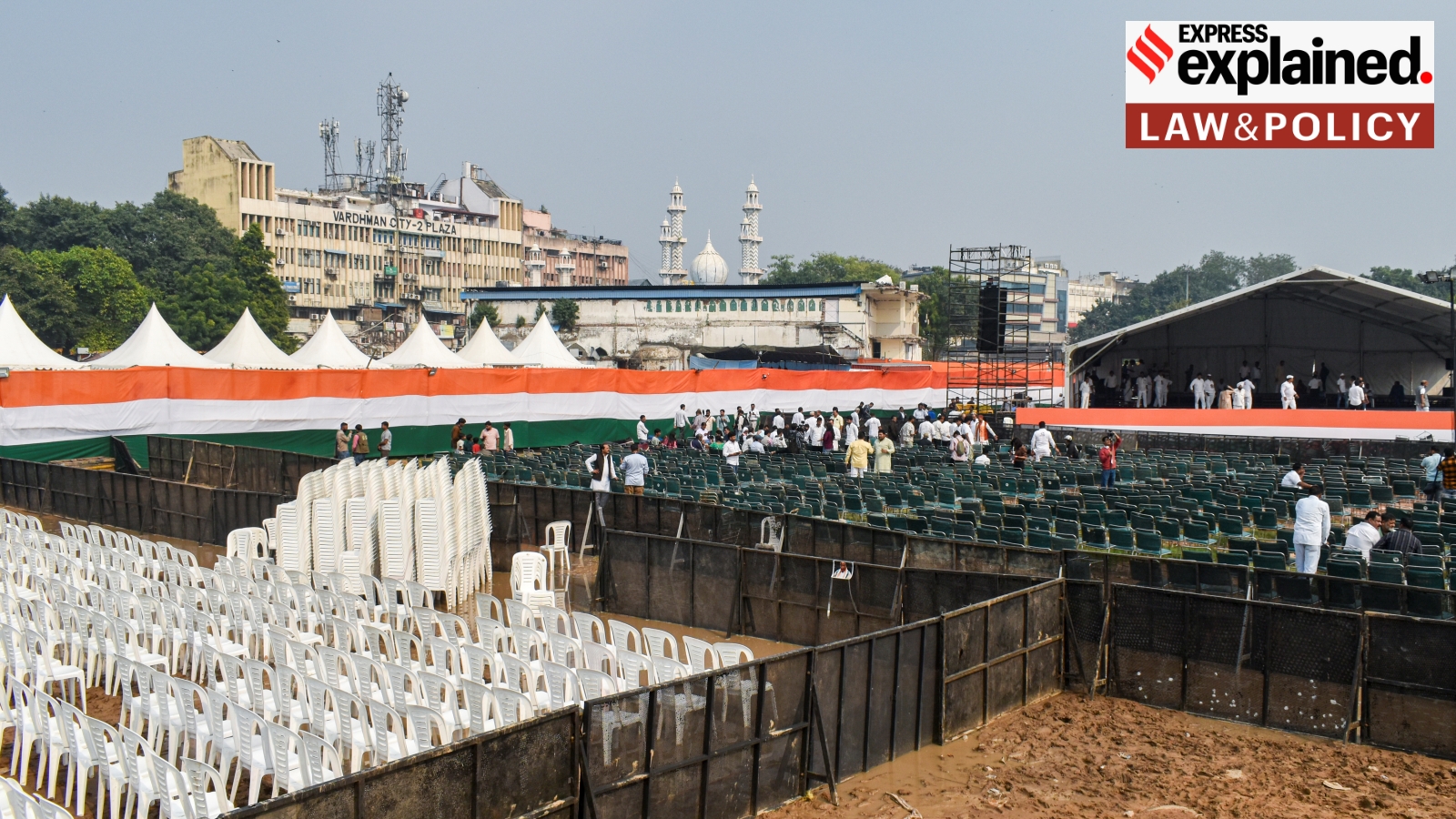
The rally will be held at Ramlila Maidan — the first major demonstration at the newly designated protest site since the denotification of Jantar Mantar by Delhi Police in October.
While Jantar Mantar was just around 2 km away from Parliament, Ramlila Maidan is a 6-km drive from the nation’s supreme lawmaking body. The other two designated protest sites are even farther — the CBD ground in Shahdara is around 14 km from Parliament while the ground in Burari is about 23 km away.
Additionally, booking Ramlila Maidan costs between Rs 50,000 and Rs 1 lakh per day.
On October 15, the Supreme Court issued notice to the Centre and the Delhi Police on a writ petition challenging the October 11 standing order that denotified Jantar Mantar as a designated protest site.
Can a protest be held beyond a designated protest site? Is it a prerequisite under the right to protest? Two senior Supreme Court lawyers explain.
What is the need for a designated protest site?
Designated protest sites strike a balance between the right to protest and the need to minimise public inconvenience. They give people a space, ideally close to the seat of power, to make their voices heard while preventing traffic disruptions and the blocking of public roads, said Senior Advocate Shadan Farasat.
Story continues below this ad
The practice of earmarking specific areas for protests was recognised by the Supreme Court in its 2018 judgment in Mazdoor Kisan Shakti Sangathan v. Union of India.
“The case dealt with the rights of organisations, protesters, and residents impacted by prolonged agitation at Jantar Mantar. The case saw an intersection between the right to peaceful protest under Article 19(1)(b), freedom of movement under Article 19(1)(d), and the extended scope under the right to life (Article 21),” said Senior Advocate Nipun Saxena.
In this case, the Supreme Court held the right to protest in a democratic society to be sacrosanct and set aside an order by the National Green Tribunal that barred protests at Jantar Mantar. The Supreme Court said that Jantar Mantar would be the designated “protest site”, subject to a “few permissions, including the size of crowd”, to be obtained from the administration to “facilitate” protests.
Story continues below this ad
Does the Constitution mandate designated protest sites?
There is no Constitutional or statutory mandate requiring designated protest sites. These sites are an administrative mechanism developed by governments to manage protests.
However, such sites must be accessible and close enough to the seat of power for protesters to be heard. If they are too far away, they defeat the purpose of the protest, said Farasat.
The right to protest is not absolute, and reasonable restrictions can be imposed to maintain public order, but these restrictions should not make peaceful protest ineffective, he said.
Story continues below this ad
A designated protest site is also not a prerequisite to the right to hold a protest. This is a mechanism made to strengthen the right to protest as a convenience measure for all stakeholders. It is not “prohibitory” in nature; the right to protest is independent of a designated protest site, said Saxena.
The Supreme Court, in the Shaheen Bagh protest case of 2020 (Amit Sahni v. Commissioner of Police), held that the right to peaceful protest cannot be stretched to an extent where the daily lives of citizens, (commuters, in this case) are severely affected.
However, if no accessible site is available near the seat of power, or if even the designated site is closed to protesters, the balance shifts against the right to protest. In such circumstances, people may seek permission to protest in other public spaces, said Farasat.
What does a site booking fee mean for the right to protest?
Farasat said that designated protest sites should ideally be reserved for protests rather than routinely used for other events, rallies or public functions.
Story continues below this ad
“While a ground such as Ramlila Maidan may naturally be occupied during Ramlila celebrations, the government should ensure that people have access to a suitable alternative… The idea of a designated protest site is different from that of a general-purpose ground used for political rallies or other events. If such sites are frequently unavailable because of other activities, they cannot serve their intended purpose,” he said.
On the question of booking fees, charging a substantial amount to use a designated protest site can make the right to protest inaccessible, particularly for workers, labourers and individuals who already struggle to get the government’s attention. A fee of Rs 50,000 for a protest involving 50 people, for instance, could be prohibitive for many groups. The right to peaceful protest should not depend on a person’s ability to pay, said Farasat.
Saxena said: “In the 2018 Mazdoor Kisan Shakti Sangathan case, one of the key concerns was that the alternative site proposed by the government, Ramlila Maidan, was a commercial venue that charged organisers Rs 50,000 per day at the time. This could prevent groups with limited resources, such as Anganwadi workers, pensioners, Dalits or ordinary citizens, from exercising their fundamental right to protest. Taking these concerns into account, the Supreme Court held in 2018 that Jantar Mantar would continue to be a designated protest site, subject to prior permissions. The underlying principle was that people should not be denied the opportunity to make their voices heard simply because they cannot afford to pay for a venue.”
Story continues below this ad
He added: “Every citizen is free to assemble peacefully wherever they wish to. The only caveat would be the imposition of prohibitory orders in a specific geographical location. Protests cannot by any stretch of imagination be localised to one area alone. The denotification of a ‘protest site’ cannot by itself be a ground to let any peaceful protester who wishes to exercise the right to assemble peacefully and exercise freedom of speech be restrained in any manner.”
KioskNews shows a cleaned-up reading view extracted from the publisher’s page — the original always lives on their site, not ours.