LOCAL ELECTIONS 2026: DA needs FF+, Knysna Civic Association to govern troubled coastal town
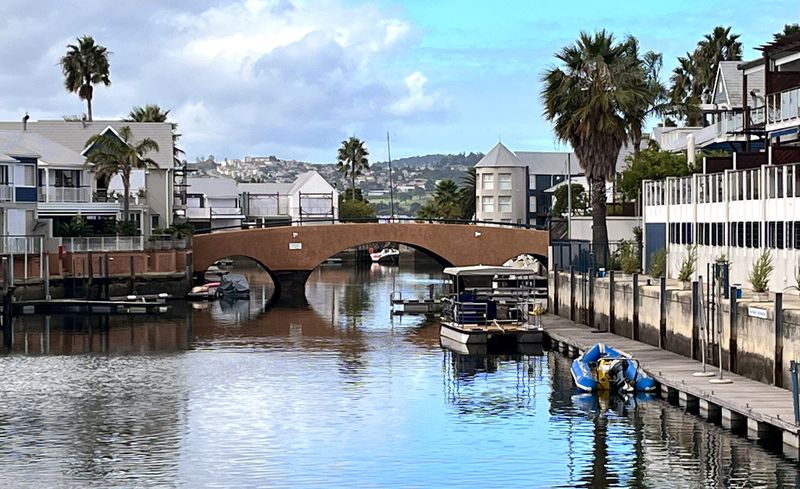
Knysna has a long-standing history of political instability amid coalition-making – and coalition-breaking – since 2016, with more recent problems including corruption and non-functioning sewerage pumps.
In October 2026, ex-mayor Thando Matika, the then acting municipal manager Boy Ngubo and acting chief financial officer Busisiwe Lubelwana were arrested and released on bail in connection with kickbacks linked to a security tender.
The council clashed with DA local government MEC Anton Bredell, who successfully opposed Ngubo’s appointment, and also went to court over provincial attempts in 2025 to dissolve the council in terms of section 139 of the Constitution.
On 4 November, the DA gained one extra seat in the 21-strong council on the back of increasing its voting share to 44.41% from the 35.44% achieved in 2021. But that remains less than the 49.61% support the party received in the 2016 municipal election when its 10 seats, together with Cope’s one seat, clinched the council.
Currently, the DA in Knysna has nine seats to the ANC’s four, two for the Patriotic Alliance and six single seats for parties including the South African Communist Party (SACP), EFF and Freedom Front Plus (FF+). These results are based on completed vote counts.
Depending on the coalition talks, it could go either way: the DA with the one-seat FF+ and Knysna Civic Association could take control of council, but a coalition of everyone but the DA and FF+ would also clinch the required 11 seats for control.
Beaufort West and Saldanha Bay
Those dynamics also play out elsewhere across the Western Cape, where key economic hubs such as Beaufort West and Saldanha failed to give the DA an outright majority.
It came close in Saldanha, where the party obtained 49.11%, slightly up from 2021, but again not enough to win outright control in the council where the PA, with six seats, is the second-largest party, followed by the ANC (4). The SACP gained one seat in the council.
Unlike in Knysna, the coalition numbers in this 31-seat council favour the DA, which would reach a majority in cooperation with the two-seat FF+. But that is not a given. Both parties fell out in Oudtshoorn, a key economic hub in the Karoo, after complaints that the coalition partners’ views were not heard on the budget or other council-related matters.
In July 2024, DA mayor Chris Macpherson was ousted in a motion of no confidence supported by the ANC, the Independent Civic Organisation of South Africa and the FF+, whose councillor Johan Allers became mayor.
Municipalities controlled by DA
Completed results on Friday showed DA was in outright control of:
Stellenbosch with 62.09% of the vote;
Drakenstein (56.12%);
Hessequa (51.47%);
Bergrivier (64.24%);
Swartland (60.73%), which is recognised as a top-performing small-town council and is seated in Malmesbury;
Overstrand (61.01%); and
Mossel Bay (66.15%), an economy centred on PetroSA.
In George, the results were extremely close. The DA obtained 28 of the council’s 55 seats with 50.26% support, while all other parties combined – the PA came second with 11 seats – make up the remaining 27 seats.
The Western Cape’s five district councils are announced last as local municipalities must appoint councillors to supplement the directly elected ones.
By Friday afternoon, 6 November, the final results for Cape Town were outstanding, although the DA declared it a win a day earlier on its own projections. DM
KioskNews shows a cleaned-up reading view extracted from the publisher’s page — the original always lives on their site, not ours.