The 10 Best Stephen King Book Endings, Ranked

Jeremy has more than 2800 published articles on Collider to his name, and has been writing for the site since February 2022. He's an omnivore when it comes to his movie-watching diet, so will gladly watch and write about almost anything, from old Godzilla films to gangster flicks to samurai movies to classic musicals to the French New Wave to the MCU... well, maybe not the Disney+ shows.
His favorite directors include Martin Scorsese, Sergio Leone, Akira Kurosawa, Quentin Tarantino, Werner Herzog, John Woo, Bob Fosse, Fritz Lang, Guillermo del Toro, and Yoji Yamada. He's also very proud of the fact that he's seen every single Nicolas Cage movie released before 2022, even though doing so often felt like a tremendous waste of time. He's plagued by the question of whether or not The Room is genuinely terrible or some kind of accidental masterpiece, and has been for more than 12 years (and a similar number of viewings).
When he's not writing lists - and the occasional feature article - for Collider, he also likes to upload film reviews to his Letterboxd profile (username: Jeremy Urquhart) and Instagram account.
He has achieved his 2025 goal of reading all 13,467 novels written by Stephen King, and plans to spend the next year or two getting through the author's 82,756 short stories and 105,433 novellas.
Sign in to your Collider account
Stephen King has a reputation for writing questionable endings, but that feels a bit unfair, honestly. Like, not everything he’s written has been great, and his not-so-great novels do tend to have not-so-great endings. And there are also books of his that begin quite a bit better than they end, running out of steam to some extent, which might be a consequence of writing numerous books without a specific ending in mind.
Still, some Stephen King books have great endings, including the ones below. There are some hot takes here, with a few controversial picks alongside the handful of King novels where the quality of the ending is more generally agreed upon, or at least not controversial. This will also be done while keeping spoilers to a minimum, referring to the direction some final chapters take but without giving away too many specific plot details.
10 'Misery' (1987)
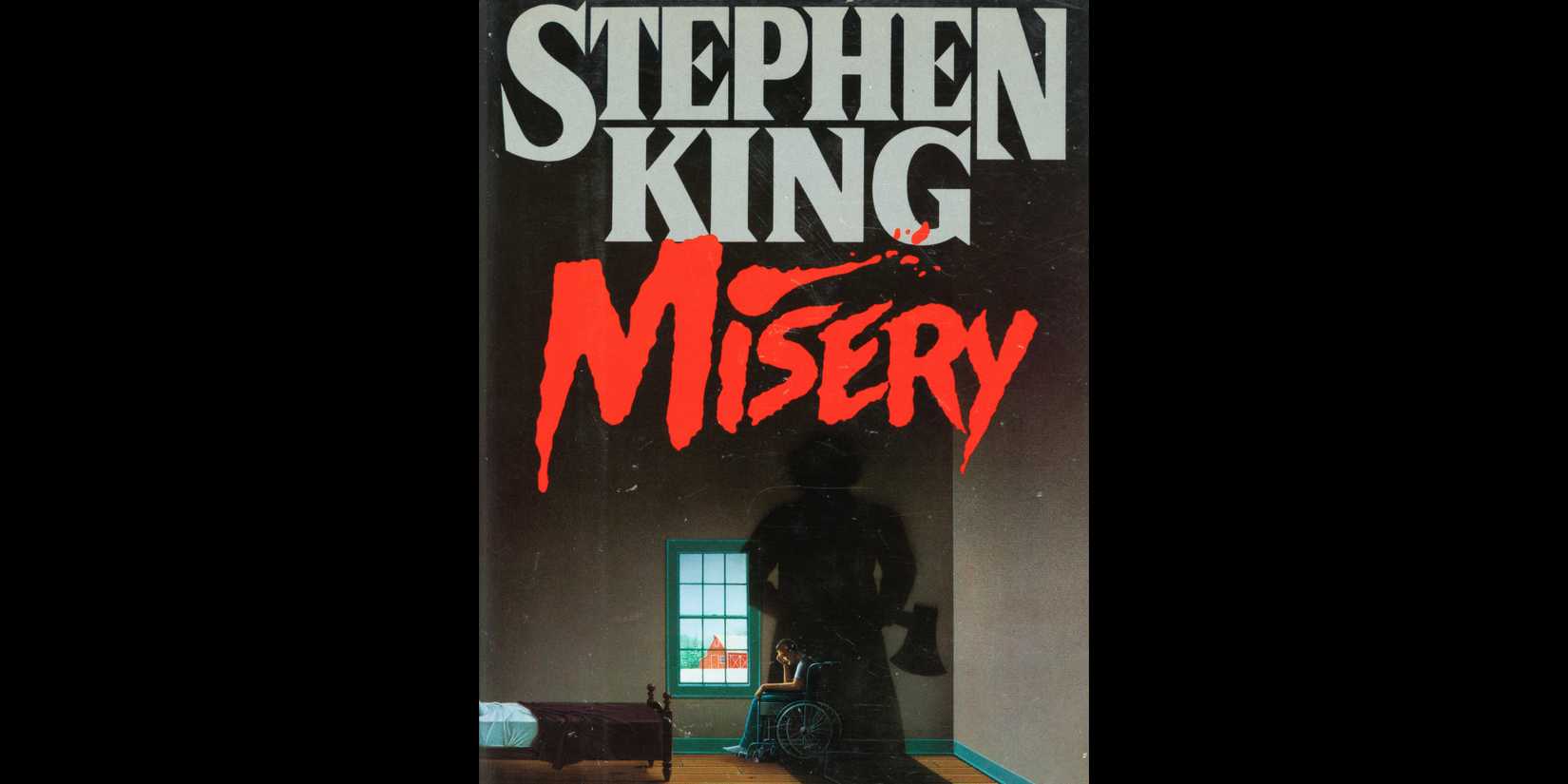
Aggressively about writing, even compared to other Stephen King books (he does like writing about writing), Misery is about an author who gets held against his will inside the house of an overly dedicated fan. He’s moved on from a series he considered quite weak, by his standards, but she loves those books and is horrified to learn this, so her behavior toward him gets more violent, and his time as a prisoner extends as she makes him continue the series he didn’t want to.
It gets undeniably nasty at points, starting out tense and then ending up quite horrifying, but it’s paced phenomenally and King always keeps things interesting, even with only two main characters and such a confined setting. There are only so many ways a story like Misery can end, technically speaking, with the premise being what it is, but that doesn’t stop the final stretch of the book being absolutely riveting.
9 'Revival' (2014)
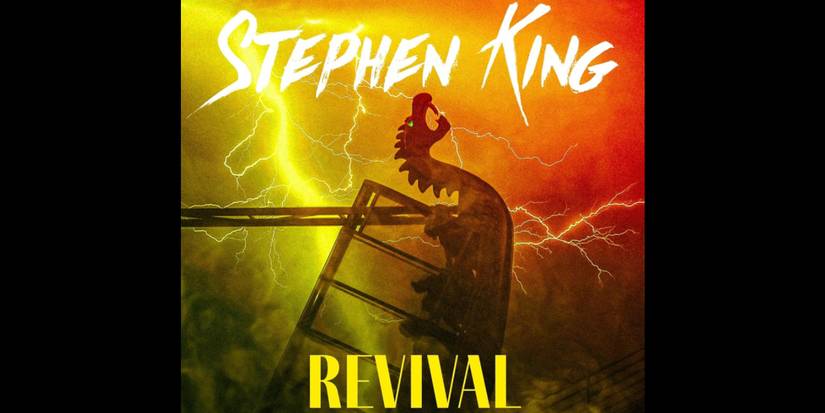
Revival definitely ends better than it begins, but it does also start fairly well, too. It’s a slow burn, though helped by the fact that it doesn’t burn too slow, nor for too long, with it being about a young boy and a tragedy involving a minister. The boy grows up and happens to reunite with his old town’s minister, and the latter is still haunted by his past, and dangerously obsessed with contacting people in the afterlife or even bringing the dead back to life.
It’s probably the scariest book King’s written in the 21st century so far, and the horror here toward the story's end does rival much of what can be found in some of his best/most frightening works of the 20th century.
This does make Revival comparable to another Stephen King book (this one from 1983) that will also be mentioned shortly, but there is a different sort of horror tapped into by the time Revival reaches its final few chapters. It’s probably the scariest book King’s written in the 21st century so far, and the horror here toward the story's end does rival much of what can be found in some of his best/most frightening works of the 20th century (when he was generally focused on writing horror to a particularly great extent).
8 'The Dead Zone' (1979)
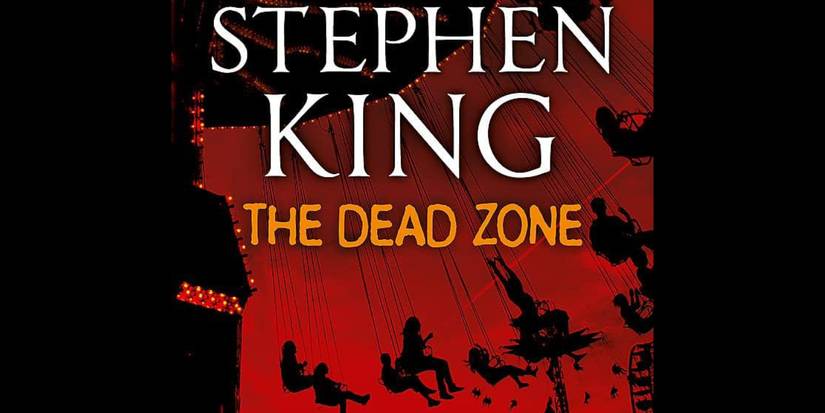
There’s a fairly well-known movie adaptation of The Dead Zone, and then it was the basis for a TV series, too, but forget about ‘em, because the source material is where it’s at. The narrative here is about a man who is able to see glimpses of the future through the act of touching objects or people, and this ability reveals to him that a politician with aspirations of one day becoming President might well doom the world if he were to be elected.
He also uses these powers to help solve a case involving a serial killer, but the part about him grappling with the choice of whether to assassinate someone before they can do something unspeakably devastating (as opposed to the other terrible acts they do earlier, just on a smaller scale) is what’s particularly compelling in The Dead Zone. It builds to where a story like this has to go, but squeezes all the suspense it can from its premise, and the final stretch of The Dead Zone is some of the most riveting writing King’s ever done.
7 'The Long Walk' (1979)

They do walk for quite a long time, in The Long Walk, but the book itself is not very long, compared to many others in Stephen King’s body of work. Oh, sorry, “in Richard Bachman’s body of work,” because King wrote this under his pseudonym, and at a time when it wasn’t the most common of common knowledge that King and Bachman were one and the same. Some people might've suspected it, though it wasn’t confirmed until around the publication of Thinner.
Anyway, the long walk in The Long Walk is undertaken by a group of teenage boys, as part of an annual competition in a dystopian world, with one person left standing at the end, still walking, and the others all being executed after having to drop out. The ending here is definitely haunting, albeit in a different way to how most of the book before it was harrowing (and no, that doesn’t feel like a spoiler, because it’s impossible for a book with this much death and devastation to have an ending that’s not at least a little bit disturbing and bleak).
6 'The Stand' (1978/1990)
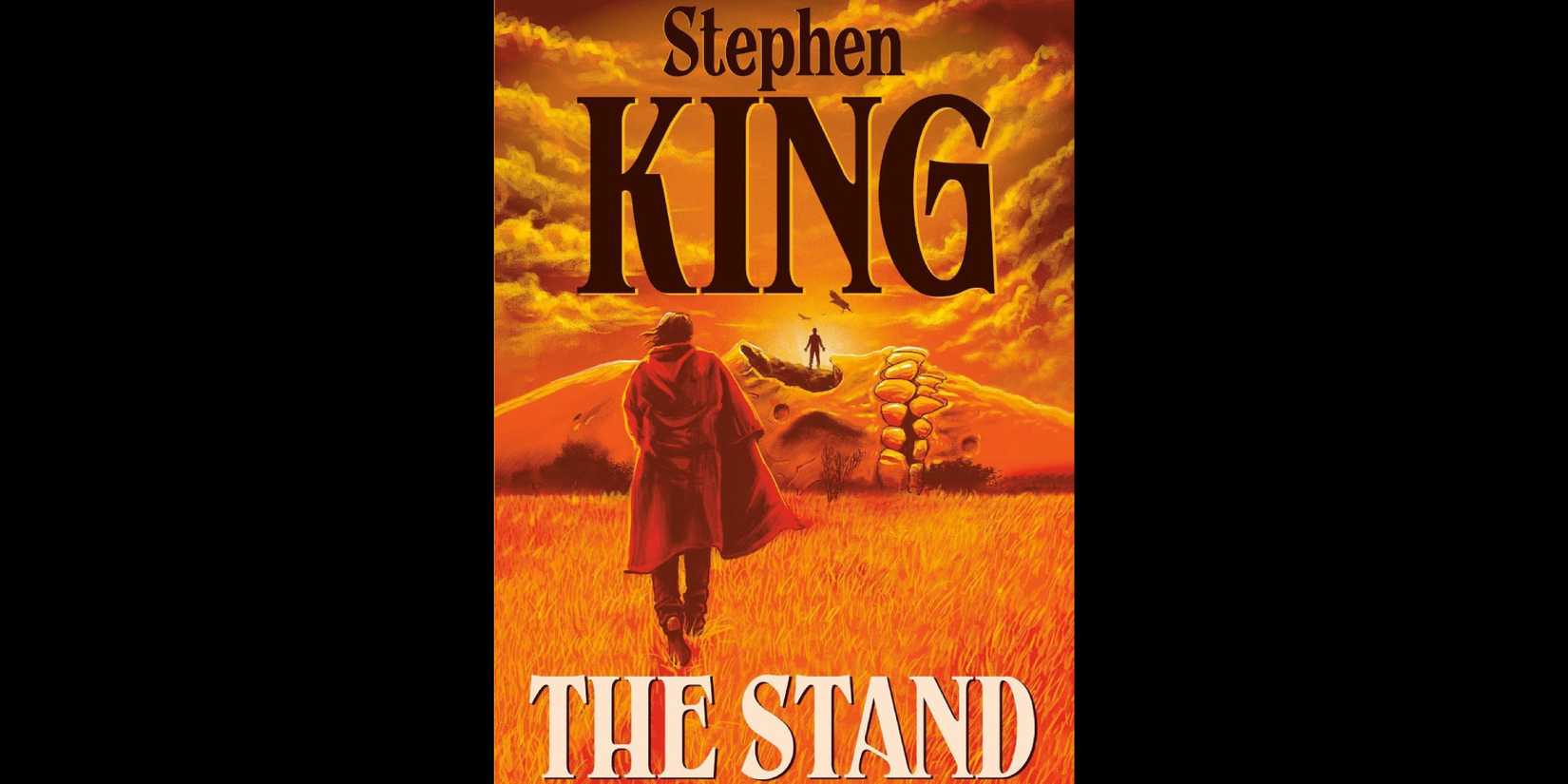
The Stand was first published in 1978, and it has an ending that’s better than some people give it credit for, but the ending to the 1990 uncut version of the same story is superior. It does have a fairly abrupt way that the main conflict is wrapped up, sure, but the whole final act, so to speak, is still exciting and packed with drama, and then what it does after the climax is also emotionally satisfying.
It’s a massive book, and so it’s not going to please 100% of readers for 100% of its runtime, but The Stand is still one of those Stephen King novels that has a better ending than you might expect, and there are endings to King stories that are less well-known, but much more jarring/questionable. That final part of the uncut version of The Stand also has a pretty striking, effective, and ominous epilogue, too, adding to King’s whole multiverse in an undoubtedly intriguing way.
5 'Pet Sematary' (1983)

Alluded to earlier, when talking about Revival, Pet Sematary keeps the page count fairly modest by Stephen King standards, with the scope of the novel being limited as there’s just a focus on one family unit. It’s about said family moving to a new house that’s by a particularly dangerous highway, and then they also live near a cemetery that seems to bring the dead back to life.
It’s about pets, at least at first, but there is further conflict and horror that comes about because of the idea that the cemetery might also be able to do the same if people are buried there. Pet Sematary does get undeniably disturbing in its back half, after a suitably eerie first half, and the ending here is definitely one of the more difficult ones to shake and/or forget, out of all the book endings King’s written.
4 'Cujo' (1981)
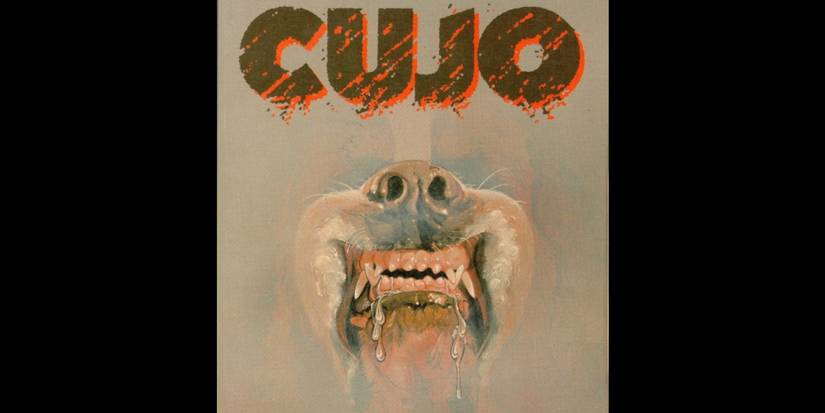
See, Stephen King didn’t mess around in the 1970s and 1980s. Some unspeakably horrible things happen in Pet Sematary, and the same can be said about Cujo, with the two also feeling undeniably linked because Pet Sematary is initially about a cat that comes back from the dead, and Cujo is largely about another pet who proves to be a source of horror, but there isn't anything supernatural here.
The titular Cujo has rabies, and he gets violent because of that, putting a fair few people in danger while some other characters (human beings who genuinely aren’t good people) cause more by way of destruction and terror. It gets grim and even a bit unpleasant the further it goes along, but it’s easy to admire how uncompromising things are toward the end of this novel (the movie adaptation does not pack nearly as much of a punch with its altered ending).
3 'IT' (1986)

Speaking of Stephen King being uncompromising, here’s IT, which does indeed have what’s probably the most controversial chapter King’s ever written, and it’s found fairly close to the novel’s end. It’s the elephant in the room, and now it’s been addressed. IT is still an absolutely massive room, so even with a very eyebrow-raising chapter that goes on for a while, it doesn’t take up that much space.
There’s room for so many elephants to stand in the room that is IT. The novel’s got two timelines, a few tangents that are very compelling, and an all-time great villain being fought by a memorable group of underdogs, both as kids and adults. The entire thing builds to a suitably grand ending, or technically two endings, and King does an honestly phenomenal job at somehow wrapping such an ambitious book up with some truly gonzo creative choices that (mostly) pay off.
2 '11/22/63' (2011)

11/22/63 is about an English teacher who’s given the chance to go back in time, but specifically to 1958. He sees this as an opportunity to stay in the past for a while, until the titular date, when John F. Kennedy was assassinated, and on that date, he intends to prevent the assassination from happening, which seems like it’ll change the future for the better... that’s the plan, at least.
He has to confirm who killed Kennedy while there, and then there are other forces that are harder to comprehend which seem to be working against him changing the past. 11/22/63 is excellent at staying engaging over a vast number of pages, and the final few chapters are super intense and exciting before the last couple of chapters work by hitting hard emotionally in a way not many other Stephen King books have. It is for sure one of the stronger endings King’s ever written.
1 'The Dark Tower VII: The Dark Tower' (2004)

Like with The Stand, some people really don’t seem to like how The Dark Tower (as in the whole series) concluded with the seventh main book, fittingly called The Dark Tower VII: The Dark Tower. It’s bold for sure, perhaps to a greater extent than even the ending found in IT, which is also a somewhat controversial King conclusion, but let it be known: these books have good endings, actually.
There was a need to wrap up a lot here, and with The Dark Tower VII, Stephen King didn’t pull any punches, and then he also didn’t limit himself in terms of strange and offbeat ideas. There’s a sense of finality here for sure, alongside some anticlimactic elements, and then also a lot that’s surprisingly meta and introspective. It gives you a ton to think about and feel all at once, and it’s undoubtedly striking as a grand finale. For better or worse, once read, you're unlikely to ever forget it.

The Dark Tower
- Release Date
- August 3, 2017
- Runtime
- 95 minutes
- Director
- Nikolaj Arcel
- Writers
- Anders Thomas Jensen, Akiva Goldsman, Jeff Pinkner, Nikolaj Arcel
KioskNews shows a cleaned-up reading view extracted from the publisher’s page — the original always lives on their site, not ours.