Cummins’ answers won’t end Sandpapergate debate, but he couldn’t have done any better
He bowls, he bats, he fields, he leads. Now for his next trick: could Patrick Cummins walk the tightrope while threading the needle and squaring the circle?
It’s a while since John Howard called the prime ministership Australia’s second-most important job. The symbolic authority of the nation’s men’s Test cricket captain has been somewhat downsized in those 25 years. But circumstances have reasserted that symbolism. Only the captain could speak here.
Cricket Australia and white-ball captain Mitch Marsh might have sidestepped the issues brought up by Usman Khawaja in his autobiography, but Cummins understood what his position entails. It fell to him to use that position – and to test the abundance of his natural gifts – to reconcile the apparent contradictions of the Sandpapergate story.
As well as explaining Rashomon, he had to bring peace to the opposing and equally legitimate national impulses that have been pulling the cricket community apart. One is the public demand for transparency, to know, finally and unconfusingly, what went down in South Africa in 2018. The other is the wish to put the past behind us and concentrate on the challenges of today.
A tall order for a tall man. But this is the Australian Test cricket captaincy. Nobody said it should be an easy job.
A week’s worth of headlines came out of Cummins’s Friday press conference: about 2018, about the punishments, about racism, about Cricket Australia’s conduct and processes, about the ongoing fallout within the Test team, about privacy, about some tectonic issues within the sport in this country. But aside from opening a pallet load of cans of worms, did Cummins achieve what he set out to achieve? Did he pull it off?
Obviously, his press conference won’t end debate, dissension and the usual piling on, but that’s society. Zombies can’t be put to bed.
Cummins did make slips. He accused Khawaja repeatedly of being “flippant” in saying “we all knew” about the planned ball-tampering. Flippancy suggests deliberate carelessness, and this is unfair to Khawaja. The more accurate word would have been “glib”. Cummins himself was glib when he said “we were all interviewed” in CA’s inquiry at the time, when they weren’t. He appeared a bit unclear on the law about intentionally throwing the ball into the ground to rough it up, suggesting it was legal when it wasn’t. These and many more issues will be picked apart.
What Cummins did was break the wearisome, manufactured, over-managed mould into which the captaincy had been squeezed. He spoke for 80 minutes, of which two were a prepared statement. As he had promised, he answered all questions, and many of them were the right questions about the broader context beyond the specifics of sandpaper being taken onto Newlands in 2018.
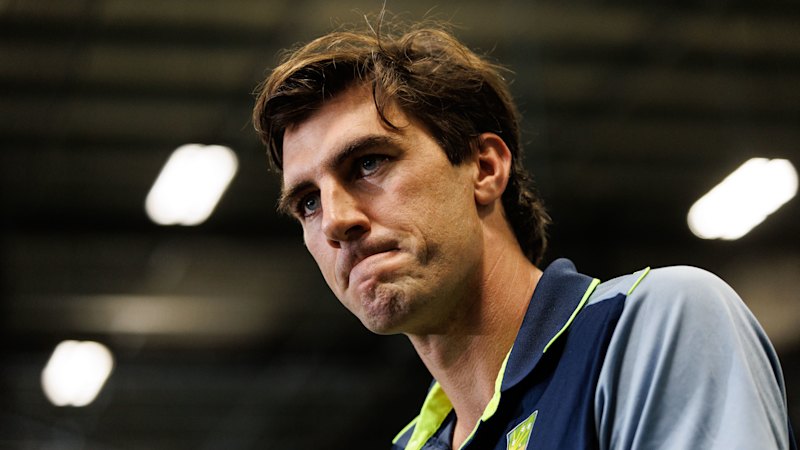
He was candid and consistent and, most importantly, he conveyed the impression of speaking without fear (I can’t say what he was feeling inside, but at the beginning he looked nervous and tearful and so very, very young).
He denied that he or the other bowlers were aware of any plan for illegal acts, let alone involved in such planning. But he did acknowledge the team had, through its win-at-all-costs attitude, pushed the boundaries, bit by bit, until the sandpaper they used in the nets and on their bats ended up in Cameron Bancroft’s pocket on the field.
Cummins painted a nuanced picture of a continuum of “ball management”, where the line between legal and illegal was blurred, just as Australia had been blurring the line in other aspects of their conduct. Cummins said he had been uncomfortable with how Australia had walked that fabled “line”, and had helped to change that culture since he became captain. This fact, his track record, gave him authority.
For a long time, Australian cricket captains were known for their honesty. Ian Chappell and Allan Border were exemplars of this, but they were not the only ones. In more recent times, the pseudo-science of media management has got between the captains and their constituency. Personal weaknesses haven’t helped. But it’s been a long while since an Australian cricket captain has taken such a risk as Cummins took on Friday, to turn himself inside out on personal and professional sore points. His integrity was under question. Plenty of Australian captains have ducked and dived, and the accumulation of those acts has distanced the cricket team from a section of its community. Cummins was seeking to set that straight, by being straight.
Judging whether he succeeded in a press conference feels a little too much like writing a theatre review. But if you take Cummins at his word – that this was not theatre, just the truth – I felt he did as much as a captain could possibly do.
His explanations did cast light on why Khawaja might have felt that the plan to tamper with the ball was team-wide, and on why Khawaja might have been mistaken. The context Cummins provided on ball-tampering did illustrate the spectrum of common practice and the wobbliness of the “line” between legal and illegal that pervaded most levels of cricket in 2018.
At the end, you could reconcile the apparent opposites. You could believe Khawaja’s version while also accepting Khawaja was loose in his language (maybe he did need a stronger editorial hand in his book, if not an actual ghostwriter). You could believe David Warner and Cameron Bancroft thought they had the bowlers’ implicit consent to doctor the ball, but also why the bowlers did not think they had given such consent. There is no absolute settling of one version, but there was never going to be. Political expediency in 2018 cut that avenue off, and cricket has been paying for it since. Cummins acknowledged as much.
So while it can’t be said that Cummins succeeded in ending the damaging debate, that would be too high a bar to set. The question is whether he could have done any more than he did. And I don’t think he could have.
If there’s anything to take away from the week, it’s that this argument should have been thrashed out a long time ago. The Newlands incident has been a suppurating infection for eight years. Khawaja lanced the boil, finally, and Australia’s captain has applied the bandage. Now let’s give it some time to see if it can heal.
News, results and expert analysis from the weekend of sport sent every Friday. Sign up for our Sport newsletter.
KioskNews shows a cleaned-up reading view extracted from the publisher’s page — the original always lives on their site, not ours.