An AI 'Kill Chain' Was Behind US Strikes On Iranian School In Minab: Report
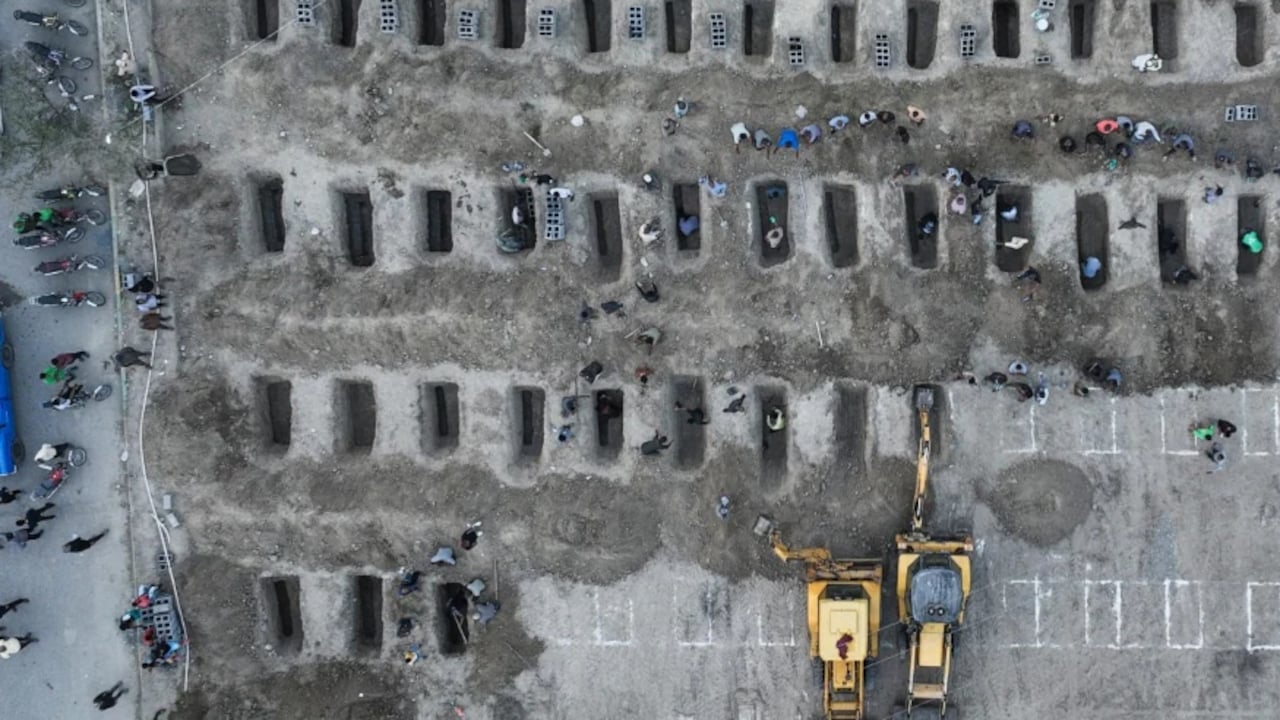
On February 28, two Tomahawk missiles hit the compound of Shajarah Tayyebeh Elementary School in the southern Iranian city of Minab as the US and Israel launched their joint war against Iran. More than 150 people, including at least 123 children, were killed in the explosions. The two-story school building was built on land that was once part of a military compound.
Iran blamed the United States for the strikes, which the United Nations said amounted to war crimes. Though the Donald Trump administration has not publicly taken responsibility for the tragedy, a Bloomberg investigation found that the Pentagon knows its overreliance on artificial intelligence, which is fed with outdated targeting data and lacks human oversight, was behind the bloody tragedy.
In terms of child deaths, the Minab was the deadliest American military targeting error of the 21st century.
Preventable Failures
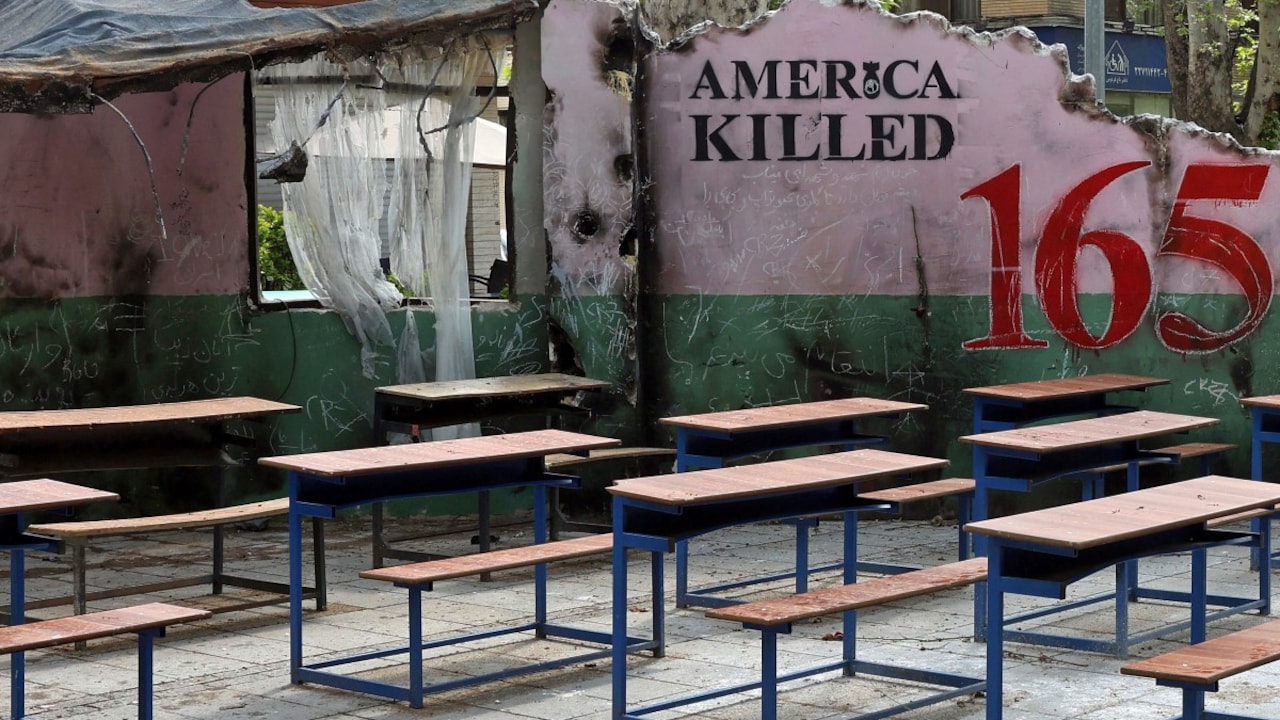
Photo Credit: AFP
More than two dozen current and former US officials, who spoke to Bloomberg on the condition of anonymity, said some Pentagon personnel knew within hours that the US military's "cascade of preventable failures" was responsible for the civilian catastrophe.
It was the final days of February when the Trump administration ordered an overwhelming aerial assault on Iran. Officials told Bloomberg that the urgency of the demand compressed the time frame for finalising targets. This, combined with outdated intelligence about the site, cuts in civilian-protection teams, and an overreliance on artificial-intelligence technology, set the stage for the deadly error.
The US reportedly struck more than 1,000 Iranian targets during the first 24 hours of the war. The school in Minab was one of them. It landed on the target list because the compound it was built on had been classified by the US military as an Islamic Revolutionary Guard Corps (IRGC) facility for years.
But officials involved in the investigation noted that there was clear evidence that the site had been modified, with new construction -- visible on satellite imagery -- dated back almost a decade. They agreed the site openly operated as a school.
Commercially available satellite images also showed that construction of walls and entrances separating the school site from the military base was completed by 2017. An image from 2018 showed brightly painted walls, a football pitch, assembly areas, and markings for children's activities.
Analysis of commercially available satellite images shows construction of walls and entrances that separate the school site from the military base, work that appears to have been completed by 2017. A 2018 image showed brightly painted walls alongside a soccer pitch, assembly rows, and play markings on the ground.
According to the report, years before the strike, some US intelligence analysts took notice of the changes in 2019. They logged remarks about the modifications in a system that wasn't connected to the primary military intelligence database, which informs targeting.
The primary database used to identify the targets continued to identify the Minab site as an IRGC facility. A New York Times report in June noted that targeting officials had used satellite imagery that was seven years old and did not show the school.
Officials involved in the Pentagon inquiry said they were examining the failure to update the site's classification.
The Killer AI

Photo Credit: AFP
Inside the US Central Command (CENTCOM), which oversaw the attack, officials said some personnel relied too much on the AI embedded in the Maven Smart System.
Developed by Palantir Technologies, the AI-enabled system uses more than 150 different data inputs to create a coherent set of information to inform commanders' decisions on complex military operations-- from targeting to command and control.
Since Trump returned to the White House, a Bloomberg probe found that the US Defence Department has heavily relied on Maven, making it a cornerstone of the US military apparatus. Several former senior US military officials now reportedly work for Maven's parent company, and their role is to keep the software functioning inside secure military environments.
Officials said some military personnel expected the AI-enabled system to identify and flag outdated information or inconsistencies in intelligence used to assess potential targets. It remains unclear why they had such expectations.
A Palantir spokesperson told Bloomberg the company "is not responsible for the underlying data nor identifying intelligence deficiencies" and that there was no evidence its software was at fault in the Minab strike.
Two people familiar with Palantir's Pentagon contracts told the publication the Trump administration remains primarily responsible for the quality of the information that's fed into Maven. But they noted that it was not uncommon for personnel who use such AI tools to develop operational understandings that differ from contractual terms.
In the aftermath of the Minab tragedy, Palantir has reportedly modified its capabilities to "re-review underlying intelligence to identify factors that would disqualify a target and flag inconsistencies and inaccuracies that human review may have missed."
The 'Kill Chain'
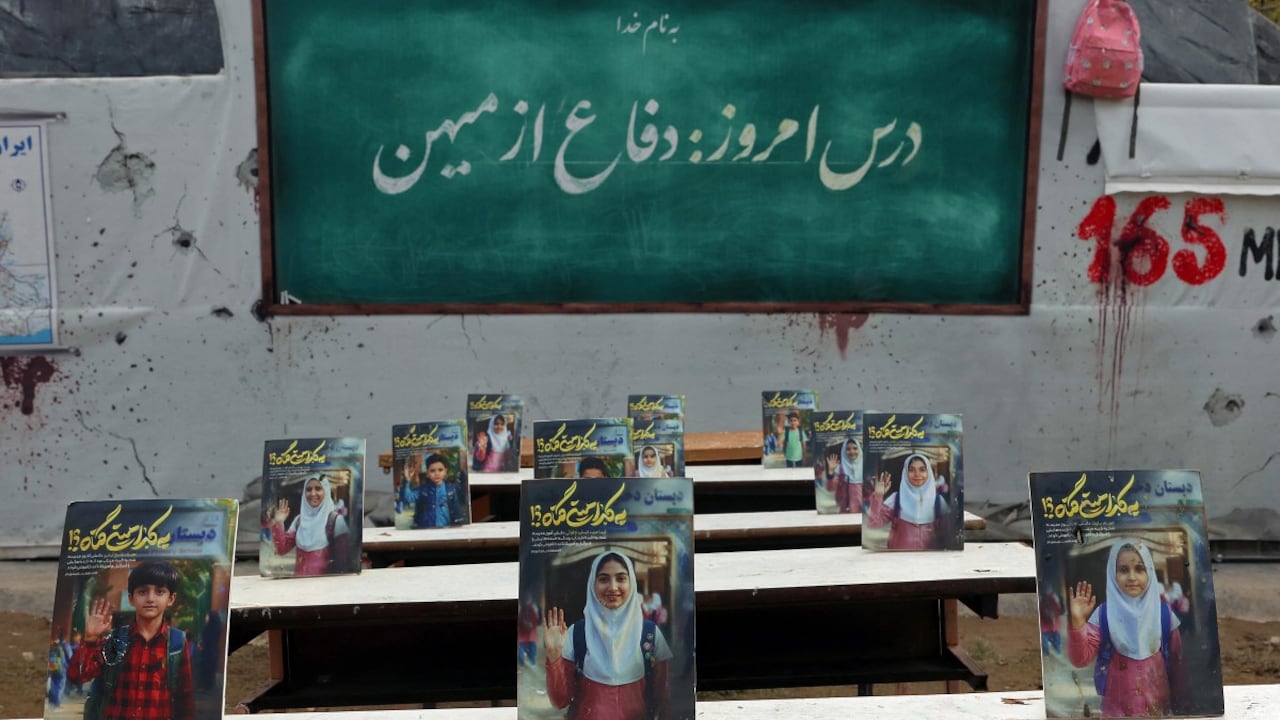
Photo Credit: AFP
Before the war, officials said the military was tasked with identifying targets, attacking which could paralyse Iran's military before Tehran even had a chance to respond. High on their list were sites associated with IRGC's naval division, which is tasked with defending, and at times, disrupting, the Persian Gulf and Strait of Hormuz.
The process used by the US military to approve such targets is reportedly called a "kill chain."
Traditionally, this process included a long chain of people from intelligence analysts, imagery specialists, targeteers, lawyers, commanders, and weapons crews. But today, Maven dominates decision-making in these operations, from the initial intelligence inputs to later review stages. Officials said the AI tool helped reduce work that previously took hours to just minutes.
Why Minab Made the List
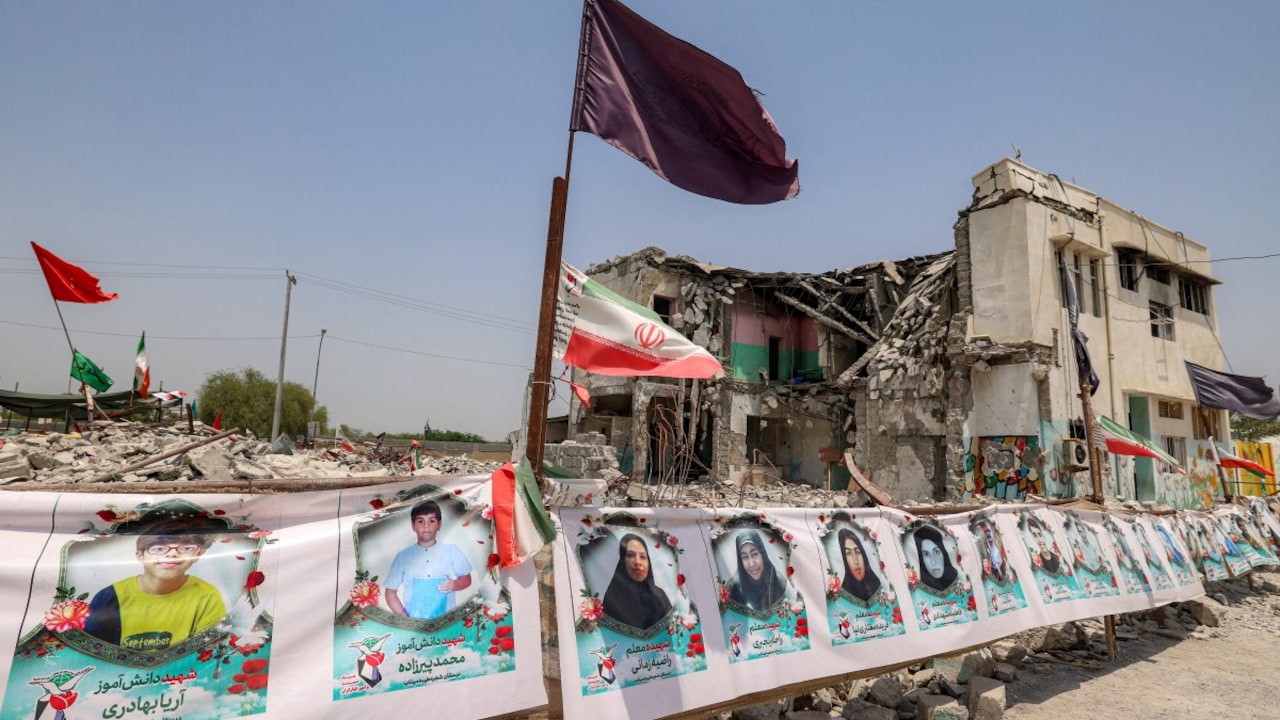
Photo Credit: AFP
The city of Minab is situated about 800 miles south of Tehran, close to the strategically important Strait of Hormuz. Home to about 76,000 people, the city houses military installations alongside residential neighborhoods. The IRGC operates several missile, naval, and logistics facilities in the area.
Shajarah Tayyebeh Elementary School was built almost a decade ago on land previously occupied by an IRGC naval unit.
With its uncorrected classification as an IRGC facility, the Minab school was fed into Maven along with other potential targets. It ultimately emerged as one of the recommended day-one targets, officials said.
But still, the tragedy could have been avoided by timely human mitigation. Officials noted Defence Secretary Pete Hegseth has dismantled most of the Pentagon's civilian harm mitigation, or CHM, units -- cutting staff by about 90 per cent, leaving fewer than 20 personnel. At CENTCOM, the team was reduced from 10 to one.
No civilian-harm mitigation specialist reviewed the Minab site before the strike, officials said.
Such review was not mandatory, but they noted that it could have reduced the risk to civilians' casualties.
"Haste can lead to errors," Laurie Blank, who was appointed a special counsel at the Pentagon's general counsel during the Biden administration from 2022 to 2024, told Bloomberg. She drew a distinction between pre-planned targets and targets identified during active combat.
"A rush to hit pre-planned targets just isn't the same thing," she said, "especially when the operations are launched by choice and not in response to an attack where you are responding without time to plan."
Lack of Accountability
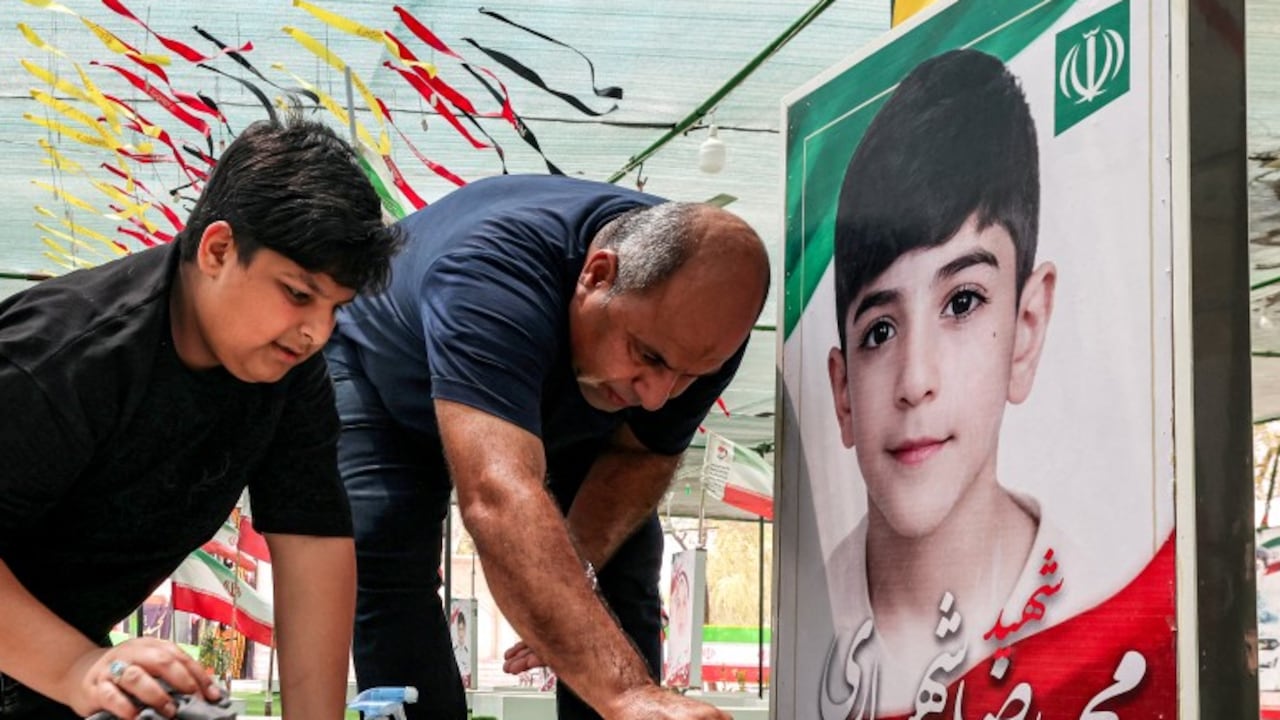
Photo Credit: AFP
A recent UN investigation found that there were reasonable grounds to conclude that the Minab strike, along with another US attack in Iran that day, amounted to war crimes. The report said the US had "failed in its obligation to do everything feasible to verify" that the school was a military target. It said the failure "went beyond negligence".
The US is yet to publicly accept responsibility for the attack, with President Trump having previously suggested that Tehran was responsible.
On 14 July, he told Fox News, "I don't think anybody's going to ever be able to say what happened there."
On March 12, over 120 Democrats in the US House wrote to Hegseth asking about the role that artificial intelligence, including Maven Smart System, played in identifying the Minab school site as a target. The Pentagon refused to respond publicly to the inquiries, citing the ongoing investigation.
Officials familiar with the investigation said it has been effectively complete for several months, but it has not been released.
CENTCOM head Admiral Brad Cooper, who ordered the investigation, told Congress in May that he was committed to transparency. Yet it's not clear how much detail will be included in the report, nor how much of the report will ultimately be released to the general public.
A Pentagon spokesperson told Bloomberg the probe was still under investigation and declined to comment further. Asked when the White House had been informed that the strike was an error, a senior administration official also referred to the ongoing investigation and said, "The United States does not target civilians."
KioskNews shows a cleaned-up reading view extracted from the publisher’s page — the original always lives on their site, not ours.