Could we be about to see the end of northern English dialects? My experience – and the science – says aye | Zahaan Bharmal
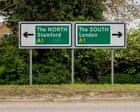
At our wedding reception 15 years ago, my new father-in-law stood up, pint in hand, looked me squarely in the eye and welcomed me to the family – and to Yorkshire. He acknowledged my obvious defect – my London roots – before offering a note of comfort. “Don’t worry, Zahaan,” he said. “You’ll fit in here eventually. It’ll just take 50 years.” He added that if I’d been from Lancashire, there’d have been an extra zero on that 50.
Not long after the wedding, my wife and I relocated from our first place together in London to her beautiful home city of York. The quality of life and the glorious scenery on our doorstep have made the move more than worth it – but over the last decade and a half, it’s felt like the people of Yorkshire and I haven’t always spoken the same language.
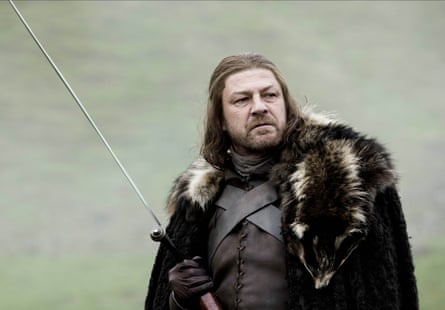
My untrained southern ear quickly decided they all sounded like a cross between Sean Bean in Game of Thrones and former Spice Girl Mel B. It was, of course, a gross oversimplification – but for someone who had previously treated Watford as the edge of the known universe, it was the best I could do.
It wasn’t just how things sounded that caught me out – some words meant something else entirely up north. In the south, “kegs” are what you store beer in; in parts of Yorkshire, they are your trousers. When I was first offered “tea” up in Yorkshire, I imagined a hot drink, perhaps with a small plate of chocolate biscuits on the side. What actually arrived, of course, was a full evening meal. And that was after I’d had my “dinner” for lunch.
My own children now speak with a proper Yorkshire accent – and mercilessly tease me for my southern tones. I pronounce the green stuff on our lawn “gr-arse”. They say it as if the “a” is barely there. The same goes for “bath”: mine comes out “bar-th”, theirs stays clipped and short. They won’t let it go, repeating my words back to me and comically lengthening my vowels until the whole kitchen is laughing. Whenever I try to defend myself, they look at me as if I’m an amiable foreign exchange student who hasn’t grasped the basics.
That sense of not quite fitting in has never fully worn off. At school pick-ups, if I overhear another parent with a London accent, something switches on in me – a kind of homing beacon – and I find myself gravitating towards them. I feel as if I’ve bumped into a long lost friend. I’ll want to talk about the tube or the price of a two-bedroom flat in Hammersmith or the best curry house – anything London-related. And, perhaps for their benefit or mine, I’ve caught myself deliberately dialling up my own London accent, with more elongated vowels than I might normally use.
Over the years, I’ve never tried to change how I speak, and I certainly haven’t been trying to fake being a northerner. Yet, without me ever quite noticing, some things have changed. I recently offered someone directions to Tadcaster Road and, without thinking, completely forgot to pronounce the “arse” in the middle. And I’ve now started calling dinner “tea” – much to the amusement of my children. This kind of flexing is not uncommon: Andy Burnham, the “king of the north” himself, has been observed sounding more scouse in Liverpool and rather more Mancunian in Manchester.
So where do I belong? When I take the train between York and London, where along the 170-mile journey does “grass” become “gr-arse” and vice versa? On the way up, I still feel like a Londoner heading north. On the way down, oddly, I feel like a northerner heading away from home. In fact, it feels as if I’m not fully northern or southern any more.
Perhaps one of the reasons I struggle to know where I belong is because accents themselves are changing. Dialect boundaries are not fixed lines on a map. They behave much more like bubbles in a bath (pronounced “bath” or “bar-th”; your choice), distinct when left alone but merging and reshaping wherever they touch.
after newsletter promotion
There are in fact some researchers – James Burridge and Tamsin Blaxter among them – who predict that this bubble behaviour may lead to many northern linguistic traits dissolving over time. The word “strut”, for instance, is steadily losing its rhyme with “foot” across parts of the north. And the old northern word for autumn, “backend” – now rarely used – will one day vanish altogether. Not every feature will budge: a 2024 study of the East Midlands, where the north and south bubbles touch, found the boundary between “gr-arse” and “grass” has stayed remarkably stable. While a 2020 study suggested that among city-dwellers in the north, local accents are softening into a more homogenous pan-northern accent. It seems that the same thing that’s happened to my accent and vocabulary is happening across the country. People move, marry, have children and absorb one another’s words and pronunciations.
As it happens, it’s predicted some of these changes could happen within the next 50 years – meaning my father-in-law’s joke may have been more prescient than either of us realised. Plenty of linguistic charm will be lost along the way, no doubt. But perhaps there is a small personal consolation. I may eventually fit in up here – not because I’ll ever talk like Ned Stark, but because there could be far less of a difference between the way people in the north and south speak. Mind you, my children will still find a way to take the mick out of how I say “bar-th”.
-
Zahaan Bharmal is the author of The Art of Physics and a senior director at Google, writing in a personal capacity
KioskNews shows a cleaned-up reading view extracted from the publisher’s page — the original always lives on their site, not ours.