4 more Supreme Court judges, 1 big question: Will diversity find space on the bench?
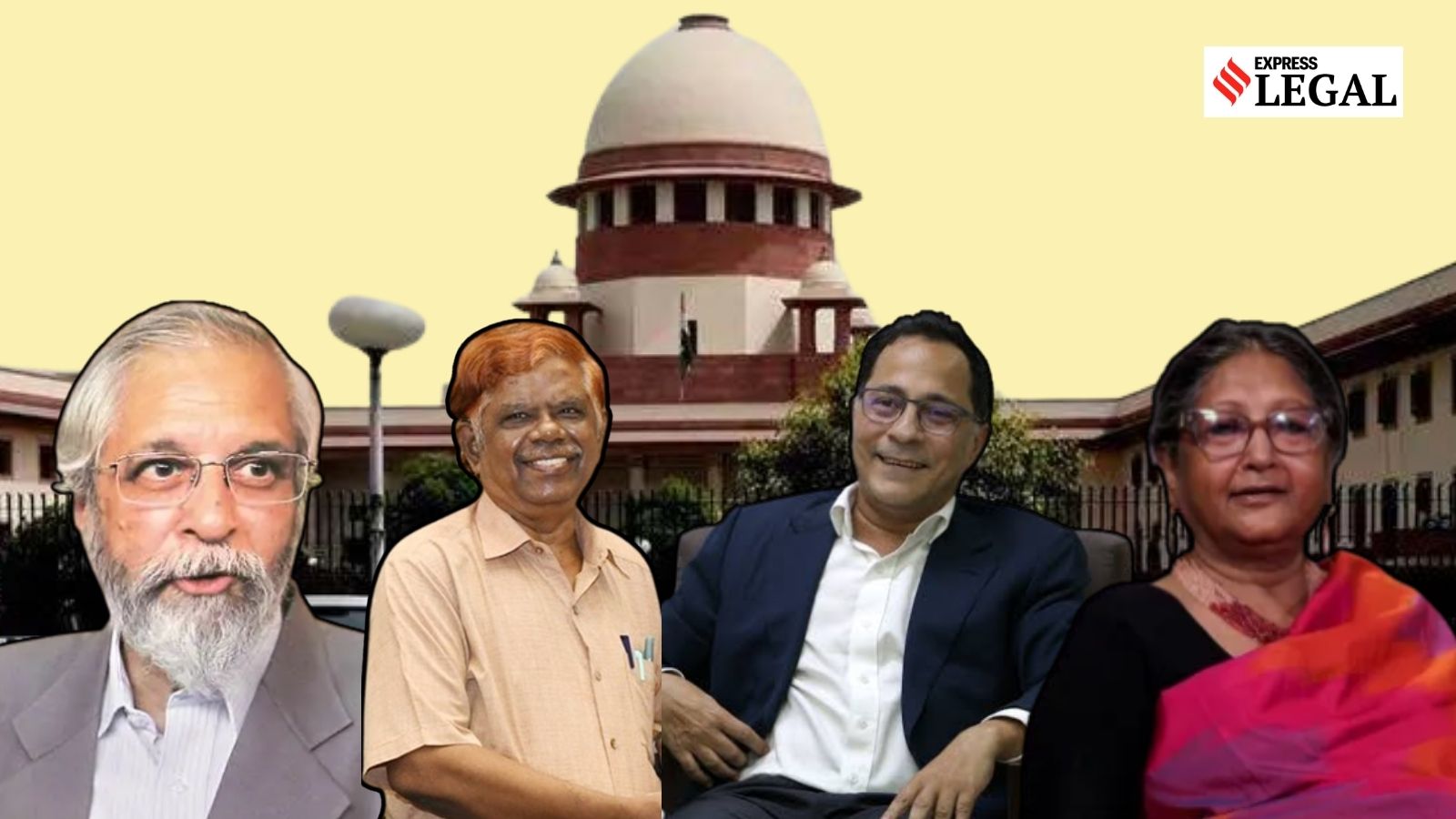
The Parliament recently took a major step to fill vacancies in the top court of the country when it passed the Supreme Court (Number of Judges) Amendment Act, 2026, adding four more judges to the existing strength of 34. Even as this is seen as a step towards addressing the perennial problem of pendency of cases, experts have underlined the “wider scope” of justice if this move also brings more diversity to the bench.
Data from the Ministry of Law and Justice shows that women account for only 4.15 per cent of the total judges in the apex court. And diversity, experts say, does not stop at gender. It must also be seen through the lens of caste, region, religion and other sections of society.
During his tenure, the court presided over by former Supreme Court judge Justice Madan B Lokur was popularly known as the “social justice bench”. Speaking on the question of diversity on the bench, he says it should include regional representation and gender equality, with no discrimination on the grounds of religion, caste or creed. “We have enough talent in the country to appoint judges on this basis,” he says, pointing to the lawyers, judges and academics as a wide pool from which suitable candidates could be identified.
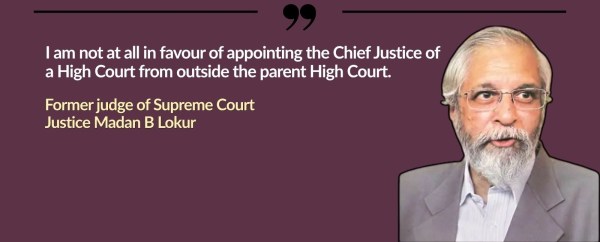
Lokur says with a thousand judges in high courts and now 38 in the Supreme Court, it is difficult to believe that only a handful of women could fill up the available vacancies. “Look around, and you will be able to spot the talent.”
Anna Chandy and women that followed
In 1937, Anna Chandy became the first woman judge in India, appointed to a district court. More than five decades later, in 1989, Fathima Beevi became the first woman to be appointed a judge of the Supreme Court of India.
Lokur, who has long advocated changes to the Collegium system, says it earlier included informal chats with candidates in a bid to know them and clear misgivings that any member of the Collegium may have about their candidature. “This has now been converted into an interview, although that never was the original intention. If an interview is necessary, it should be a formal, structured interview of about an hour or more,” he says.
According to Union Law Minister Arjun Ram Meghwal’s statement in Lok Sabha, since 2014, as many as 170 women judges have been appointed in high courts, including 96 in the last five years, and six in the Supreme Court.
Story continues below this ad
“…the Government is committed to enhancing social diversity in judiciary and has been requesting the Chief Justices of High Courts that while sending proposals for appointment of Judges, due consideration be given to suitable candidates belonging to Scheduled Castes, Scheduled Tribes, Other Backward Classes, Minorities and Women to ensure social diversity in the appointment of Judges in High Courts,” Meghwal said in February.
Lokur, however, questions the practice of appointing chief justices of high courts from outside their parent high courts, saying that while the practice may have had rationale when introduced in the early 1980s, the situation has since changed.
He also criticises the routine and mass transfer of judges, stating that it impacts the independence of the judiciary, and such transfers should be carefully pursued.
Institutional challenges
On August 5, during a parliamentary debate on the Supreme Court (Number of Judges) Amendment Bill, 2026, Senior Advocate and Trinamool Congress MP Menaka Guruswamy said that increasing the number of judges alone may not address the deeper institutional challenges.
Story continues below this ad
She stated that the real issue lay in the reluctance of the central government to appoint diverse candidates, women, religious minorities, those from Scheduled Tribes and Scheduled Castes, and LGBTQ+ individuals.
According to the Centre’s data, between 2018 and March 9, 2026, a total of 849 judges were appointed to high courts. Of these, 33 were from Scheduled Castes, 17 from Scheduled Tribes, 104 from Other Backward Classes, and 46 were from minority communities.
Data shows that of the 289 judges appointed to the Supreme Court, only 12 have been women since its inception. “Out of these, only six women judges have made it to the Collegium,” it adds.
India's Judiciary: Representation vs Reality
5.68 Crore
Cases pending across India's High Courts & District Courts
High Courts: 64,73,387 | District Courts: 5,03,91,116
System Under Strain
64.73L
Cases pending in High Courts
5.04Cr
Cases pending in District Courts
4,855
Judicial vacancies in District Courts (as on 01.12.2025)
74.6%
Of all prisoners are undertrials (3,94,413 of 5,28,728)
High Court Vacancy Crisis
1,122
Sanctioned strength
814
Working strength
308
Vacancies (as on Feb 2026)
27.5%
Of High Court posts lie vacant
Women in the Judiciary
14.3%
Of sitting High Court judges are women (116 of 814)
4.15%
Of all Supreme Court judges ever appointed are women (12 of 289)
6
Women judges have ever been part of the collegium
79 Yrs
Since Independence — and still just 6 women in the collegium
Caste Representation in HC Appointments (2018–Mar 2026)
3.88%
SC judges (33 of 849 appointments)
2%
ST judges (17 of 849 appointments)
12.24%
OBC judges (104 of 849 appointments)
5.4%
Minority judges (46 of 849 appointments)
Sources: Ministry of Law & Justice (Press Release 06.02.2026; LS Unstarred Reply 13.03.2026; RS Unstarred Reply 04.12.2025); National Judicial Data Grid, MEITY; NALSA Report on Under Trial Review Committees, Apr–Jun 2024.
The diversity debate has become particularly visible in matters involving sexual harassment, reproductive rights, LGBTQ+ related matters, caste discrimination and cases involving rights of minorities. In such cases, having judges from diverse backgrounds can broaden the experiences and insights brought into courtrooms.
Story continues below this ad
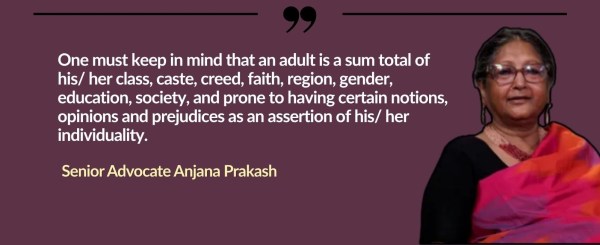
Emphasising this, Senior Advocate and former Patna High Court Justice (retd) Anjana Prakash says she views diversity as more than a question of optics. She believes that a bench with little diversity risks excluding “different voices and opinions out of the purview of a judicial pronouncement.” In a country as complex as it is, and where true democratic values are still to sink in, she says that after so many years of Independence, lack of diversity does not bode well.
Symbolic significance
Prakash said diversity on the bench would truly represent the society in its myriad forms, and those in power must rise above their personal prejudices and interests and uphold constitutional principles if they genuinely wish to strengthen the judiciary. It is necessary that the bench become a true representative of society, she adds.
The point, in essence, is not that a male judge would rule differently from a woman, or that a judge belonging to a particular caste or community would automatically solely represent that group. Institutions making decisions for a diverse population are believed to benefit from having a wider range of experiences and perspectives within them.
So, as the Supreme Court prepares to expand, who gets to enter the ranks? And can the judiciary be completely detached from the diverse experiences of the society it serves?
Story continues below this ad
It is not just the Constitution from which the court derives its authority, but citizens’ confidence in the fairness of its decisions also plays a vital role. A diverse bench drawn from different sections of society can establish a symbolic significance beyond the individual cases it decides. Diversity is about the composition of the institution, not community-based adjudication.
‘Elitist echo chamber’
In a first, the Supreme Court Collegium in 2021 recommended Saurabh Kirpal, an openly gay Senior Advocate, to be appointed as a judge in the Delhi High Court. The Delhi High Court collegium headed by Justice Gita Mittal had recommended Kirpal’s appointment as a judge in October 2017.
Kirpal was part of the team of lawyers that represented Sunil Mehra and Navtej Singh Johar, who were among the petitioners in the landmark case in which the apex court decriminalised homosexuality.
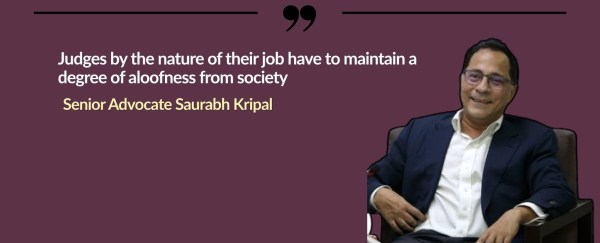
He says the legitimacy of the court stems from the moral authority of its judges. The people whose fate is being decided have a legitimate interest in ensuring that the bench reflects, at least to some extent, the make-up of society, he says, pointing out that without diversity, the court risks becoming “an elitist echo chamber”.
Story continues below this ad
Kripal proposed that the collegium invite judges and senior members of the bar to suggest names, with those candidates then examined through a transparent process and reasons recorded for why one candidate was recommended over others.
The issue, therefore, is not simply whether the diversities reach the Supreme Court, but whether they remain in the seniority pipeline long enough to become part of the body that recommends future judges.
The Constitution of India does not prescribe any caste, class, or gender quotas or reservations for appointing judges to the Supreme Court. Judicial appointments in India are governed by the Constitution in conjunction with the Collegium system established through landmark Supreme Court judgments. There is no fixed formula for considering representation, but rather the pool of candidates considered and the choices made within that system matter.
The Supreme Court in the ‘third judges case’ (1998) clarified the role of the Collegium and laid down guidelines for its functioning. The five-member body would comprise the Chief Justice of India and the four senior-most judges of the court.
Story continues below this ad
Before a name even reaches the Collegium, the question of representation begins. A Supreme Court judge may spend decades in the bar, rise through high courts, and become a senior advocate – particularly for women and historically under-represented communities, the journey has always been harder than for others. Representation at the Supreme Court cannot be separated from the eligibility to build a long judicial or litigation career.
‘Hardly enough SCs, STs’
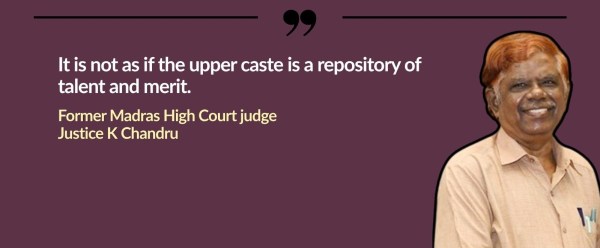
Renowned for his progressive judgments, former Madras High Court judge Justice K Chandru, who disposed of around 96,000 cases and initiated conventions like publicly declaring his assets upon taking office, says there must be diversity in the appointment process and social justice must be taken into account while filling the vacancies. The Collegium system of appointment has “failed to bring proper persons to the judiciary,” he adds.
After two Dalit siblings were brutally assaulted by their dominant-caste classmates in Tamil Nadu’s Tirunelveli, the one-man committee constituted under Justice Chandru in 2024 proposed a multifaceted approach to address such deep-rooted problems, including a mandatory orientation programme for classes 6 to 12 on caste discrimination and caste violence, sexual harassment and sexual violence, and laws such as the Scheduled Castes and Scheduled Tribes (Prevention) of Atrocities Act.
“The present Supreme Court, having 34 judges, is full of upper-caste candidates and hardly has due representation for adivasis, SCs and OBCs. This includes women also,” he says.
Story continues below this ad
While the debate over who occupies the new seats at the Supreme Court remains relevant, the shortage of judges is far more pronounced lower down the hierarchy.
Data from the Ministry of Law and Justice indicates that the district judiciary is where the most litigants encounter the justice system first. Yet thousands of judicial posts remain vacant, even as crores of cases are pending. For a litigant waiting years for a trial, the question is not just who occupies the seat but whether we have judges available to hear the matters.
As of December 1, 2025, district courts had 5.04 crore pending cases, while 4,855 posts in the district judiciary were vacant, according to the ministry. Nearly 24 per cent of district judge posts also remain vacant. At the same time, 3.94 lakh prisoners were under trial as of 2024, accounting for 74.6 per cent of the country’s total prison population of 5.28 lakh. That builds up to the larger question of judicial expansion: whether it addresses the vacancies and delays at the level where the bulk of litigation stands pending.
Even as the 2026 Act to increase the number of chairs in the Supreme Court is a step in the right direction, it is the appointments that follow which will determine whether the apex court becomes not just larger, but more representative.
KioskNews shows a cleaned-up reading view extracted from the publisher’s page — the original always lives on their site, not ours.