The collapse of MAGA: Cost of living and war weariness defeat Trump — Phar Kim Beng
NOV 4 — The sweeping setback suffered by President Donald Trump and his Make America Great Again (MAGA) movement in the November 3, 2026, midterm elections offers a sobering lesson in American democracy.
No amount of political theatrics, nationalist rhetoric or presidential bravado can indefinitely overcome two fundamental concerns of ordinary Americans: the cost of living and the exhaustion brought about by prolonged warfare.
The Democrats’ reported electoral gains represent a major setback for Trump’s Republican Party, demonstrating the breadth of the political backlash.
But this election should not be understood merely as a Democratic victory.
It represents a serious challenge to the political assumptions that have sustained MAGA since Trump’s first presidential campaign in 2016.
For years, Trump successfully presented himself as the champion of forgotten Americans, especially working-class families struggling with economic insecurity, declining purchasing power and distrust of Washington.
Yet the 2026 midterms reveal the limitations of political loyalty when economic hardship becomes increasingly difficult to endure.
The first and most important factor is affordability.
Election-day polling indicates that the cost of living was among the most important considerations for American voters.
Many blamed Trump for persistently high prices and expressed dissatisfaction with the country’s direction.
These sentiments are politically significant.
Trump returned to the White House in January 2025 promising to restore American prosperity and address inflation.
Yet many American households continued to struggle with the prices of groceries, housing, electricity, transport and healthcare.
The distinction between macroeconomic performance and household economic security has become increasingly apparent.
A government may point to investment, industrial expansion or stock market performance.
But ordinary voters judge economic success through their monthly expenses.
When salaries cannot comfortably cover basic necessities, presidential claims of economic achievement become less persuasive.
The second factor is the war with Iran.
Trump’s political appeal had long rested partly on his criticism of America’s costly military interventions abroad.
He portrayed himself as a leader who would prevent endless wars and compel other countries to assume greater responsibility for their security.
Yet the American military campaign against Iran, beginning in February 2026, created a contradiction between that political image and the realities of his second administration.
The war’s disruption of energy supplies, particularly through the Strait of Hormuz, exposed American households to higher fuel costs and broader economic uncertainty.
This was not merely a foreign policy issue.
It became a domestic economic burden.
The connection matters because energy prices affect transportation, manufacturing, agriculture, food distribution and household expenditure.
The war therefore brought together two sources of public dissatisfaction that might otherwise have remained separate.
Americans were not simply questioning why their country was fighting another Middle Eastern war.
Many were also questioning why the economic consequences of that war had reached their own homes.
Public opposition to the military campaign reinforced the impression that Trump’s administration had become entangled in precisely the kind of costly foreign intervention that MAGA once promised to avoid.
The third factor is the growing distance between MAGA’s ideological commitments and the practical priorities of American voters.
MAGA has always been more than an electoral slogan.
It is a political movement built around national identity, immigration, economic nationalism, resentment of established institutions and loyalty to Trump.
These themes remain influential among substantial sections of the Republican electorate.
Indeed, the midterm defeat does not establish that MAGA has disappeared or that its supporters have abandoned Trump.
But it does demonstrate that an intensely committed political base cannot necessarily compensate for dissatisfaction among independent voters, moderates and less ideologically motivated Republicans.
The fourth factor concerns Trump’s reliance on confrontation as an instrument of political leadership.
His administration has embraced tariffs, aggressive immigration enforcement and repeated disputes with domestic and international institutions.
Supporters defend these policies as necessary measures to restore American sovereignty, protect domestic industry and strengthen national security.
Critics argue that tariffs have contributed to higher consumer costs and that confrontation has generated unnecessary economic uncertainty.
The midterm results indicate that such competing arguments are no longer being assessed solely through ideological loyalty.
They are increasingly being judged through their material consequences.
The fifth factor is the demand for institutional checks and balances.
Many voters have expressed a desire for Congress to exercise greater restraint over presidential power.
This suggests that the election was also about the concentration of authority in Washington.
A stronger Democratic presence in Congress would subject Trump’s remaining two years in office to greater legislative scrutiny, possible investigations and potentially prolonged confrontations over federal spending and executive authority.
Trump retains his presidential veto and considerable executive powers.
Consequently, the electoral setback does not automatically end his political influence or policy agenda.
It does, however, substantially alter the institutional environment in which he must govern.
The sixth factor is the larger historical lesson.
American presidents frequently discover that foreign policy ambitions cannot be separated from domestic economic conditions.
Lyndon Johnson’s presidency was undermined by the Vietnam War.
George W. Bush faced mounting public dissatisfaction over Iraq and the financial crisis.
Joe Biden confronted persistent voter frustration over inflation despite his administration’s emphasis on employment and economic recovery.
Trump now confronts his own version of this enduring contradiction.
The language of national greatness becomes politically vulnerable when citizens believe their personal circumstances are deteriorating.
For Malaysia and Asean, the implications deserve serious attention.
A weakened Trump administration may face stronger domestic constraints, but this does not necessarily mean that American foreign policy will become more predictable.
Congressional confrontation could complicate trade negotiations, security commitments, tariffs and diplomatic initiatives.
The Iran war also demonstrates how conflicts thousands of kilometres away can undermine economic security across Southeast Asia.
Malaysia and Asean must therefore broaden and deepen their diplomatic and economic relationships while continuing to engage Washington constructively.
The region should avoid assuming that Democratic gains in Congress necessarily guarantee a softer American approach towards China, international trade or regional security.
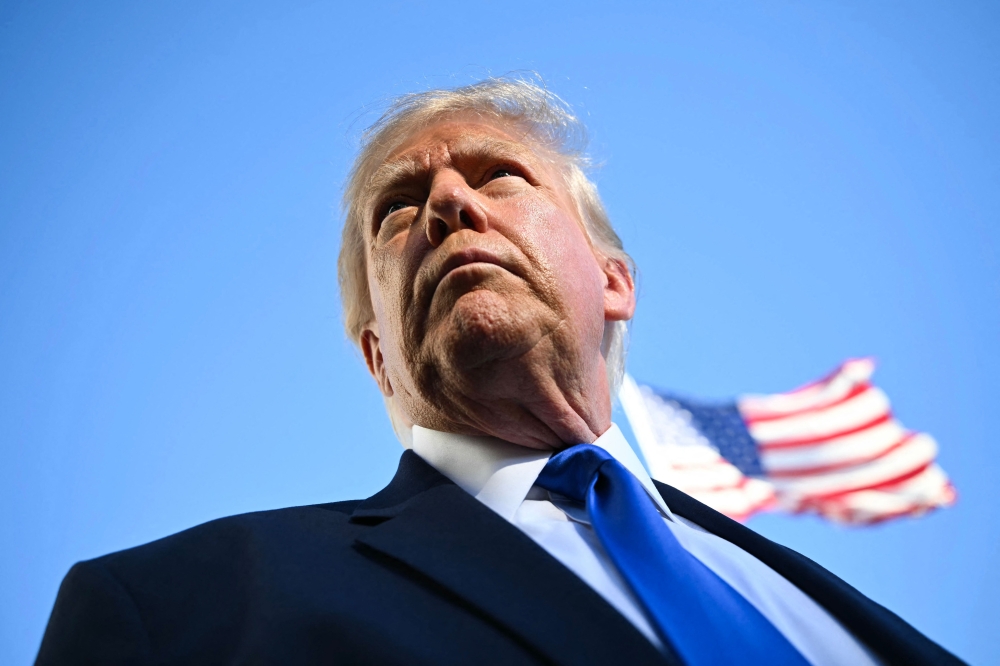
A weakened Trump administration may face stronger domestic constraints, but this does not necessarily mean that American foreign policy will become more predictable. — AFP pic
American strategic competition with China enjoys support across party lines, even where Democrats and Republicans disagree over methods.
Ultimately, the 2026 midterms reveal something more enduring than the electoral difficulties of one president.
They demonstrate that political movements cannot indefinitely substitute identity, ideology and confrontation for tangible economic improvements.
MAGA’s future will depend partly on whether its leaders can reconcile their nationalist ambitions with the everyday expectations of American households.
The Democrats, too, must recognise that electoral dissatisfaction with Trump does not automatically constitute lasting confidence in their own economic programme.
They will eventually be judged by the same standards of affordability, security and effective governance.
For Trump, the message from the midterms is especially consequential.
His promise to make America great again was ultimately tested against the cost of making ends meet and the burden of another war.
The voters’ verdict suggests that political greatness cannot be sustained through slogans alone.
It must be experienced in the lives of ordinary citizens.
And when the price of living rises alongside the price of war, even the most powerful political movements can find their electoral foundations shaken.
* Phar Kim Beng, PhD is the Professor of Asean Studies at International Islamic University of Malaysia and Director of Institute of International and Asean Studies (IINTAS).
** This is the personal opinion of the writer or publication and does not necessarily represent the views of Malay Mail.
KioskNews shows a cleaned-up reading view extracted from the publisher’s page — the original always lives on their site, not ours.