5,000-year-old skull fractures reveal human sacrifices in Ancient Egypt
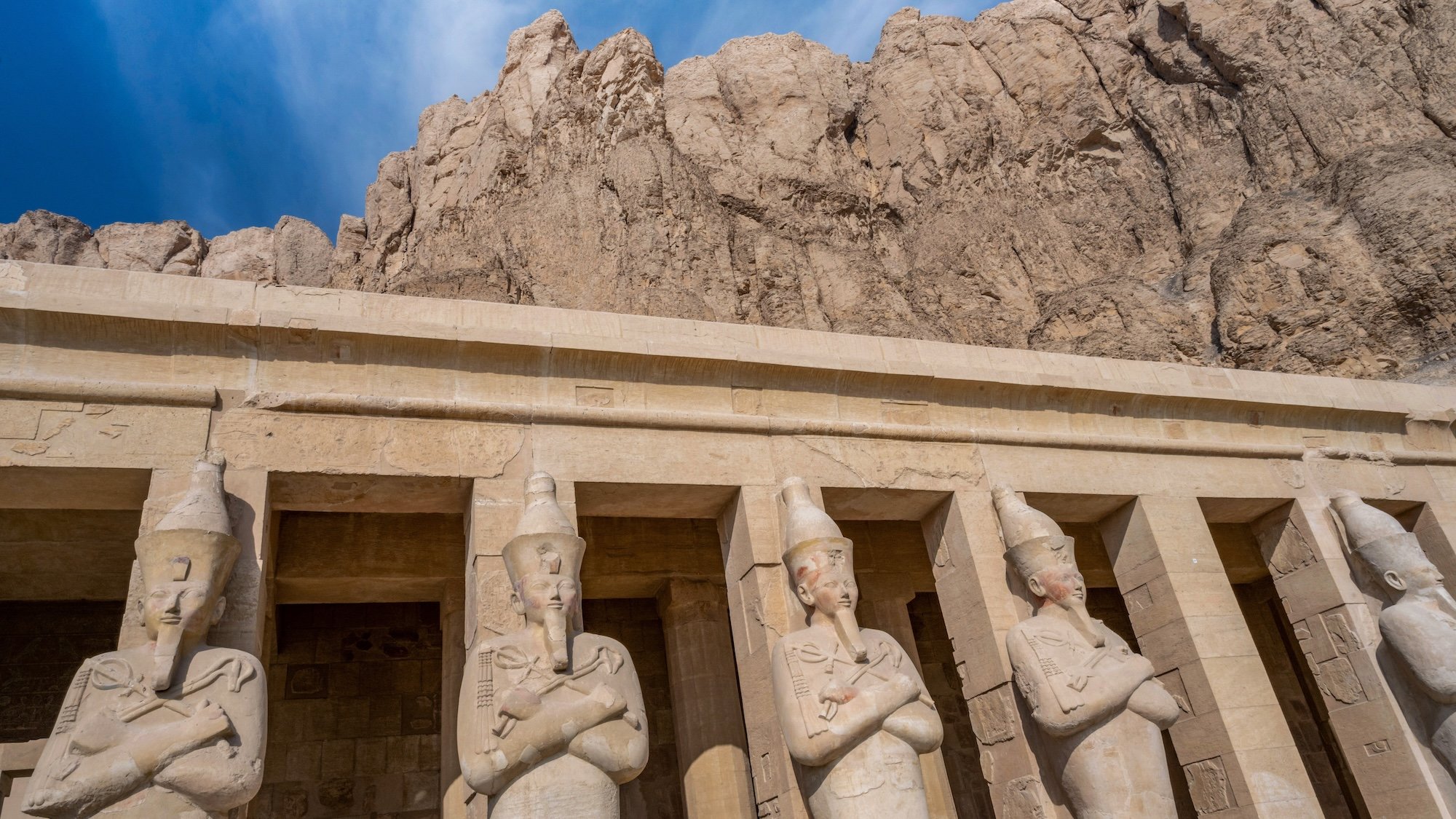
Forensic reexaminations of 5,000-year-old skulls indicate over a dozen ancient Egyptian royal attendants met gruesome ends to honor their beloved, deceased pharaohs. The recent findings, detailed in a study published today in the journal Frontiers in Environmental Archaeology, finally explain a collection of cold cases that have puzzled researchers for nearly a century.
Like many Ancient Egyptian stereotypes, tales of living servants entombed with mummified pharaohs are greatly exaggerated. That said, retainer sacrifices did occur for a brief period of time. Between roughly 3100–2900 BCE, at least five First Dynasty rulers were buried with slain subordinates. Archaeologists suspect the practice was a combination of religious beliefs and social hierarchy enforcement. Royalty simultaneously ensured a staff for the afterlife while demonstrating the extent of their influence and power.
In the 1920s, archaeologist Flinders Petrie discovered multiple funerary complexes at a site known as Abydos in eastern Egypt. Petrie dated the pharaohs’ tombs and hundreds of nearby secondary graves back to the First Dynasty. The British archaeologist and his team theorized these additional tombs likely housed human sacrifices based on the sheer number of burials, but the skeletal remains lacked any direct evidence of lethal injuries. Dozens of skulls exhumed from Abydos were ultimately stored at Cambridge University, where they remained for almost 100 years.
Roselyn Cambpell, an archaeologist at Purdue University in Indiana, recently got the chance to analyze these First Dynastic skulls herself using more precise forensic methodologies. Of the 46 individuals she reviewed, 18 displayed much clearer indications of trauma that Petrie originally misidentified as naturally caused wounds.
“The injuries on the preserved crania are generally linear fractures, which would likely cause rapid unconsciousness, internal bleeding, and death,” Campbell explained in a statement.
Some of the skulls also suggest sharp-force trauma, and one even displaying signs of a chopping wound to their eye. Linear fractures are often caused by a wide, flat weapon, but Campbell and her colleagues stopped short of making any definitive claims about the exact method of execution. The discoveries are further complicated by historic depictions of Egyptian kings killing foes with a mace, since a mace doesn’t cause the same injuries.
It’s also not clear how the other royal attendants died. With no outward skull injuries, they could have passed away naturally—or perhaps they were sacrificed in ways that didn’t leave behind skeletal evidence. Petrie reburied most of the bodies he initially excavated, so while some of the cold cases are finally closed, many others still remain open.
“If I had unlimited resources, I would love to figure out where the bodies of these individuals might be and analyze them,” said Campbell.
KioskNews shows a cleaned-up reading view extracted from the publisher’s page — the original always lives on their site, not ours.