Six lessons learned in Week 3: Texans, Eagles offenses in major trouble, officials need help
September NFL football is officially over, and through three weeks, we have undefeated teams both surprising (Raiders! Vikings!) and unsurprising (Bills, Chiefs) as well as 0-3 teams both surprising (Texans?! Chargers?!) and unsurprising (sorry, Dolphins).
And there's a big glut in the middle, too. How about the superteam Rams sitting at 1-2 on the young season, with Puka Nacua and Myles Garrett not having played since the season opener? How about the Browns, thought to be in play for the No. 1 pick, having won two straight?
The early NFL season always holds plenty of unexpected developments, and while it's all that's happened so far and all that we can judge off of, there is still so far to go. With October looming, we can still consider it the early part of the season and acknowledge that this might just be what some teams are ... and what they will be going forward.
These are the six lessons we learned in Week 3.
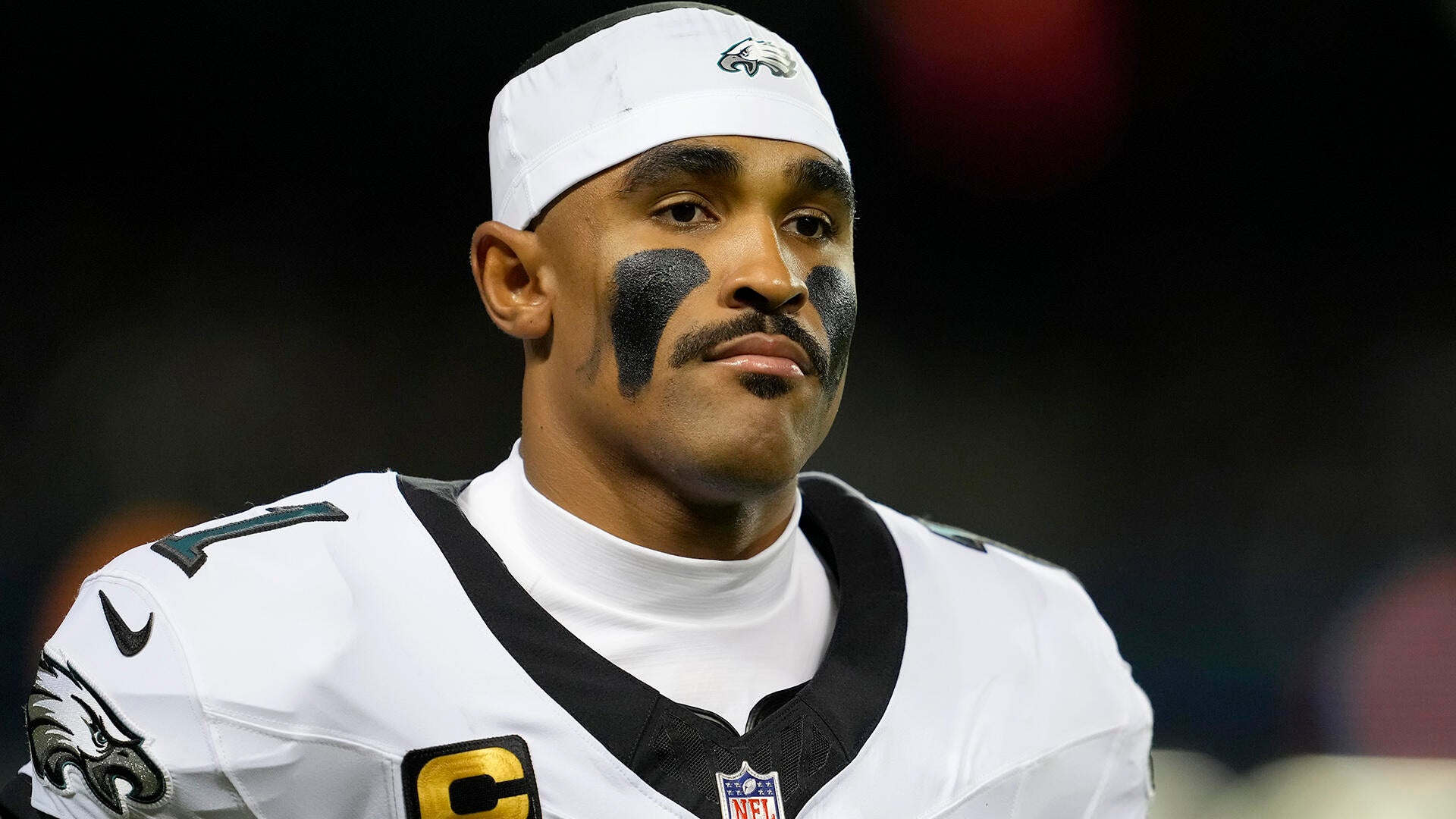
1. The Eagles' offense has too many problems right now
Good coaches overcome adversity. Look at what Ben Johnson did last night with 38-year-old third-string quarterback Case Keenum starting in the Bears' 27-7 win over the Eagles.
Now look at what the Eagles did. Jalen Hurts looked lost all night, never more so than on this fourth-quarter interception that all but ended the game.
If Hurts is lost, it's in part been because Sean Mannion doesn't have a map. Saquon Barkley ran the ball 11 times for 73 yards in the first half, a 6.6-yard average. He ran the ball four times for 9 yards in the second half.
This was a two-possession game for the Eagles' first two drives of the second half. All three were three and outs. Barkley ran for 7 yards on the first play of the second half, but a pass behind the line of scrimmage lost 2 yards, and Hurts threw incomplete on third-and-5. On the next drive, a 3-yard loss on another throw behind the line of scrimmage derailed things.
Mannion's offense, so far, doesn't fit Hurts, and vice versa. Mannion wants to attack the middle of the field and play under center. Hurts simply doesn't do that -- or really hasn't much. There were times when opportunities over the middle were there; Hurts hit some and missed others.
And then there's an offensive line that's more liability than powerhouse. Moving Cam Jurgens to left guard in Landon Dickerson's absence looks like a bad decision. Hurts has always been prone to getting antsy when pressured, and a more leaky offensive line in a new system exposes that. He has no dominant run game to lean on; in fact, the run game is mediocre overall. There's no A.J. Brown easy button.
Philadelphia is 27th in offensive success rate with exactly zero easy answers. It is still early, and the Eagles are 2-1. Sometimes the answers aren't going to be easy, but they can still be found. The Eagles have to dig deep to overcome issues at every position on offense.
2. The Texans' offense is a mess, and DeMeco Ryans is coaching scared because of it
Another game, another miserable showing from the Texans' offensive line. It started early, when on a fourth-and-1, Houston brought a sixth offensive lineman -- Blake Fisher -- onto the field. With six offensive linemen and two tight ends packed in tight against a struggling defense, 1 yard should be available, right?
Wrong. Fisher ended up flat on his face, and tight end Cade Stover lost at the point of attack, too. The Texans have now failed to gain a first down on third/fourth down and 2 yards or fewer five times this season, tied for most in the league.
Here's David Montgomery barely avoiding a safety by making a free defender miss in the backfield, bouncing off one of his own blockers and fighting for dear life just to get to the line of scrimmage.
There were ugly individual losses in pass protection, too. All three of Indianapolis' sacks came from interior defensive lineman -- DeForest Buckner and Adetomiwa Adebawore both had an individual sack, and they teamed up for the third. All three came without blitzing, and the two solo sacks came on wins right away. Buckner beat left guard Keylan Rutledge; Adebawore beat right guard Wyatt Teller.
Even more concerning, though, is the impact the short-yardage failures are having on DeMeco Ryans. Both this week and last week, Houston failed on a fourth-and-1 run in the first half. Last week, Ryans opted for a 58-yard(!) field goal instead of going for it on a fourth-and-1. Ka'imi Fairbairn missed. This week, Ryans opted to punt on a fourth-and-4 down nine points with under eight minutes left.
Of course, one could say he's stuck between a rock and a hard place, because the running game is bad, and without Nico Collins and Jayden Higgins the passing game is really limited. Still, he is leaving potential points on the table, and this offense needs all the points -- real and potential -- it can get. He also badly mismanaged the clock late in the game, but that's another subject entirely.
The Texans started 0-3 last year. They went on to win 12 of their final 14 games. But it is extremely hard to envision this team doing the same. The defense is still very, very good, but even discounting Week 1 against Josh Allen, it hasn't been as good as it was last year. Combine that with an offense that has no margin for error and some poor coaching, and you get three one-score losses.
3. It's a great time to watch running backs
Most people watch games to root for their teams, whether it's their NFL team, their Fantasy team or whatever squad they're interested in.
But sometimes it's fun to watch for the players, and my goodness, Bijan Robinson and Jahmyr Gibbs are bringing it.
It's a great time to watch elite running back play. If you miss the old, ground-and-pound days, well, you're getting them, just in a more modern way. Through three weeks, the NFL's league-wide rushing rate is at its second-highest through 2008. The top three teams in rushing expected points added -- the Jaguars, Bills and Chiefs -- are a combined 8-1.
But if you like the new-age game, running backs are getting involved in so many ways as pass catchers, too. After deep passing dominated the 2010s and early 2020s, defenses changed. They got smaller, they got faster, and they stopped allowing throws over the top. Offenses are quietly hitting back by getting bigger and meaner running the football and finding creative ways to use running backs and tight ends in the passing game. It's a fun back-and-forth.
4. Prepare for the Brock Bowers takeover
After missing the first two games due to minor knee surgery, Brock Bowers was back like he never left: 10 catches on 13 targets, 116 yards and a score. His route chart is a thing of beauty.
Note not only where the lines end, but where they start. Bowers is all over the place, but many times out wide. Check out these numbers:
- 12 snaps as left slot wide receiver
- 12 snaps as left wide receiver
- 11 snaps as right wide receiver
- 6 snaps as left tight end
- 2 snaps as left fullback
- 2 snaps as right tight end
- 2 snaps as right slot wide receiver
- 1 snap as left outside slot wide receiver
- 1 snap as right outside slot wide receiver
- 1 snap as right outside tight end
- 1 snap as right inside slot wide receiver
CBS Sports NFL Draft analyst Mike Renner had some great film on this, but here's my favorite play:
(For those wondering about the list above, he's a left slot receiver here.)
Bowers is a tight end only in name. On that play, he gets a safety, Jonas Sanker, in coverage. Sanker never has a chance. Bowers is too fast.
Klint Kubiak unlocked Jaxon Smith-Njigba last year. He's going to do the same with Bowers.
5. Old dogs can learn new tricks: Steelers switch it up
I have been pretty uninspired by the Steelers' plan for years. Bring in a mediocre-at-best quarterback, surround him with a mediocre-at-best offense, field a solid defense, hope you get a few bounces your way. That's how you post a winning record but don't have a playoff win since the 2016 season.
And after two weeks, the Steelers looked even worse than that. Aaron Rodgers and Co. were downright wasting the defense. I know that he and Mike McCarthy have history, but their offense looked prehistoric.
And then Sunday came, and Pittsburgh hung 30 on Cincinnati. Bryan DeArdo was there and has some great details and quotes about how it came together.
Steelers' offense finally shows its potential in shootout win over Bengals: Here's what sparked breakout
Bryan DeArdo
Now for the nerdy numbers: The Steelers bumped their two-tight end sets up from 24% in the first two weeks to 32% in Week 3. With two tight ends on the field, they posted 0.11 EPA per play in Week 3, compared to -0.03 from the first two weeks.
It's not only that this is the way the NFL is heading, but the Steelers finally learned to take advantage of it. Pat Freiermuth is a good, dependable, big pass catcher. Darnell Washington is built like an offensive lineman but can also do this:
Those two tight ends combined for 99 yards receiving, and when Pittsburgh had multiple tight ends on the field, it had a 60% rushing success rate (46% with fewer than two). Add in multiple changes up front, and the Steelers finally adapted. I had been critical when they were unwilling to do so. I have to give credit now that they did.
6. NFL officials need help
You may have heard about pass interference a time or two this weekend. Here's the Rams getting hosed ...
... and here's the Ravens getting hosed.
I don't really blame the referees here. Nate Wiggins and CeeDee Lamb were tangled up; from the angle of the referee who threw the flag, though, he can't see how they're tangled up. Same for the Pat Bryant vs. Josh Wallace battle. Bryant throws his head back to embellish the contact that wasn't even close to qualifying for interference and gets the call.
In 2019, coaches were allowed to challenge pass interference. But the calls were so rarely overturned -- even when obviously incorrect -- that teams basically stopped doing it, to avoid wasting a timeout. Call it pride or whatever, but officiating crews didn't want to admit bad calls.
In 2022, the NFL expanded its replay abilities to include expedited reviews -- mistakes in spotting the ball, completion vs. incompletion, etc. -- but not to include actual calls such as pass interference. Why? If expedited reviews can take a look quickly, it should at least suggest umpires take a look, if not outright overturn errors. Maybe it's not all game; maybe it's just in the last five minutes, or something of the like. It'd behoove the NFL to get it right in the biggest moments.
KioskNews shows a cleaned-up reading view extracted from the publisher’s page — the original always lives on their site, not ours.