Indonesia pledges stronger UNESCO role to support Global South
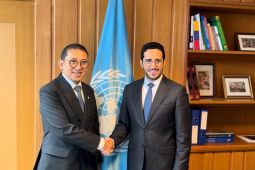
Jakarta (ANTARA) - Indonesian Culture Minister Fadli Zon reaffirmed the nation's commitment to advancing the interests of the Global South through an active role at UNESCO.
"Indonesia seeks to contribute more proactively through ideas, experiences, and best practices to UNESCO,” Zon said in a statement issued Friday.
“We also want to ensure that the perspectives of the Global South have a stronger platform in global dialogues on education, science, and culture."
Zon delivered the remarks following a bilateral meeting with UNESCO Executive Board Chairperson Nasser bin Hamad Al Hinzab during the 225th Session of the Executive Board in Paris on Thursday.
Indonesia currently serves as one of the 58 elected member states on the Executive Board for the 2023–2027 term, overseeing program implementation, governance, and organizational policy.
During the meeting, both officials explored strategies to enhance governance and establish sustainable, alternative financing mechanisms.
Discussions focused on expanding partnerships beyond standard member contributions by engaging development partners, international financial bodies, and the Qatar Fund.
Al Hinzab welcomed Indonesia's proactive stance, noting that closer engagement from member states is essential for supporting strategic initiatives and improving transparent evaluation processes for heritage inscriptions.
"UNESCO needs countries like Indonesia to play an increasingly proactive role on the Executive Board," Al Hinzab stated.
"We must strengthen the visibility of our mandate, improve governance and transparency, and explore innovative funding instruments to ensure the long-term sustainability of UNESCO's programs."
In response, Zon highlighted Indonesia’s recent establishment of a Board of Trustees under the Ministry of Culture to mobilize private sector and philanthropic resources for cultural restoration.
"We need more innovative financing models. The governments cannot work alone," Zon urged, calling also for more agile nomination processes for Intangible Cultural Heritage.
"The private sector and philanthropic bodies must be engaged to ensure cultural programs remain sustainable."
Zon, who also chairs the Indonesian National Commission for UNESCO (KNIU), reaffirmed that Indonesia stands ready to serve as a constructive partner to ensure the agency remains inclusive and relevant amid complex global challenges.
Translator: Sri Larasati, Uyu Liman
Editor: Aditya Eko Sigit Wicaksono
Copyright © ANTARA 2026
KioskNews shows a cleaned-up reading view extracted from the publisher’s page — the original always lives on their site, not ours.