Israel's rift with US Democrats will take more than a Netanyahu-Eisenkot gov't to fix - analysis

Those fantasizing that a change of government in Israel will magically remedy Israel’s slipping standing in the US need to think again.
Consider the following. Likud and Gadi Eisenkot’s Yashar party spent four hours talking in Herzliya on Sunday. According to media reports, they agreed on two principles: that Israel is the nation-state of the Jewish people and that no Palestinian state would be established.
That nothing else could be agreed upon by these two parties except these principles establishes them as the Israeli political equivalent of motherhood and apple pie: concepts that, at least among the Jewish electorate, nearly everyone can rally around. When you can agree on little else, at least you can agree on these.
And it is the second of those propositions that should give those expecting a change of government to improve Israel’s standing among Democrats reason to pause.
US Democrats and Palestinian statehood
Leave aside for a moment Israel’s sharpest Democratic critics, such as California Rep. Ro Khanna and New York Rep. Alexandria Ocasio-Cortez. Even among Democrats who are well disposed toward Israel and whose names are mentioned as possible presidential candidates, such as Pennsylvania Gov. Josh Shapiro, a two-state solution remains a cardinal principle.
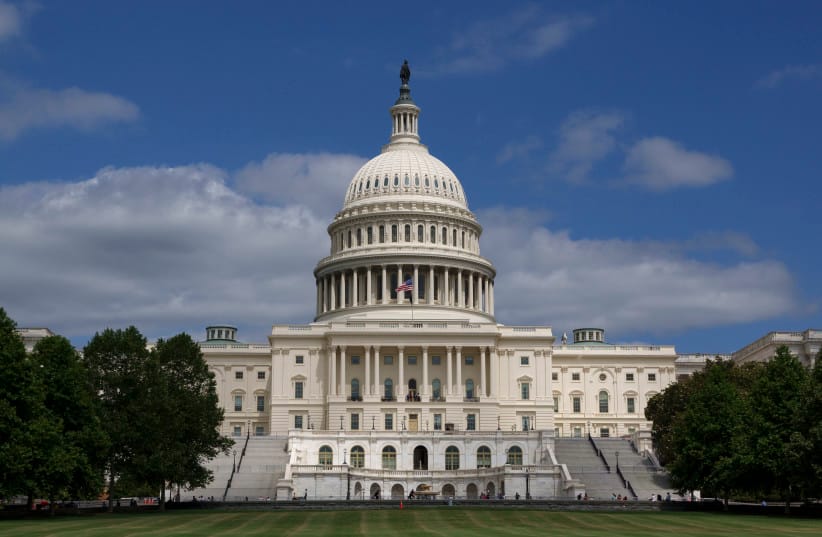
This means that even those who like us will be disappointed by a government that brings Likud and Yashar together.
What the two parties agreed on reflects a broad consensus among Israeli Jews. After the withdrawal from Gaza in 2005 and October 7, 2023, many simply cannot imagine Israel allowing the establishment of a Palestinian state. A July Israel Democracy Institute poll found that only 24% of Jewish Israelis supported the creation of a Palestinian state. Among Arab Israelis, that figure was 71%.
That gap between mainstream Democratic thinking and the prevailing view among Israeli Jews will be there regardless of who forms the next government.
Unresolved disputes over haredi conscription, judicial reform
Which brings us to the question of whether Likud and Yashar are actually trying to form one together. They are both saying that they are “leaving no stone unturned” in a search for a unity government, but are they? Or, perhaps, are they just going through the motions because they don’t want to be blamed for the failure of what so many in the country want to see?
At their Sunday meeting, the two sides reportedly discussed the judicial overhaul, haredi conscription, a commission of inquiry into October 7, and whether Itamar Ben-Gvir’s Otzma Yehudit would join the coalition. They did not resolve those issues, but they agreed to meet again.
What did they leave untouched? The question of who would be prime minister? According to the reports, they didn’t discuss whether there would be a rotation, much less who would go first.
Those other issues are real. But if Prime Minister Benjamin Netanyahu insists on staying in the prime minister’s chair and Eisenkot insists on taking it, how much does it matter what their negotiators work out on the judicial reform?
It is still hard to tell whether these are genuinely the early stages of a negotiation or pure political theater. Both sides have a reason to keep showing up to the talks, and if the talks go nowhere, both can point to the meetings and say: We tried everything. The other side wasn’t interested.
Though very little leaked from Sunday’s meeting, Channel 14 reported on one proposal making the rounds, giving some idea of what a potential deal might look like.
It would produce a 66-seat coalition, with 33 seats from Likud and Religious Zionism and 33 from Yashar and B’Yachad. Otzma Yehudit would be out, and Yair Golan’s Democrats, as well as Avigdor Liberman’s Yisrael Beiteinu, have made clear that they would not sit in such a government. The two Arab parties would not be invited to join, and the haredi parties would support the government from the outside.
Proposed Netanyahu-Eisenkot rotation deal
Under this proposal, Netanyahu would serve as prime minister for a year and a half. The argument for giving him the first turn is his strong working relationship with US President Donald Trump, who has another two years in office and strongly endorsed Netanyahu, calling him someone he can work with.
Eisenkot would then take over for two and a half years. Under this proposal, Netanyahu would then assume the presidency when Isaac Herzog’s term ends, assuming he can get the votes in the Knesset, something this coalition deal would seek to guarantee.
True, Eisenkot would get the longer turn. But would he agree to wait a year and a half for a job he insists he should have now? And would Netanyahu agree to leave the Prime Minister’s Office without a guarantee that he’d move into the President’s Residence, and what kind of guarantee could be provided?
Those are the questions to listen for as the parties meet again and again over the next few days. The clock is ticking on the time Eisenkot has left to form a government: 13 days, with the possibility of a 14-day extension, and the answer to those questions will be the ones that determine in which direction the talks are headed.
KioskNews shows a cleaned-up reading view extracted from the publisher’s page — the original always lives on their site, not ours.