Cybersecurity expert reveals how pornography ended up on a Cairo billboard
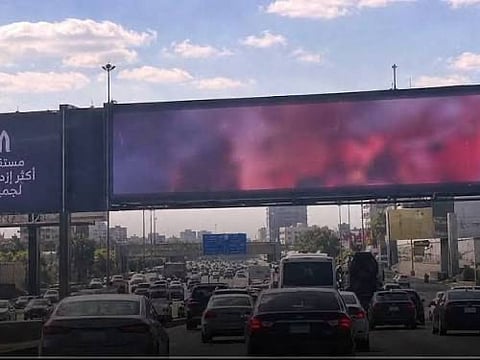
Cybersecurity expert Haitham Salah-Eddin revealed that the breach of a digital advertising display management system in Cairo, which resulted in the broadcast of pornographic content, was the result of a cyberattack targeting the international company responsible for managing the advertising content – rather than a breach of the physical billboard itself.
During a phone interview with “al-Hekaya,” (The Story) hosted by Amr Adib on MBC Masr on Saturday, Salah-Eddin explained that the Egyptian company that owns the screen had leased it to an international firm tasked with managing the advertisements displayed on it.
This international company manages advertising screens across four countries, he noted. The breach of its system granted the hacker remote control over the content displayed on screens in these nations, including Brazil.
Salah-Eddin further noted that there is recent information circulating suggesting that the individual behind the hack is a Brazilian national.
A common cyberattack
The export noted that this type of attack has occurred in other countries; Germany experienced a similar incident earlier this year, preceded by another in England.
The motives of the hackers vary depending on the nature of the groups carrying out the attacks, he explained.
He added that some groups – particularly those consisting of younger individuals – carry out these operations to make their presence known to the world.
Others resort to hacking to increase the financial rewards they can demand for their attacks, often by executing large-scale operations that generate significant public attention.
Salah-Eddin further observed that some attacks carry political messages intended to weaken public faith in their safety, even despite protective measures taken by their governments – he cited events that took place in France as an example.
Expanding scope
He warned of the expanding scope of unconventional cyberattacks, emphasizing that they are no longer limited to websites or traditional systems; rather, they now extend to internet-connected devices, including advertising displays, refrigerators, and various household appliances.
Salah-Eddin cited an incident that occurred in France two or three weeks ago, in which approximately 700 smart refrigerators, located in hypermarkets belonging to four major retail chains, were hacked.
This caused the internal temperatures to rise to 60 degrees Celsius, resulting in the spoilage of frozen food.
He noted that the incident affected various stores across France and other European countries, and added that a similar event had taken place a month earlier, in August.
KioskNews shows a cleaned-up reading view extracted from the publisher’s page — the original always lives on their site, not ours.