The last goodbye of Ghanaian shot dead in the US
At about 6 pm on Friday, 18 September 2026, members of the Akamani family joined a conference call to discuss whether to send a delegation to a funeral in Biu, near Navrongo in the Upper East Region.
Four family members were actively taking part while others listened, and among them was Dr Kofi Akamani. He joined the discussion from the US and, as the call came to an end, said goodbye to the family and wished those travelling a safe journey.
Nobody knew that this would be one of their last conversations with him. One of his sisters noticed that Kofi was unusually quiet that evening and slower than usual in the way he spoke and responded.
The change stood out because Kofi was usually loud and expressive, someone his family knew as a person who spoke freely and readily engaged with those around him. That evening, however, he appeared subdued, although nobody knew why.
The following day, Saturday, 19 September, Kofi was shot and later pronounced dead in the US. He was one of six children, and relatives describe him as someone they could depend on when they needed help. That role continued as his education and professional career took him from Ghana to the United States and into international scientific circles.
Kofi's family roots are in northern Ghana. His mother comes from Kologo, near Navrongo, while his father is from Biu, a Builsa community in the Upper East Region.
His academic and professional work later centred on environmental science, forests, biodiversity, natural resources and the relationship between communities and their environment.
The schoolmates who remember Kofi before the world knew him
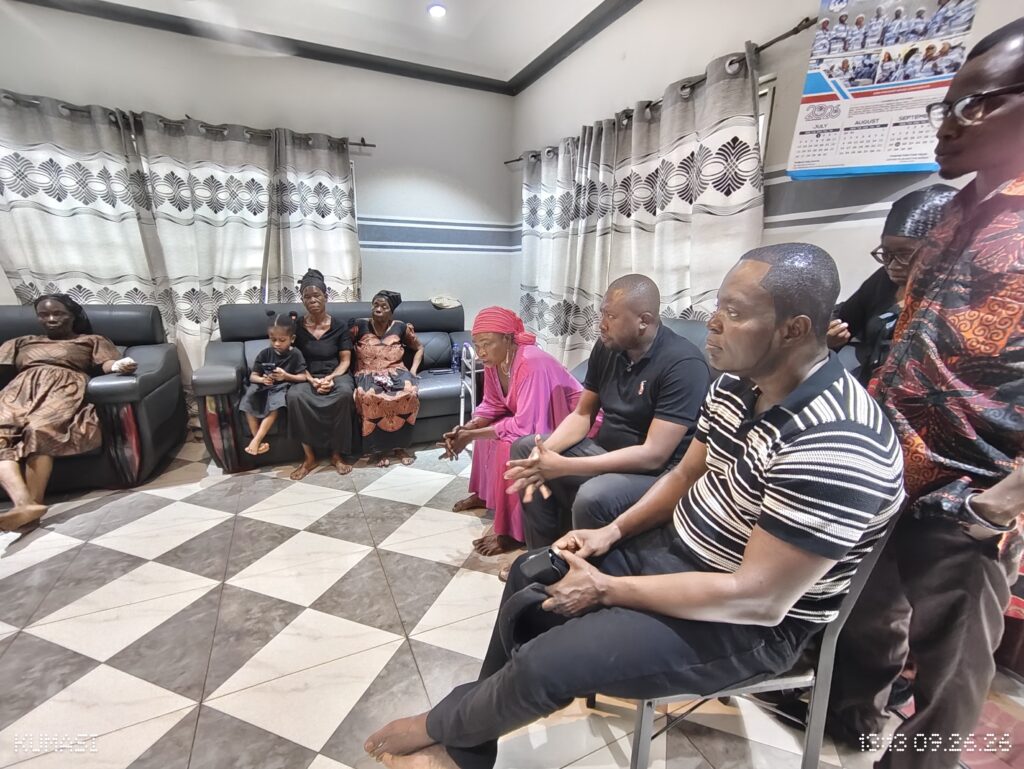
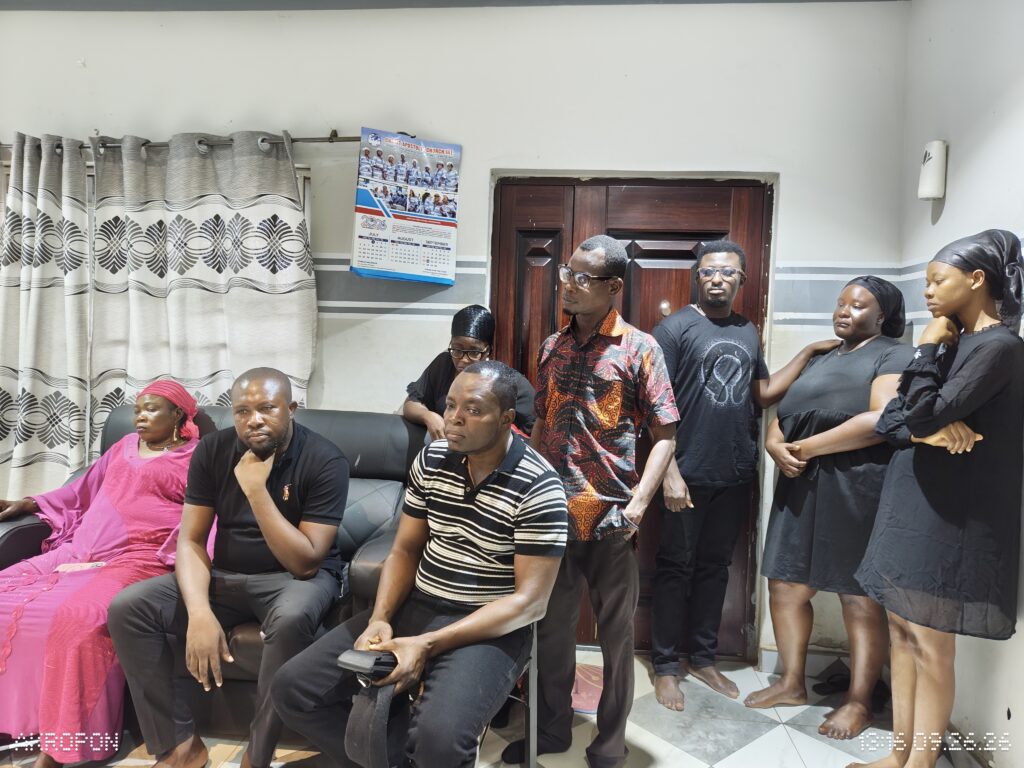
On Saturday, 26 September, five former students of Osei Tutu Secondary School visited the Akamani family at Akropong in the Ashanti region to mourn with them and pay their respects following the death of their former schoolmate.
The group included Samuel Duncan, the Ashanti Central Zone Head of OmniBSIC Bank, Ewura Baba Al-Hassan, Albert Opoku, Kwodwo Acheampong and Henry Sarfo Adu Amankwa. They were representing members of their former year group who had known Kofi since their secondary-school years and remained connected with him after leaving school.
Their visit brought back memories of a period when Kofi's future was still taking shape, before his academic and professional career took him through KNUST, Norway and the United States and into international work in forestry and natural resources.
Duncan and Henry remembered a young Kofi as quiet, disciplined, humble and respectful, qualities they said remained with him as he grew older.
Duncan recalled that Kofi was among the youngest students in their class when they entered Osei Tutu Secondary School in 1989. He said Kofi spent much of his time studying and rarely got into trouble.

“Right from the beginning, Kofi has always remained very humble,” Duncan said. “He's been very respectful. He's been very obedient.”
Henry, who grew up with Kofi in Akropong also remembered him as a calm and gentle person. “He was a good man,” Henry said. “From the beginning, he was humble, down to earth.”
The five former schoolmates had returned to the family home decades after leaving secondary school, carrying memories of Kofi from a time when his life was still taking shape and his later academic career was still far ahead of him.
The final day
Kofi's final hours were connected to his two children.
Kofi and his wife had been separated for about two years while awaiting final divorce and custody proceedings concerning the children. Public reporting confirms that a dissolution case was pending. According to information gathered by JoyNews, the couple shared custody, with Kofi scheduled to spend time with the children on Wednesdays and Saturdays.
A source with direct knowledge of the proceedings told JoyNews that Kofi had also been seeking full custody. The matter remained before the court, with a further hearing expected later in September.
Saturday, 19 September was one of Kofi's scheduled days with the children. He picked them up, spent time with them and later returned them to their mother.
Prosecutors have alleged that Kofi was shot as he drove away from his wife's residence after dropping off the children. The Jackson County Sheriff's Office said deputies responded to a shooting near a residence off Lake Road, between Murphysboro and Carbondale, at about 5 pm that day.
Kofi, 48, was taken to Memorial Hospital of Carbondale, where he was pronounced dead from injuries sustained in the shooting.
His wife, Betty Akamani, 35, has been charged with two counts of first-degree murder and one count of endangering the life or health of a child. The charges are allegations and have not been determined at trial. She appeared in Jackson County court on 21 September, and her next court appearance is scheduled for 6 October.
For his family in Ghana, the first news of his death came not from authorities in Illinois but through a telephone call.
One of Kofi's younger relatives was in Sunyani pursuing further education and had planned to call him on Sunday, 20 September. He wanted to tell his elder brother something important and to thank him for the support he had given the family.
But it was raining in Sunyani, so the call did not take place. The following morning, Monday, 21 September, the relative received a call from another family member living in the United States. She was crying when she told him that Kofi was dead.
“I couldn't believe her statement,” he recalls.
He then travelled from Sunyani to Akropong in the Ashanti Region to inform the rest of the family. The journey, which would ordinarily have taken about two hours, became a difficult one as he travelled home carrying the news of Kofi's death.
After he arrived, he informed the family elders, who contacted other relatives and arranged for a delegation to visit the Catholic priest at St Lawrence Catholic Church in Akropong.
The elders, accompanied by the priest, then went to Kofi's father to formally break the news. He was about 87 years old.
“My father is older, about 87 years old, and he couldn't receive the news of the death of his elder's son,” the relative recalls.
His family and former schoolmates remember different sides of Kofi, the elder brother whom relatives turned to for support, the student remembered by friends from Osei Tutu, and the academic whose work later took him into international research on forests, biodiversity, natural resources and climate change.
On Friday evening, he joined his family on a call about a funeral. The following day, he spent time with his children before returning them to their mother. Later that day, he was shot and killed.
The younger relative in Sunyani never made the Sunday call in which he had planned to thank him, while his sister was left with the memory of how unusually quiet Kofi had seemed during their conversation the night before his death.
For those who knew Kofi at different stages of his life, the last days of his life are remembered through these small details: a family conversation on Friday evening, time with his children on Saturday, a missed call on Sunday and the news of his death reaching Ghana on Monday.
DISCLAIMER: The Views, Comments, Opinions, Contributions and Statements made by Readers and Contributors on this platform do not necessarily represent the views or policy of Multimedia Group Limited.
Tags:
DISCLAIMER: The Views, Comments, Opinions, Contributions and Statements made by Readers and Contributors on this platform do not necessarily represent the views or policy of Multimedia Group Limited.
KioskNews shows a cleaned-up reading view extracted from the publisher’s page — the original always lives on their site, not ours.