Delhi Assembly Met For Just 17 Days In 2025. Speaker Backs 30-Sitting Target
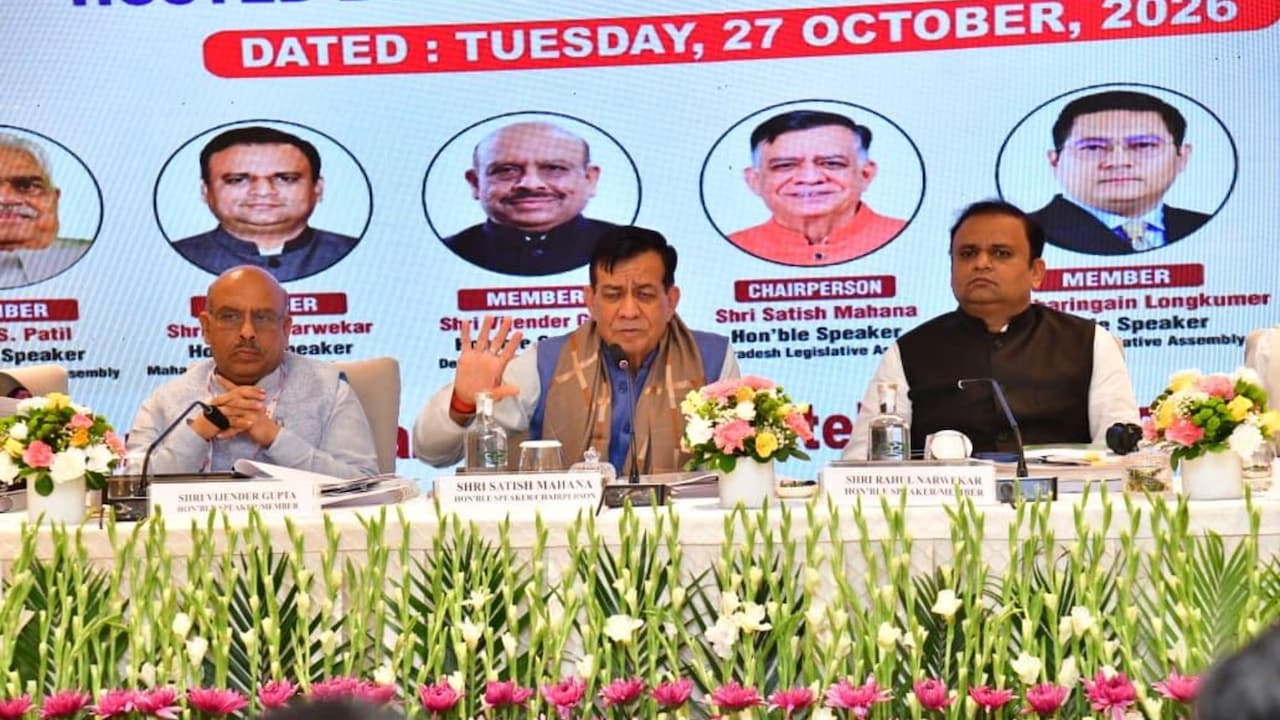
The Delhi Assembly met for just 17 days in 2025 and its Speaker, Vijender Gupta, now wants legislatures across India to sit for at least 30 days a year.
This was among the proposals discussed on Tuesday at a meeting of Assembly Speakers working on a common rulebook for legislative bodies. The committee was expected to finalise its recommendations, but it will now meet again.
Uttar Pradesh Assembly Speaker Satish Mahana, who chairs the panel, said suggestions from Delhi, Maharashtra, Karnataka and Himachal Pradesh needed further discussion before the recommendations could go to the Lok Sabha.
The push for more sittings comes against a record of relatively short Assembly sessions. According to PRS' Annual Review of State Laws 2025, state Assemblies met for 24 days on average in 2025. The previous Delhi Assembly, from 2020 to 2025, averaged just 15 days annually.
The proposal for a minimum of 30 sittings was adopted as a resolution at the 86th All India Presiding Officers' Conference in January.
Gupta supported three annual sessions - Budget, Monsoon and Winter - but drew a line at imposing exactly the same rules on every legislature.
"Uniform rules must not mean identical rules," he said, arguing that the distinct constitutional positions of Delhi, Jammu and Kashmir and Puducherry had to be respected.
The Speaker also pushed for the language of legislative rulebooks to change. Masculine expressions drawn from older legal conventions, he said, should be replaced with gender-neutral wording.
On the conduct of House business, Gupta sought electronic notices, summons and petitions. Bills, he said, should reach members in advance, along with authorised translations and details of their financial, administrative and legal implications. Where needed, they should be examined by legislative committees with expert and public input.
He also proposed limiting Adjournment Motions to one per sitting, avoiding overlap between Zero Hour and Special Mentions, and giving Speakers a greater say in how long debates should run.
A proposed 30-day limit on suspending members also drew his objection. Legislatures, Gupta said, must retain the disciplinary powers available to them under the law. Quorum requirements, he added, could be changed only through legislation.
Mahana, meanwhile, proposed cutting the notice period for convening an Assembly session from 15 days to three, arguing that digital communication had made long advance notices unnecessary.
Members should also be able to submit questions 15 days after prorogation rather than having to wait for months, he said.
Citing the example of Uttar Pradesh, Mahana said rules dating back to 1958 had been reviewed after he became Speaker in 2022. Some earlier procedures allowed up to 90 days for replies to questions and notices.
The committee first met in Mysuru on May 12, following a decision at the 85th All India Presiding Officers' Conference in Patna. Maharashtra Speaker Rahul Narwekar, Himachal Pradesh Speaker Kuldeep Singh Pathania and Karnataka Speaker GS Patil also attended Tuesday's meeting.
The meeting itself was paperless. The Delhi Assembly Secretariat estimated that digital circulation of documents saved 18,252 sheets of paper, 18,252 litres of water and 182.5 kg of carbon dioxide-equivalent emissions.
KioskNews shows a cleaned-up reading view extracted from the publisher’s page — the original always lives on their site, not ours.