‘Unwritten rules’ become newest target in Communist Party’s war on corruption
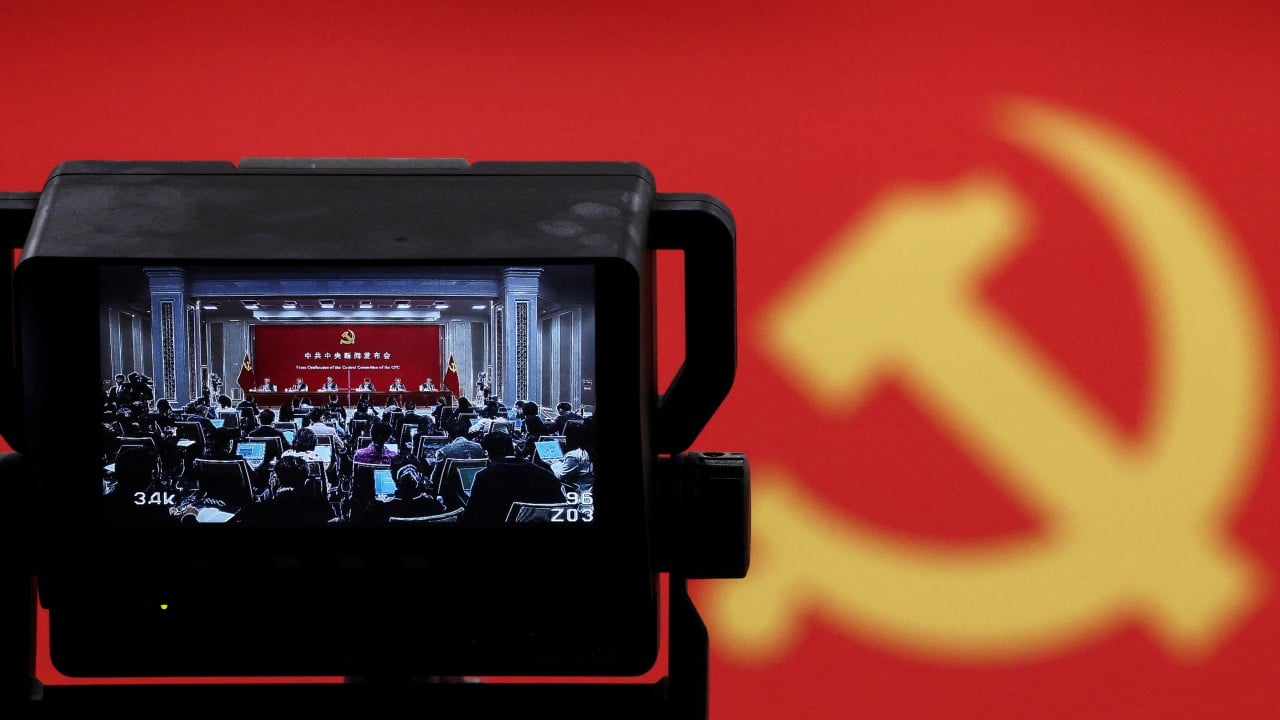
The Communist Party of China has pledged to vigorously crack down on the “unwritten rules” that enable corruption in the party, deepening its long-running campaign to keep officials in line.
At a Friday press conference, senior officials described the important takeaways from the 20th Central Committee’s Fifth Plenum, which concluded the day before. They underscored President Xi Jinping’s assertion that corruption remains a serious challenge that requires sustained pressure and targeted action against the informal practices that undermine formal rules.
The four-day conclave concluded with the adoption of the “Decision of the CPC Central Committee on Several Major Issues Concerning Persevering with Full and Rigorous Party Self-Governance.”
In a rare move, the document singled out “unwritten rules” as a prominent problem to tackle.
“For a period of time, some unwritten rules have existed to varying degrees both inside and outside the party, undermining the authority and enforcement power of party rules and discipline, which has drawn strong reactions from cadres and the public,” said Xie Chuntao, executive vice-president of the Central Party School.
03:00
China’s fifth plenum focuses on discipline and loyalty to Xi
“The decision emphasises starting by establishing clear rules and puts forward corresponding measures in advancing openness in party and government affairs, strengthening education and guidance, correcting related disorderly phenomena and establishing and improving institutional mechanisms,” Xie said.
Tang Fangyu, the director of the party’s Central Policy Research Office, said that the decision represented the plenum’s most important outcome and that its drafting was led by Xi.
“He personally planned the process, provided continuous guidance, set the direction, and played a decisive role,” Tang said. The work involved soliciting opinions from localities and government departments, commissioning research on key topics, collecting more than 1,000 suggested revisions and further refinements during the plenum discussions, ensuring the document reflected the collective will of the party, he said.
The decision calls for maintaining high pressure so officials “dare not, cannot and do not want to” engage in corruption, while addressing the symptoms and causes of illicit behaviour.
Despite his 14-year-long anti-corruption campaign, Xi has repeatedly stated that the problem remains a persistent threat. In an October article in Qiushi, the party’s flagship theoretical journal, the president wrote that “when formal rules are not firmly upheld, unwritten rules inevitably flourish; when unwritten rules prevail, formal rules become mere decorations”.
He said that this allowed “political brokers and fraudsters” to rely on personal connections to get ahead in the party.
To curb unwritten rules, he stressed toughening up the enforcement of formal rules, increasing transparency in party and government affairs and strictly punishing violations while holding leaders accountable.
Beyond party discipline, the plenum’s decision focused on improving the quality of cadres through rigorous education, selection and supervision, according to Huang Jianfa, vice-minister in charge of daily operations at the Central Organisation Department.
It stressed upholding the correct criteria for selecting officials, while demanding the party “resolutely remove those who are disloyal to the party, who say one thing and do another, and who abuse power for personal gain”, he added.
He noted that it also emphasised the need to balance strict oversight with support for officials, creating systems that both reward and protect officials who take the initiative and act responsibly.
Zhang Fuhai, a senior official with the party discipline watchdog, said at the press conference that the resolution would strengthen supervision.
This includes making party committees’ supervision more effective, enhancing supervision at the local level and bringing together various oversight bodies to work as a unified force.
01:36
Former PLA generals expelled from China’s Communist Party for factionalism and disloyalty
The conclave also endorsed disciplinary penalties against 18 senior civilian and 16 military figures – all full or alternate members of the Central Committee – according to an official communique. The total of 34 marks a new high for recent plenary sessions.
The gathering had the lowest attendance in decades. Only 162 of the 205 full Central Committee members attended, representing a turnout of just 79 per cent. A total of 117 alternate members of the Central Committee were present at the session, compared with 147 last year.
The tough message and measures on discipline come a year ahead of the 21st national party congress, which will see major reshuffles at the top echelons of Beijing’s political and military establishment.
KioskNews shows a cleaned-up reading view extracted from the publisher’s page — the original always lives on their site, not ours.