The beautiful, shocking work of artist Hoda Afshar: ‘I don’t take freedom of speech for granted’
When Hoda Afshar was a teenager, coming of age in theocratic and authoritarian Iran in the 1990s, she and her friends were repeatedly arrested and physically punished by the “morality police”, for wearing their hijabs incorrectly in public and for attending underground parties. “They used to put a few of us in small solitary confinement cells together for a night or two, it was very common for my generation to experience that,” she says.
“We are part of the nasl-e sukhteh, or ‘burned generation’; the generation born after the 1979 revolution, who had to pay the price for many of the transformations and changes that happened.”
These formative experiences left the artist with an ongoing sensitivity to injustice, and an interest in incarceration, marginalisation and state violence. They have also amplified her appreciation of the rights and freedoms she now enjoys as a citizen of Australia, where she migrated in 2007, then as a lapsed photojournalist and emerging artist. “I grew up under a system that didn’t give me freedom of speech, or equal rights as a woman, so I don’t take it for granted,” she says.
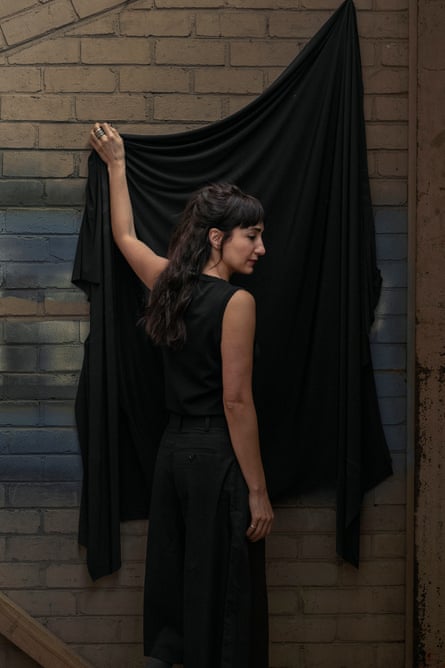
But it has also made her more sensitive to Australia’s human rights and social justice failures: “Australia claims beautiful values. It is the country of a ‘fair go’, that wants everything equal for everybody. But rights are not distributed equally.”
“From the beginning, I was very excited to be able to critique authority; to be a responsible citizen in a society where we can fight for change,” she adds.
This combination of lived experience and strongly held values has resulted in some of the most vivid, urgent and achingly beautiful works of Australian art seen in the last decade – several of which are brought together in a/part, her new exhibition at the University of Melbourne’s Buxton Contemporary
The show brings together three projects that deal with what she calls “states of exception”, a term coined by the Italian political theorist Giorgio Agamben for “sites where the laws that are applied to normal citizens don’t apply or can be broken,” Afshar says.
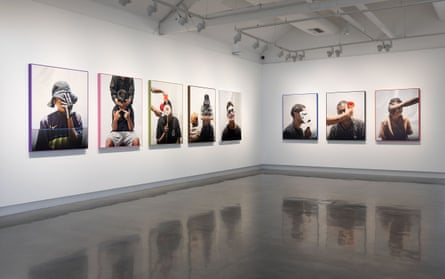
For each project, she has created video and photographic portraits that foreground the humanity of her subjects, while interrogating the narratives that underpin each state of exception; the ways of depicting a marginalised person or group that make it possible to accept their disenfranchisement.
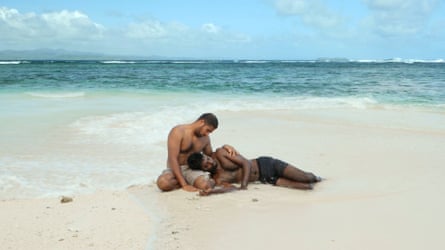
Best known among these works is Remain, the 2018 work Afshar made with the Kurdish Iranian journalist and author Behrouz Boochani and a group of refugee men detained on Manus Island as part of Australia’s offshore immigration detention system. Shot on a tiny island near Manus, the two-channel video marries the beguilingly beautiful aesthetic of the tropical paradise with poetry, Kurdish song and personal testimony to express the humanity of its subjects – and the depth of their suffering.
“The intention was to create a new visual language that can impact people about this issue, because we have become absolutely immune to images of suffering from the refugee crisis,” Afshar told me back when Remain debuted in 2018. Almost a decade later, it is her most exhibited work in Australia and abroad.
Code Black/Riot, showing at Buxton for the first time since its debut at the Sydney Biennale in March, is an immersive video installation and series of portraits focusing on Indigenous youth in detention shot in far north Queensland.
after newsletter promotion
Created with Boochani and Kuku Yalandji/Waanji/Yidinji/Gugu Yimithirr artist Vernon Ah Kee, the video features former detainees and staff from a youth detention centre, talking about living and working within a dehumanising system.
The former staff talk about the rainbow-coloured system of “codes” used to identify security and safety issues, and the practice of “night mode”, in which children are locked in their cells, in pitch dark, for days at a time. The children describe beatings from guards, solitary confinement, and a seemingly endless cycle of arrests, incarceration and probation.
To protect the identities of her young subjects, Afshar shot them in tight closeup, focusing on bodies and the lower halves of faces, highlighting the tension in the children’s bodies and mouths as they share harrowing experiences.
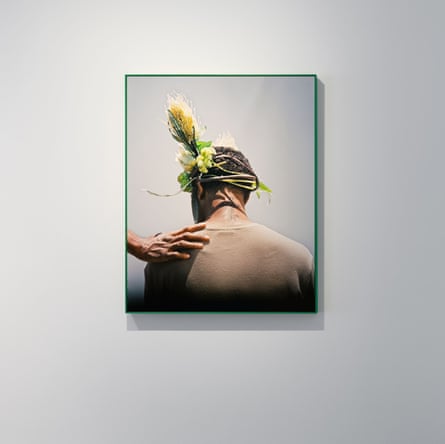
The studio-based interviews are intercut with footage of the young people: navigating Cairns at night amid revelling locals and tourists, floating in rivers and waterholes, perching in trees and bouncing on trampolines.
“It was very important not to depict them as broken,” Afshar says of the children; their photographic portraits show them in playful and defiant poses, using hands, flowers, face paint and clothing to obscure their faces.
As in Remain, beauty is juxtaposed with violence; the humanity of the narrators is contrasted with the inhumanity of the systems they are trapped in.
Her 2021 project Agonistes, spotlighting prominent Australian whistleblowers such as the former Australian army lawyer David McBride, explores a different “state of exception”: government employees who breach confidentiality agreements to speak up about witnessing wrongdoing, and are prosecuted and imprisoned as a result.
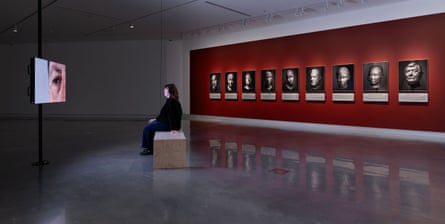
“These people all made a sacrifice; they had to choose between the law and the public, and they chose the public, believing that if the public knows what is happening, things will change,” says Afshar. “They lose everything because they believe in the values that the society claims to have.”
A fourth work, Shafaq, premiering in a/part, is more personal. Made during a camping trip on Larrakia country in the Northern Territory in July, it reflects her anxiety as the US resumed bombing Iran’s south, where her family lives. Shafaq is “a conversation across distance to my family members”, she says.
The last year has been difficult, with career highs marred by grief and anxiety over the bombing of her homeland. “Seeing places that you grew up in being demolished like that, it’s like part of your body and identity is being erased by it too. It’s a kind of pain I didn’t know till that moment,” she says.
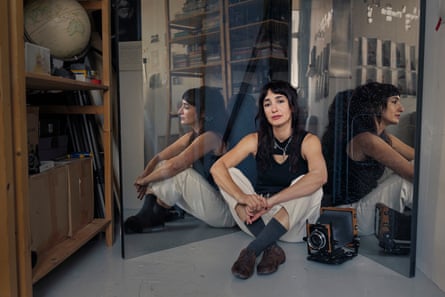
The way Iran has been portrayed internationally has left her sceptical of documentary modes of storytelling. “Our struggles and our movements are often hijacked and used for other political purposes and ends,” she says. “I wanted to rethink what documentary means, to allow for interpretation; to never present an image with concrete messaging or didacticism.”
The end goal of her art, she says, is to bring people together. “For me, it’s not about east or west, right or left, or these binaries that keep us endlessly separated and fighting with each other. I don’t belong to anyone’s camps … What I care about is human life and human dignity.”
-
Hoda Afshar’s a/part is on at Buxton Contemporary, the University of Melbourne, until 24 April 2027. Entry is free
KioskNews shows a cleaned-up reading view extracted from the publisher’s page — the original always lives on their site, not ours.