‘Nothing is left’: deadly floods slam Thai economy and strain Bangkok ahead of IMF meeting
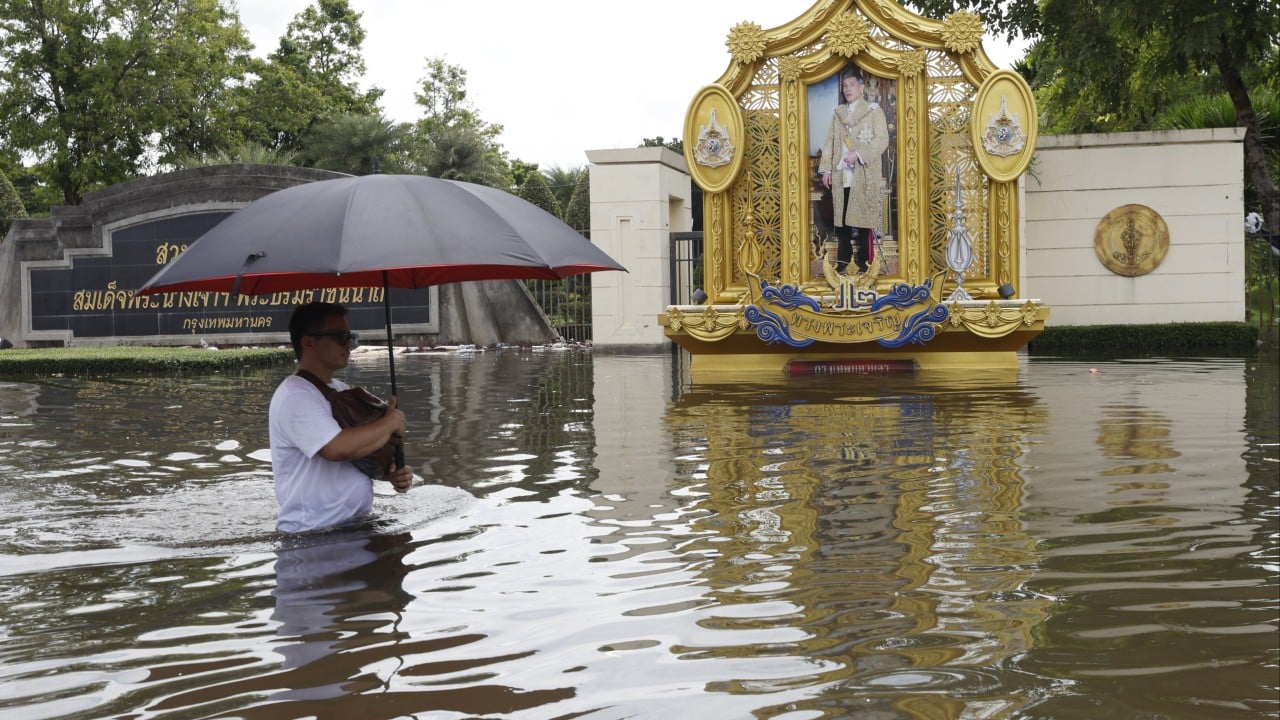
Monsoon floods in Thailand have killed 60 people since mid-September, officials said, as surging waters exact an increasing economic toll – destroying homes and crops, killing livestock and flooding factories.
Bangkok buckled at the end of September as 300mm (11.8 inches) of rain – around one month’s worth – hit its creaking drainage system over just three days.
The floodwaters have largely retreated from the capital, giving city officials crucial breathing space to clear the stinking, slurry-like mess left by stagnant water in Bangkok’s east and to dredge canals ahead of renewed storms forecast to roll in from Saturday.
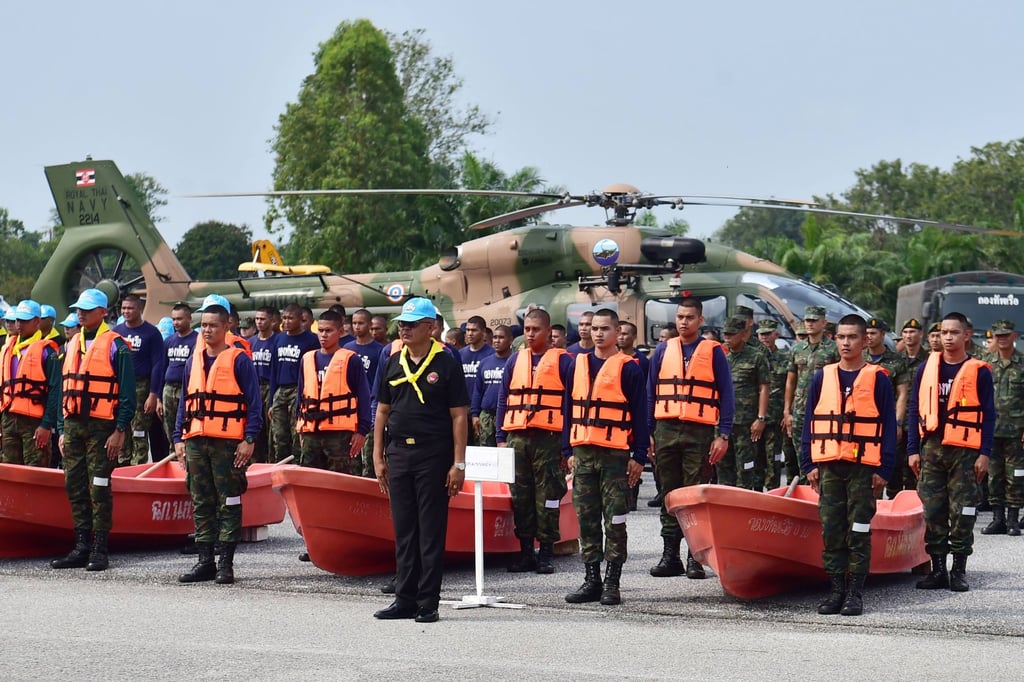
Hundreds of millions of dollars in damage has been done to the capital alone, as homeowners race to apply for complicated government compensation schemes.
Authorities say they have contingency plans in place should the floods return, threatening the IMF-World Bank annual meeting scheduled to take place in the capital early next week, an event expected to draw thousands of global delegates.
While Bangkok enjoyed a rare day of respite on Wednesday, eastern provinces including Chachoengsao and Prachin Buri faced rising waters as tidal rivers pushed floodwater back into vast tracts of land used for agriculture and industrial estates.
The Department of Disaster Prevention and Mitigation said 19 people had died in Prachin Buri so far – the highest toll among the 27 affected provinces – with nearly 190,000 people impacted nationwide.
The province is home to hundreds of factories, including new artificial intelligence infrastructure ranging from data centres to printed circuit board facilities that the government has positioned as key drivers of economic growth.
Videos posted on social media show fast-flowing water reaching rooftop levels, with residents cowering on upper floors filming the devastation as dark storm clouds pour unrelenting rain onto metres-deep floods.
02:14
Bangkok residents stock up as thousands evacuate as Thai capital sees worst flooding in 15 years
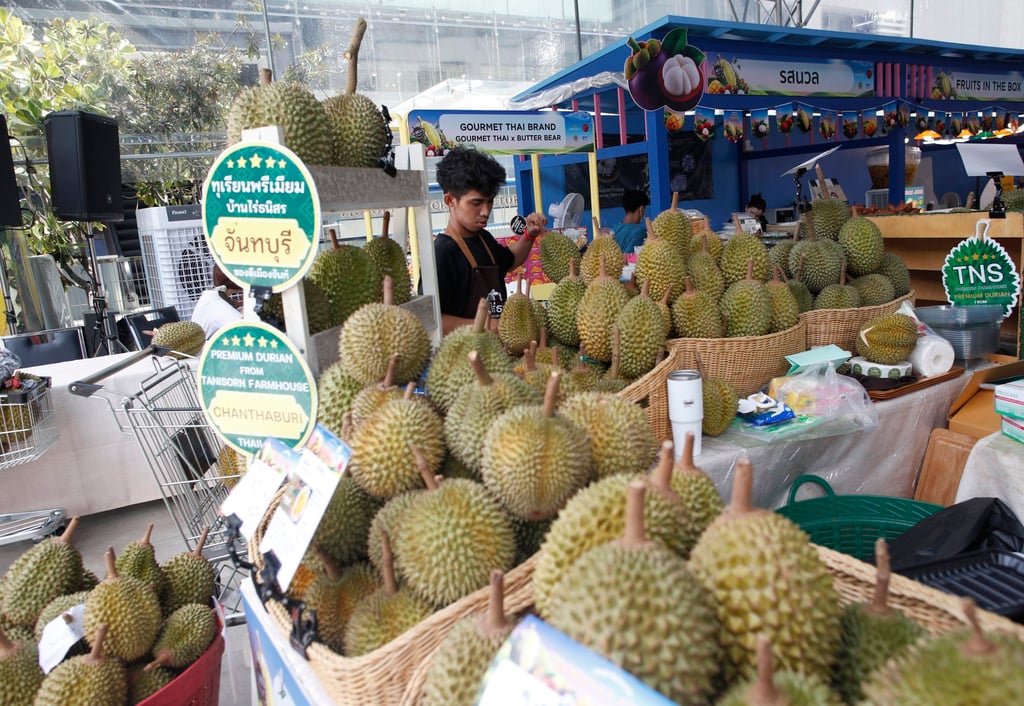
In hard-hit Chanthaburi province, the nation’s main fruit-growing hub famed for its durian harvest, residents spoke of obliterated homes and businesses.
“My house and restaurant are completely destroyed – nothing is left,” Wararat Kunam, 53, told This Week in Asia, sharing an image of her refrigerator swept into a nearby tree by floodwaters.
“At its peak, the water was several metres deep, submerging the entire first floor. We couldn’t move our belongings in time because the water came very fast.”
Wararat said she was grateful that her 200-tree durian orchard sits on higher ground for now, meaning the lucrative harvest may survive a punishing rainy season as she prepares for forecast El Nino-driven drought next year.
Others who joined the durian boom driven by surging Chinese demand have not been so lucky, with tens of thousands of rai (1 rai = 0.16 hectares) affected.
“If a durian tree is submerged for three days, its root system cannot breathe, and the tree will die standing. Farmers have to start counting from zero again, and production costs also start over,” she said, noting that durian trees take up to five years to bear fruit, making them a high-risk investment.
“It has always been like this – the area is inherently fragile,” Wararat added. “When it floods, it floods for real; when it’s dry, it’s brutally dry.”
The floods have also hit the agricultural supply chain. Drowned livestock and submerged poultry farms have led the Commerce Ministry to urge egg exporters to slash overseas shipments by up to 50 per cent over the coming weeks to ensure domestic supply.
With the floods ongoing, the government has yet to calculate the overall economic impact. But losses are mounting across tourism – after Bangkok’s main airport was temporarily paralysed by flooding – as well as in clean-up costs and direct compensation.
Thailand’s annual monsoon typically replenishes reservoirs and feeds crops ahead of the dry season as water flows down from swollen northern rivers into the Chao Phraya – the country’s central arterial waterway – before emptying into the Gulf of Thailand.
This year, however, rainfall has been erratic and intense, overwhelming natural drainage systems and straining the infrastructure of Bangkok, a sinking city built on soft clay.
The political costs are mounting too.
Political rivals accuse him of failing to lead relief efforts, particularly in the hardest-hit eastern provinces, while government focus appears split between flood response and hosting high-profile international dignitaries at next week’s IMF-World Bank gathering.
“What we are seeing is a failure in the government’s management of the situation,” opposition leader Natthaphong Ruangpanyawut, head of the People’s Party, told parliament on Wednesday.
“The prime minister should be sitting at the head of the table, directing all agencies to work effectively and provide targeted assistance. Instead, he has distanced himself from the problem, choosing to visit field kitchens rather than answer questions.”
KioskNews shows a cleaned-up reading view extracted from the publisher’s page — the original always lives on their site, not ours.