Hyperscale data centers use 2% of US electricity
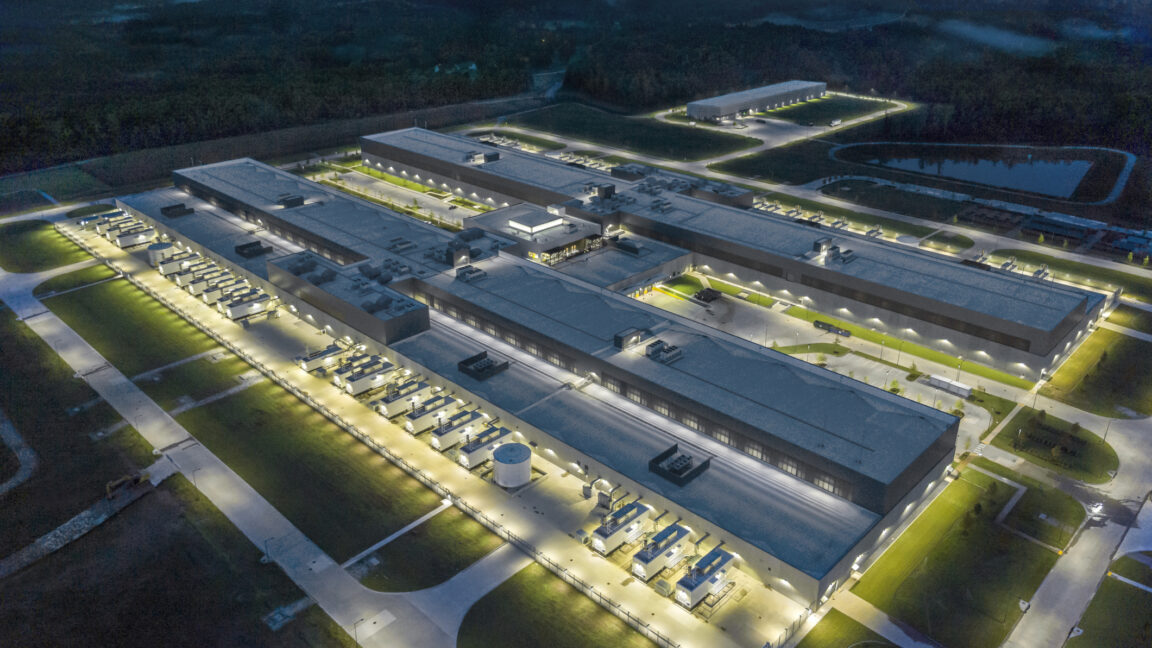
A recent Lawrence Berkeley National Laboratory report estimated the total electricity use of all data centers of any kind in the US (minus crypto mining) at 76 terawatt-hours in 2018. In 2024, that number was up to 192 terawatt-hours. That means the hyperscale data centers identified by this study account for something like one-third to one-half of all data center energy use.
Electrons come with carbon
The researchers also wanted to estimate the greenhouse gas emissions associated with generating all that electricity. It’s fairly straight-forward to get a reasonable number here—calculate the mix of generation in each data center’s region of the grid, and apply that CO2 per watt-hour rate to a data center’s electricity use.
This yields 21 to 31 million metric tons of CO2 for the year. That’s around 0.5 percent of total US fossil fuel CO2 emissions.
These data centers aren’t located in areas of especially clean energy—their energy mix was only slightly cleaner than the US average. About 54 percent of the electricity was generated by fossil fuel power plants (dominantly natural gas), with 25 percent from renewables, and 21 percent from nuclear.
This doesn’t include any “behind-the-meter” generation on-site, though. The xAI data center in Tennessee notably ran a fleet of natural gas turbines during this study’s time period, for example. Cleanview, which describes itself as a market intelligence company, has tracked a boom in on-site generation since early 2025, including 116 current or planned data centers. While this may not affect this study’s numbers much, it is becoming increasingly significant over time.
This matters because the types of generators being used are much less efficient than utility power plants, emitting 60 to 80 percent more greenhouse gas to produce the same amount of electricity. (Conversely, if a data center built solar generation instead, it could reduce the carbon footprint of its energy.)
Although this study can’t pinpoint the energy use of AI data centers alone, repeating this analysis in subsequent years could reveal the growth related to the AI buildout—at least as long as that buildout lasts.
Nature Sustainability, 2026. DOI: 10.1038/s41893-026-01985-7 (About DOIs).
KioskNews shows a cleaned-up reading view extracted from the publisher’s page — the original always lives on their site, not ours.