Are your bones brittle? If they were, how would you know? (To men: this goes for you too) | Ranjana Srivastava
“Doctor, how could I get a fracture from sliding on the floor?”
My 60-year-old patient is impatient to recover from a pelvic fracture.
“Because you have osteoporosis.”
He is gobsmacked, acting as though I must have the wrong person.
“But osteoporosis happens to women!”
“Not quite,” I say, and his eyes widen.
Worldwide, one in three women and one in five men over 50 are at risk of an osteoporotic fracture. Anyone who has suffered one knows it is not merely inconvenient but potentially life-changing.
A quarter of my medical patients who suffer a hip fracture do not regain their previous mobility. Many make slow progress in rehabilitation; some need residential care. For others, the consequences can be fatal, not from the fracture itself but the complications of immobility: blood clots, pneumonia and deconditioning.
In cancer patients, I am equally familiar with bone loss caused by treatments that deplete sex hormones. A lack of oestrogen or testosterone weakens bones.
Next to cancer, bone health can seem like the poor cousin. Yet for many cancer survivors, a fracture impairs quality of life and – ironically – survival.
If you have had a heart attack or stroke, you are probably on medication. If you have diabetes, you will be on drugs to prevent complications. Yet osteoporosis remains woefully under-recognised and undertreated. Fractures cost billions in direct and indirect healthcare. Preventing them is far better and far less expensive than treating their consequences.
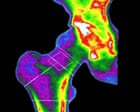
A bone density scan, or Dexa, takes about 20 minutes and is non-invasive. Combined with other risk factors including age, weight, smoking, alcohol use, steroid use and other illnesses, it helps assess the risk of fractures of the hip and spine, among other sites. Not everyone turning 50 needs a scan but many at-risk people are never assessed.
One pervasive misconception is that vitamin D, with or without calcium, is enough to protect our bones.
The theory makes sense. Vitamin D is essential for bone health and its receptors are found throughout the body. But biological plausibility does not always translate to clinical benefit.
In a large trial published in the New England Journal of Medicine, vitamin D supplementation did not reduce fractures or falls in generally healthy adults who were not selected for vitamin D deficiency or osteoporosis. Nor did it deliver the hoped-for benefits for several other conditions, including cancer and cardiovascular disease.
This does not mean vitamin D is unnecessary. People who are severely deficient need treatment. But for otherwise healthy people, taking more is not necessarily better. The same principle applies to calcium. Adequate calcium intake is important, preferably through food, and supplementation may be appropriate for some. But neither supplement, on its own, is a treatment for osteoporosis.
So what does help bone health?
Exercise! Both weight-bearing activity and muscle strengthening. Squats, lunges and upper-body resistance exercises help build and maintain strength. Walking, running and skipping are good weight-bearing activities. Technique matters more than the equipment. Resistance should increase progressively and safely.
Functional fitness matters, too. This is the ability to do everyday things: to get in and out of a car, to reach up for something or to rise from a chair without using your arms. Many falls and fractures occur because people lack the strength or balance to manage these seemingly mundane tasks. Preserving both matters.
For sceptics, the evidence offers encouragement. A manageable, regular program of resistance exercise, combined with aerobic activity, can improve strength and overall health.
For far too long cancer medicine has treated exercise as an optional extra, something nice to do if you have time. But a study published in June showed that a structured exercise program after chemotherapy reduced the risk of recurrence in people treated for colon cancer. Exercise is not a substitute for chemotherapy but its benefits may be far more consequential than we once assumed.
Most fragility fractures happen in people who do not meet the bone density threshold for osteoporosis. Assessing fracture risk requires more than a scan, which is why a thorough conversation with a doctor is essential.
There is also a gender gap. Men, like my patient, are often unaware that osteoporosis is also a male condition. And it’s silent; for many people, the first indication that their bones are fragile is a fracture.
Fortunately, we have effective treatments, from tablets to infusions. As with all medicines, benefits and risks differ for individuals. But people at high risk deserve that discussion rather than being left untreated.
The failure is particularly evident after a hip fracture. Fracture patients are admitted, treated and discharged. What happens next? Too often, longer-term bone health is overlooked, and the patient returns months or years later with another fracture.
Fracture liaison services offer a practical solution, bringing together professionals from orthopaedics, geriatrics, endocrinology and primary care to ensure comprehensive care. Australian evidence suggests a 10-fold return on investment.
As my friends enter their 50s, I encourage them to think beyond the screening tests we are familiar with. Ask your doctor about your fracture risk. Build strength training into your week. And, if you have already had a fragility fracture, do not assume that fixing the bone is the solution.
We have effective ways to prevent many future fractures and help people age well. We have the knowledge; it needs pairing with action.
My patient spent six weeks in hospital. Three months later, he still felt stiff and wasn’t ready to return to golf.
Sobered, I finally took my own doctor’s advice and had my bone density checked. The result was a wake-up call to do better. I now talk to all my patients about their bone health. If they expect to live a long and productive life, they need the bones to carry them through.
KioskNews shows a cleaned-up reading view extracted from the publisher’s page — the original always lives on their site, not ours.