THE EDUCATION DESK: One-size-fits-all fails — Finnish professor urges teacher autonomy and AI guardrails for SA schools

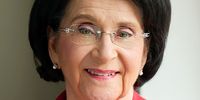
Giving South African teachers more freedom to adapt lessons to learners’ needs could improve reading outcomes, according to Hannele Niemi, an emeritus professor in education at the University of Helsinki.
She argued that rigid teaching methods and rote learning, particularly in under-resourced classrooms, make it difficult for teachers to respond effectively to struggling learners.
Niemi, a research director at the Finnish university, has worked with South African researchers and institutions through the Digital Academies in Africa project (2022-2025), which examined the skills gap between higher education and the jobs market.
She told EdDesk that in Finland, whose schools have long ranked among the best in the world, broad national goals, values and learning objectives were set nationally, leaving municipalities, schools and teachers with scope to shape curricula and teaching methods according to curated needs.
That flexibility allows teachers to respond to individual learners instead of applying a one-size-fits-all approach.
In contrast, South Africa’s Curriculum and Assessment Policy Statement (Caps) prescribes what needs to be taught, the pace of instruction, and how learners are assessed from Grade R to Grade 12.
“Although it promotes learner-centred learning, detailed requirements can be difficult to adapt, especially where classes are large, and schools lack books or other teaching materials,” she said.
Stark differences
Niemi, an experienced education policy adviser in Africa and Asia, cautioned that she was not advocating for South Africa to adopt the exact same system as Finland, due to the stark differences between the two countries.
Her advice comes as South African researchers question whether prescribed reading methods give struggling learners enough opportunity to practise reading.
A 2026 review by University of Cape Town researcher Colleen Boyd found that while the curriculum allocates sufficient time for class reading, difficulties implementing prescribed activities and gaps in teacher preparation reduces the time learners actually spend reading.
Wits University education researcher Brahm Fleisch pointed out that although the time allocated under the prescribed Group Guided Reading strategy was sufficient in theory, in reality, learners may spend only eight to 12 minutes a week actually reading.
“This suggests that Group Guided Reading as a core methodology… may be unworkable,” he wrote in a 2023 paper.
Beyond the challenges of existing reading methods, Niemi said the growing use of artificial intelligence in education created new demands on teachers, who needed training and guidance. Schools needed policies to ensure that AI did not replace the reading practice children needed to become confident readers.
A school AI policy was needed to determine how teachers could help learners understand, question, and use AI positively.
“Previously, education often placed considerable emphasis on the final answer,” she said. “With AI, we need to focus much more on the process of learning. We must help learners develop the reasoning, reflection and critical-thinking skills needed to understand the subjects.”
This means rethinking not only how lessons are delivered, but also how learners are assessed.
‘Uninspiring’ teaching methods
The challenge extends beyond reading lessons. Two South African teachers who spoke to Education Desk in their personal capacity during a teacher-training session led by Niemi at the University of Johannesburg in October, described traditional methods as uninspiring, saying they were expected to follow textbook-based lessons that often felt outdated.
Sbusiso Bengu, a 31-year-old primary school teacher in Soweto, said schools struggled to keep up with learners who were already familiar with AI.
“Yet, when they get to school you expect them to learn using hard printed textbooks and not use ChatGPT,” he said, noting that slow departmental policy left kids exploring AI unsupervised.
Nkosazana Shabangu, an Ekurhuleni physics high school teacher, called for an overhaul of rigid expectations and memorisation-based assessments.
“The way we teach is just plain boring, because we are confined. Without resources like the internet and projectors, we are left teaching in theory,” she said. “We need young minds that can change the content and allow us to teach with passion. Right now we are like bots being told what to do.”
Niemi emphasised that greater autonomy required investment. Her recommendations reflect themes in the 2026 book, Towards Industrial Revolution and Sustainable Growth in Africa: Learning Ecosystems of the Future, which she co-edited with researchers from Finland and South Africa.
“Teachers act as facilitators rather than as authoritarian figures, promoting openness, respect and empathy. Learning aims to help individuals reach their fullest potential,” the authors argued.
Professional freedom must be backed by strong teacher preparation and a system that trusted educators, said Niemi.
“Finnish classroom teachers generally train to Master’s degree level and complete supervised teaching practice at university training schools.”
Broad oversight
Finland’s Education Minister, Anders Adlercreutz, made a similar point during a visit to South Africa in August, as reported by EdDesk. He said municipalities in Finland ran schools, with support and broad oversight nationally.
University of South Africa education professor Gezani Baloyi said greater autonomy did not mean abandoning structure or leaving educators without support.
He referred to an early-grade reading study that found learners whose teachers received structured lesson plans, reading materials and coaching for two years, were about 40% of a school year ahead of regular learners.
“Classroom observations also showed that coached teachers were more likely to divide learners into smaller reading groups, giving children more opportunities to practise reading and receive individual attention,” he said.
“The findings suggest that effective teaching requires both professional judgement and practical support, particularly in schools where educators face large classes and limited resources.” DM
This story was produced by The Education Desk, a non-profit newsroom dedicated to addressing schooling challenges in South Africa.
KioskNews shows a cleaned-up reading view extracted from the publisher’s page — the original always lives on their site, not ours.