Chinese military vessels and spy drones track Keen Sword war games off Japan
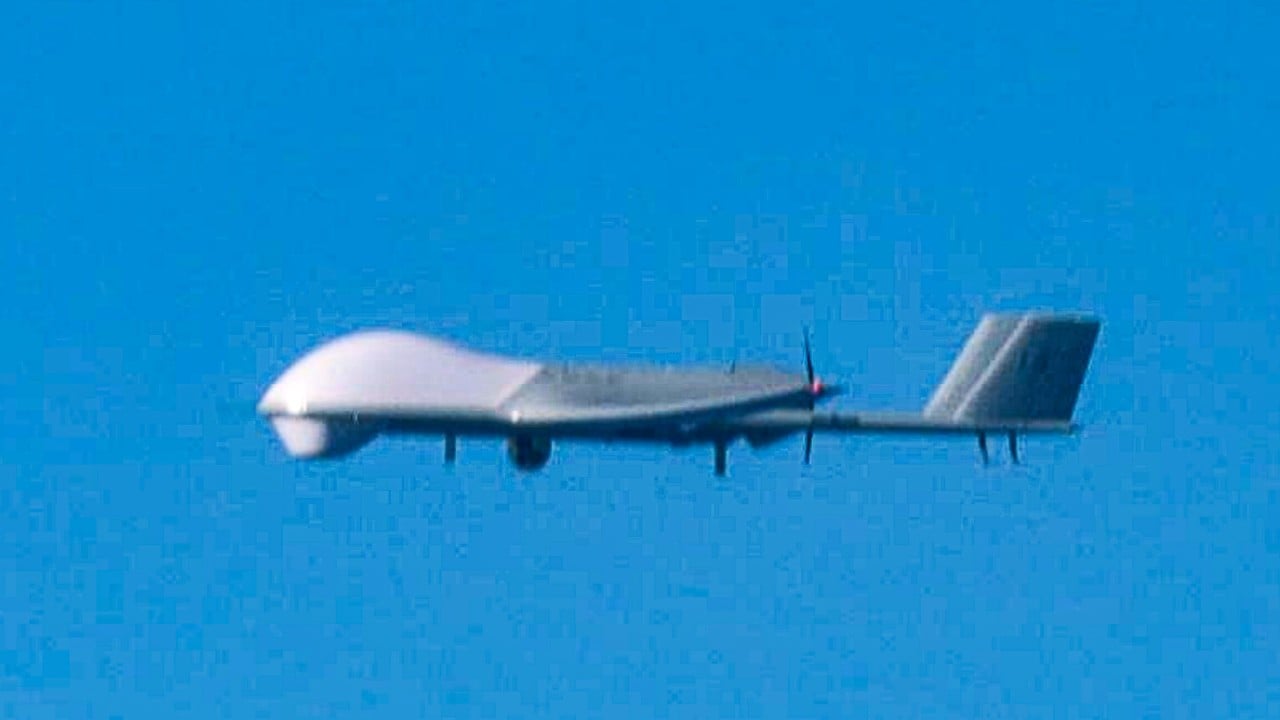
Three People’s Liberation Army military aircraft – two drones and a reconnaissance plane – flew through international airspace between Japanese islands into the Pacific before heading back towards mainland China on Monday, prompting Japan to scramble fighter jets, the Joint Staff Office of Japan’s defence ministry reported the same day.
The aircraft included a BZK-005 reconnaissance drone and a Y-9 intelligence-gathering aircraft, which flew in from the East China Sea, passed through the Miyako Strait between Okinawa’s main island and Miyako Island, and continued into the Pacific before returning towards mainland China, the Joint Staff Office said in a post.
09:58
Will Batanes become the next South China Sea flashpoint?
In addition, a TB-001 reconnaissance and attack drone passed between Yonaguni Island and Taiwan, flew northeast as far as waters off Amami Oshima, then turned back and passed through the Miyako Strait towards mainland China, the post said.
The aircraft movements coincided with Monday’s start of “Keen Sword”, a biennial joint military exercise between Japan and the United States running until October 29 across multiple locations in Japan. The exercise will involve about 45,000 Japanese Self-Defence Forces personnel and 12,000 US troops, making it one of the biggest drills ever conducted by the two allies.
Japan’s long-range Type 25 surface-to-ship guided missiles will deploy to a training ground in southern Kyushu during the exercise. It will be the first time the missiles have been deployed outside their garrison in Kumamoto prefecture since arriving there earlier this year.
The vehicle-mounted missiles have a reported range of about 1,000km, potentially putting parts of China’s coastline, including Shanghai, within reach from Kyushu. From Okinawa, the Taiwan Strait and mainland China’s southeastern coastal provinces would be within range.
Tensions between Beijing and Tokyo have been running high since Japanese Prime Minister Sanae Takaichi said in November that Japan could intervene militarily in the event of a conflict over Taiwan, angering Beijing and pushing bilateral ties to a new low.
Japan’s defence ministry also reported the recent movements of seven Chinese naval vessels in a series of four other posts on Monday.
Among them was Yuhengxing, a Chinese navy intelligence-collection ship with hull number 798. Japan said the vessel began sailing east through the Osumi Strait towards the Pacific Ocean on Saturday.
Another intelligence-collection ship, Kaiyangxing, hull number 796, was spotted on the same day travelling south through waters about 80km northwest of Kumejima in Okinawa prefecture before continuing through the Miyako Strait towards the Pacific.
Earlier on Friday, Japan detected two other vessels: the Chinese navy guided-missile destroyer Qiqihar, hull number 121, and the Hulunhu combat-support ship, hull number 901. The two vessels were observed passing through the Osumi Strait on Saturday as they headed towards the Pacific Ocean.
The Hulunhu, with a displacement of about 45,000 to 48,000 tonnes, is one of the world’s largest naval replenishment ships. Chinese state media and naval enthusiasts have referred to it as the “super nanny” or “carrier mother” because of its role in supplying aircraft carrier strike groups.
Although Beijing did not disclose the carrier’s location, Japan reported on Wednesday that the Liaoning and three accompanying vessels had passed southeast through the Miyako Strait towards the Pacific. Japan’s defence ministry reported about 10 take-offs and landings by carrier-based fighter jets and helicopters that day.
Japan continued to monitor the carrier group’s movements on Thursday, subsequently reporting that the four Chinese navy vessels had been confirmed sailing towards the South China Sea.
It remains unclear whether the Hulunhu will join the Liaoning in the Pacific, but the two vessels will be closely watched during the US-Japan exercise, which will run until the end of the month.
Trump praises Takaichi ahead of Xi’s US visit
Meanwhile, a US carrier strike group led by the USS Theodore Roosevelt arrived at Yokosuka, Japan, on Friday and is scheduled to take part in the Keen Sword exercise, according to the US Navy.
It adds to the concentration of military activity along the first island chain, which stretches from Japan, to Taiwan and the Philippines, in the coming days.
Beijing sees Taiwan as part of China to be reunited by force if necessary. Most countries, including the US, do not recognise Taiwan as an independent state, but Washington is opposed to any attempt to take the self-governed island by force and is committed to supplying it with weapons.
KioskNews shows a cleaned-up reading view extracted from the publisher’s page — the original always lives on their site, not ours.