BOOK EXTRACT: Disability justice in Africa — a radical shift from silos to solidarity is urgent
Mildred Omino is a disability activist from Kenya whose chapter explores rethinking and reinvigorating disability activism in the light of new challenges, particularly global heating.
This chapter reflects the perspectives and experiences of a woman activist with a disability, living in Kenya. It explores the evolution of disability activism in several African countries, linking it to the strides made by disability activists in the US. Further, it challenges the silos that disability activism has placed itself in and been placed in; silos that overlook the many intersections between disability and other social justice issues. It zooms in on how the impacts of the climate crisis – such as those of global warming on women with disabilities in Kenya – are being overlooked and how this is further impoverishing and marginalising women. It argues for climate activism that fully embraces the diversity of people with disabilities.
I am a proud daughter of Africa, standing tall on my continent. Some people call Africa “a country” yet Africa takes pride in its resilience, rich natural resources and diversity in many aspects. You see, I was born and raised near the shores of Lake Victoria, in a rural area of Kisumu County in the western part of Kenya. My country is in the east African region and is the home of athletics champions and is a producer of high-quality tea, with beautiful scenery and magnificent wildlife. I had a disrupted childhood after contracting poliomyelitis while a toddler. As a result, polio paralysed my lower limbs. This was the beginning of a whole set of disability experiences for me, as a young girl and all the way to womanhood. Navigating the various aspects of life – including education, health, employment, social human interactions and accessing the many gifts that life has to offer – has been a unique experience.
My parents had no choice other than to take me to “special” schools, where only learners with physical disabilities were schooling, because mainstream schools lacked the appropriate infrastructure and accessible facilities for learners like me. Although my parents would have loved to take me to mainstream schools, to learn with all the other students and facilitate easy integration into the community, there were no possibilities for this. This was the case for both my primary and secondary education.
Public goods and services remain a luxury to many persons with disabilities (PWDs), who often encounter accessibility challenges. Even when providing disability-accessible products and services, barriers exist. The costs are skyrocketing, with lack of, or inappropriate, community support systems leading to services that lack dignity.
Later, in my economics classes, I learnt the concepts of scarcity, choice and opportunity cost. These are the daily experiences of most disabled persons; where maternal death occurs because there is no choice available for disability-inclusive medical facilities; where the opportunity cost of education and employment is total dependence on almsgiving.

Often scarcity shifts to a complete lack of services, leading to the exclusion of PWDs from fundamental public services. Economists have developed theories of inequality in its different forms, so I ask the question: How are structural and systemic exclusions perpetuating inequality for disabled people?
The World Health Organization estimates that 1.3 billion people – equivalent to 16% of the global population – experience significant disability. PWDs are the largest global minority, with profound invisibility in development spheres.
Moreover, 80% of disabled persons live in developing countries, predominantly in Africa and Asia. Africa is home to more than 80 million people with different forms of disability, residing in 54 African countries.
Women with disabilities are in a very bleak situation globally. The available evidence shows a higher prevalence of disability among women. Moreover, their overall literacy rates are lower, and unemployment rates higher, compared to those of their male counterparts. They face a higher proportion of gender-based violence, sexual abuse and neglect. In addition, the planning and design of the built environment, infrastructure, facilities and services can impede or enable the access, participation and inclusion of women with disabilities.
Finding my voice in disability activism
Education introduced me to a community of PWDs. In school, I met children with disabilities; we learnt together, shared stories and celebrations, but also grieved together. My leadership capabilities were nurtured in school. I held various leadership positions, including being a school captain of my primary and secondary schools. I learnt not only to represent and lead my peers but also to question that which was not just; as well as to build solidarity for a socially just cause. In the words of Nelson Mandela, “education is the most powerful weapon which you can use to change the world”.
An experience during my final high school year ignited my activism.
We were in the middle of writing our end-of-term exams when the school principal walked into the exam room. The room went dead silent and we all stopped writing. She read out a list of names and loudly told everyone on the list to get out of the exam room. The announcement she made was: “I don’t care whether you are going to crawl or fly; all I need is school fees.” This signified that the students were to go home to collect fees arrears. The demeaning words “fly” and “crawl” stood out for learners with mobility disabilities.
The students were perplexed and the exams disrupted. The incident led to protest, indefinite school closure and the suspension of all the students after we marched defiantly to the district education offices. We demanded an explanation for four major issues: whose responsibility it was to pay fees; the use of the dehumanising, derogatory and undignified terms “crawl” and “fly” by the principal to depict disability; the humiliation of the non-paid-up students in the presence of the paid-up students; and last, the disruption of exams. The news of the school closure went out to the public via radio, which was the most popular mode of mass communication at the time.
A series of events followed the sudden school closure and conditions were set for the readmission of students to the school. As a student leader, I had to take some responsibility for the protests. I remember my father asking me why disabled children would take to the streets to fight for their rights, me included.
I recall the boarding mistress acknowledging to me that the school administration had played a role in advancing the use of stereotypes and discrimination against the learners with disabilities, without prioritising their academic goals.
I also recall a narrative authored during our readmission that the school chaplain had supposedly sodomised male students and a few coached witnesses spoke to the matter during readmission. At the time, homosexuality was even more taboo in African societies than it is today, so the school fired the chaplain and retained the principal. It would later be established that the homosexuality allegations were false and a cover-up for the maltreatment of learners with disabilities. Eventually, the principal was fired.
We paid the price. Nevertheless, I found my activist voice and I draw my social justice themes from this experience.
In traditional African societies too, perceptions regarding disability are persistent because of stigma, prejudice and deep stereotypes. Many African cultures, customs and traditions associate disability with a curse, among other negative connotations. The long-term impacts of these perceptions and harmful practices manifests in the socioeconomic participation of PWDs, and indeed in their participation in all other spheres of life. Massive human rights violations and discrimination against disabled people might be attributable to these perceptions and practices. In extreme cases, there have been reports from several African countries of persecution and murder of individuals with albinism, for superstitious reasons. Courts in Tanzania, Malawi and Zambia, among other African countries, have processed such cases.
Disability activists on the African continent have been advocating for recognition of the rights of disabled persons in all spheres of life for quite some time. Individuals with psychosocial disabilities have been institutionalised and confined in healing centres in several African countries, including Ghana, Uganda and Kenya. Notably, acts of persecution have been committed even in psychiatric hospitals, where individuals sought care and support.
Climate change and its impact on women with disabilities
Growing up on the shores of Lake Victoria, rural Kisumu, in Western Kenya, fish was our local delicacy, and it was plentiful. The village routine was that the men would go fishing at 5am and return home by 9am. The women were left at home, handling domestic chores and preparing food for their husbands. As soon as the men returned from fishing and were well fed, the women would leave the homesteads to sell the fish catch for the day in the neighbouring areas and earn an income for the family.
As a child with a mobility disability, more often than not I stayed at home as my siblings and friends went to play in the neighbourhood. I remember the fishmongers chanting “Kado weyi!” – a phrase in the Luo language that translates loosely as “You are about to miss soup!” The chant was to alert the villagers that fish was on sale. By default, I was the one who received the fish from the fishmongers – on behalf of my mother, who worked as a nurse in a nearby health centre – because I could not go too far to play, so I was always available at home.
In 2022, when I returned to my rural home for a longer stay to mourn my late father, I observed significant changes. The fish vendors no longer sold their fish at the homesteads, due to an acute shortage of fish. Coincidentally, as I was reflecting on the glaring fish shortage and the glaring food insecurity in my rural village, we were preparing a shadow report to the UN Committee on Economic, Social and Cultural Rights (CESCR). The Kenya Network of Women with Disabilities submitted the shadow report for consideration in the 72nd pre-sessional working group of the CESCR held in March 2023. During the climate justice consultations (in the context of human rights) within the network, the glaring and sad reality of the life-threatening impacts of environmental degradation and climate crisis on women with disabilities kept coming into the discussions. It was clear that urgent action was required. A disabled woman from Mandera, a region categorised as “Arid and Semi-Arid Lands” (ASAL), had this to say:
“I have never seen a drought like this. We could not find water to drink. I remember, one day, I drank dirty water, because I was so thirsty. I almost died from stomach ache. Taking a shower became a luxury for me. People would go so far to look for water, but my disability could not allow me to go that far.”
The stories of Kenyan pastoralist women with disabilities regarding climate are characterised by loss of livelihood during droughts and floods that kill their livestock; aggravated poverty, due to a lack of education and low employment levels; starvation and poor health outcomes. The greatest puzzle is the persistent absence of their voices in climate justice policy and intervention conversations, in an era in which the phrases “climate justice” and “leave no one behind” are constant reminders.
As we ponder these efforts, we must endeavour to bring the missing voices into climate negotiations and cushion the populations that are likely to face erasure in the complex web of the climate crisis. No life should be lost without stakeholders trying their utmost to prevent that loss. DM
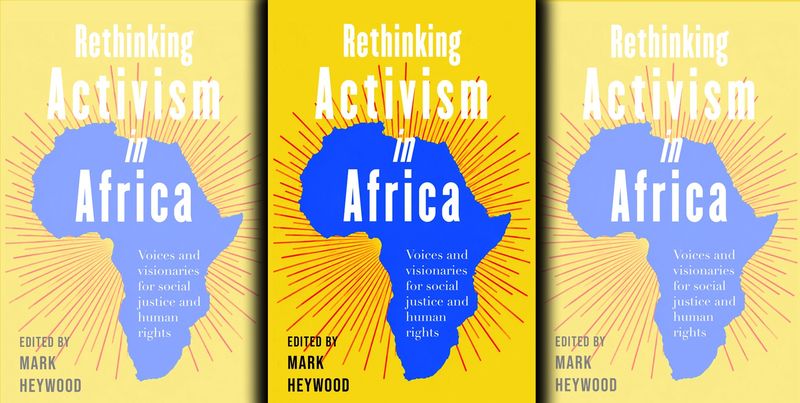
You can read Mildred Omino’s complete essay in Rethinking Activism in Africa, Voices and Visionaries for Social Justice, edited by Mark Heywood and published by Jacana Media.
Read an extract of Mark Heywood’s introduction here.
Rethinking Activism in Africa is available in bookshops and can also be purchased online from Jacana Media.
KioskNews shows a cleaned-up reading view extracted from the publisher’s page — the original always lives on their site, not ours.