PhilHealth seeks to address double coverage of workers with HMOs, PHIs
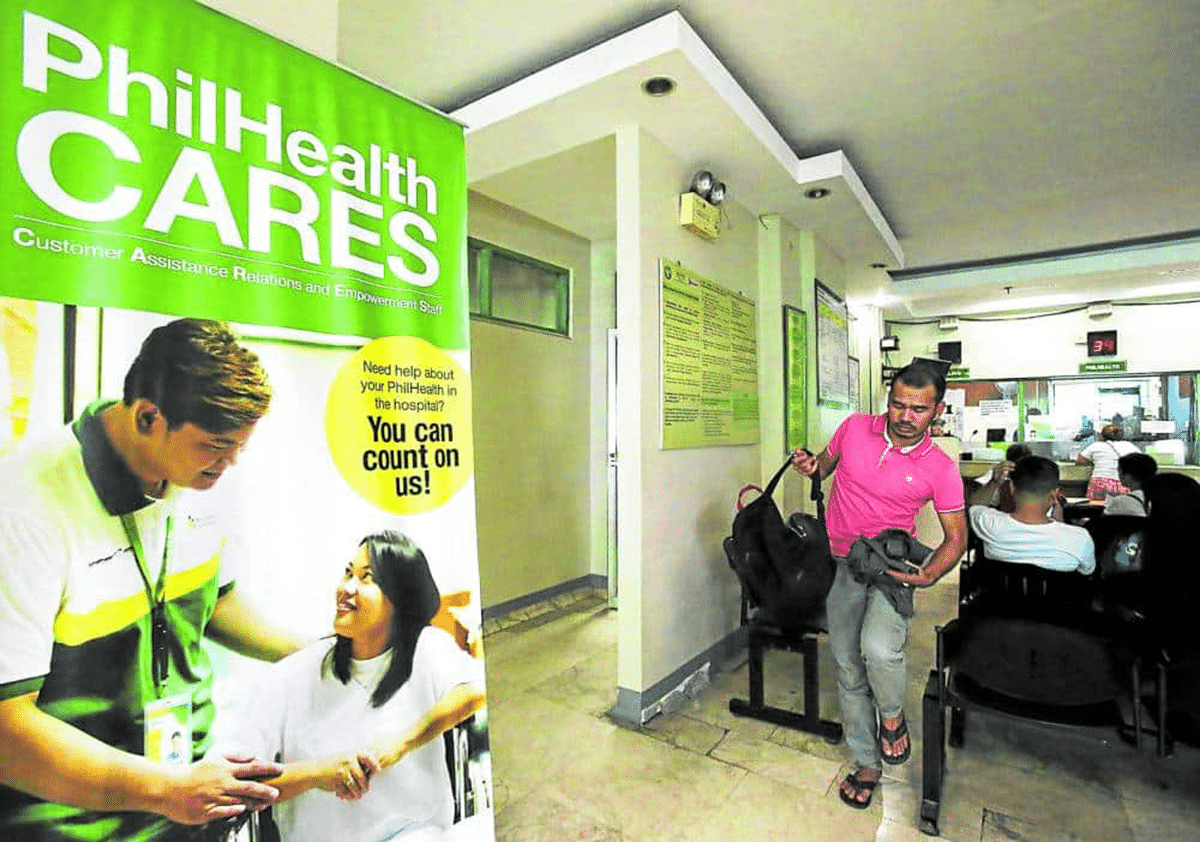

MANILA, Philippines—Philippine Health Insurance Corp. (PhilHealth) is seeking to address what it describes as “double coverage” among workers who contribute to the state health insurer while also receiving health maintenance organization (HMO) or private health insurance (PHI) coverage from their employers.
PhilHealth said some members rely mainly on their private health plans for medical care even as they continue paying PhilHealth contributions, leaving some of the state insurer’s outpatient benefits unused.
“They pay for PhilHealth and private health insurance plans and members pay for both, but they still don’t get probably twice the value. YAKAP (Yaman ng Kalusugan Program) and GAMOT benefits go unused, while insurance plans paid for consultations and tests that PhilHealth now already covers,” PhilHealth acting president and CEO Dr. Beverly Lorraine Ho said.
Article continues after this advertisement
Under the PhilHealth-HMO/PHI Benefit Complementation program, PhilHealth will serve as the first payer for covered services, while HMOs and PHIs will provide complementary coverage for services that PhilHealth does not cover.
FEATURED STORIES
NEWSINFO
NEWSINFO
NEWSINFO
READ: PhilHealth, HMOs, insurers agree to coordinate benefits under Yakap
Ho said the goal is for members to get more value from the coverage they are already paying for, rather than having PhilHealth and private health plans pay for overlapping benefits.
“We want to make sure that the benefits are complementary, meaning we don’t duplicate each other’s benefits, and also that we’re able to give better coverage,” Ho added.
PhilHealth said the complementation could help reduce members’ out-of-pocket expenses, although they have yet to set a specific target for how much patients could save.
Article continues after this advertisement
“That is really what we want—to reduce our out-of-pocket expenses, especially given how hard life is these days.”
The program does not mean members will stop paying premiums.
Article continues after this advertisement
Instead, PhilHealth said it aims to make better use of the premiums already being paid by members or their employers by preventing duplication of benefits.
With PhilHealth taking the first layer of outpatient expenses, private insurers may have more room to focus their plans on services beyond the state insurer’s coverage, including mental health care, vaccinations and critical illness protection, according to Christian S. Argos, president and CEO of Maxicare and chairman of the Philippine Association of Health Maintenance Organization Companies.
Argos said the setup could also bring down the cost of HMO plans by allowing private providers to offer products that supplement, rather than replicate, PhilHealth’s coverage.
“If we can create outpatient products with PhilHealth as the first payer, then more people can actually buy an HMO product because it will be cheaper.”
PhilHealth said it will spend the next three months working with participating HMOs and PHIs to synchronize their systems and procedures before testing the benefit complementation through a pilot program.
Your subscription could not be saved. Please try again.
Your subscription has been successful.
The pilot is targeted for implementation in 2027, with the initiative forming part of PhilHealth’s efforts to coordinate public and private health coverage under the Universal Health Care Act. /gsg
KioskNews shows a cleaned-up reading view extracted from the publisher’s page — the original always lives on their site, not ours.